Email Marketing to Generate Leads: Grow Your Store with Smart Email Tactics
Discover how email marketing to generate leads can grow your Shopify store with list-building, automation, and higher conversions.

When we talk about generating leads with email marketing, we're really talking about building a direct, personal line of communication with people who are already interested in what you sell. It’s all about capturing a visitor's email and then using smart, automated messages to build a relationship, earn their trust, and eventually, guide them toward making a purchase. For Shopify stores, this isn't just another marketing tactic—it's one of the most reliable ways to drive consistent sales.
Why Email Is Your Strongest Lead Generation Tool
In a world where social media algorithms change on a whim and ad costs seem to do nothing but climb, your email list is one of the only marketing assets you truly own. Think about it: your followers on Instagram or TikTok? You're just renting that audience. But your email list is a direct channel to your customers' inboxes, giving you full control over your message and timing.
This direct access is precisely why email marketing is still a cornerstone for so many successful Shopify stores. It's more than just a way to blast out promotions. It’s a powerful engine for building genuine relationships, one email at a time. Each message is a chance to share your brand's story, showcase your products, and offer real value that turns a casual browser into a loyal fan.
The Unmatched ROI of an Owned Audience
Let's quickly compare email to other channels to see why owning your audience is such a game-changer.
Email Marketing vs Other Channels for Lead Generation
| Channel | Audience Ownership | Average ROI | Personalization Level |
|---|---|---|---|
| Email Marketing | You own the list | $36 for every $1 spent | High (based on behavior, purchase history) |
| Paid Social Ads | Rented (platform-owned) | Varies, but with rising costs | Medium (based on platform data) |
| Organic Social | Rented (platform-owned) | Hard to measure directly | Low to Medium |
| SEO/Content | Earned (search engine dependent) | High, but long-term | Low (broad audience targeting) |
As you can see, the combination of ownership, incredible ROI, and deep personalization makes email a clear winner for lead generation. When you rely solely on paid ads or social media, you’re building your business on borrowed land. If the platform's rules change or costs go through the roof, your pipeline can dry up overnight. An email list protects your business from that kind of volatility.
An owned email list is a predictable, revenue-generating asset. Every single subscriber is a potential future sale, and every email you send is a step toward making that happen—without paying a "platform tax" for the privilege.
Why Email Consistently Wins
The data backs this up. A 2024–2025 synthesis of surveys revealed that 48% of marketers named email marketing their single most effective tactic for generating new leads. It even beat out website landing pages (44%) and content marketing (43%), cementing its place as a top-tier acquisition channel.
But before we jump into the "how-to," it’s important to ground ourselves in the foundational strategies for building effective email lists that actually move the needle. The magic isn't just in the sending; it's in the quality of the list you build.
This playbook will walk you through everything you need to know to turn your Shopify store into a lead-generating machine using Email Wiz.
Turning Your Shopify Store Into a Lead Magnet
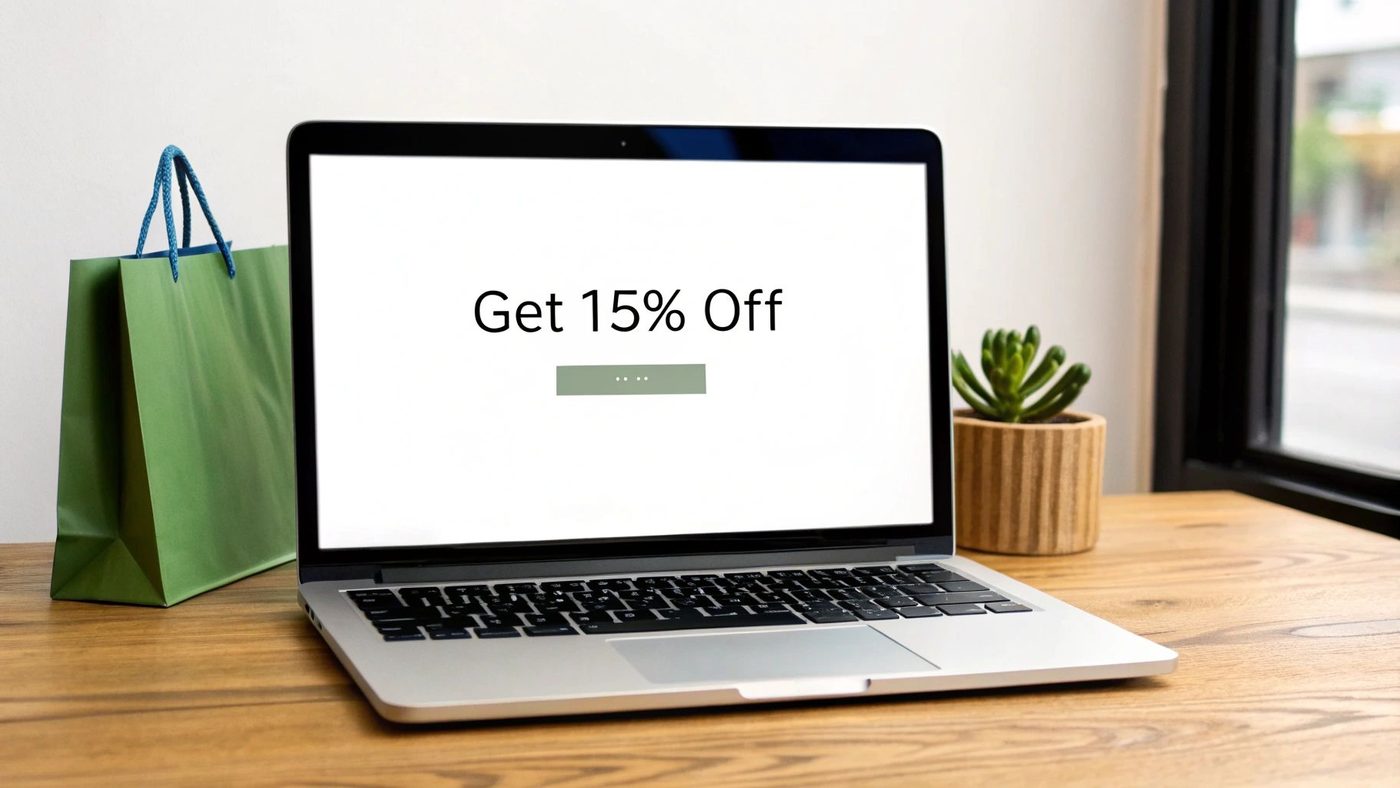
Every visitor who lands on your Shopify store is a potential customer. The real question is, are you giving them a compelling reason to hand over their email? Just having a "Subscribe" link tucked away in your footer isn't going to cut it if you're serious about building a powerful list for email marketing to generate leads.
You have to transform your site from a passive storefront into an active, engaging lead-capture system. This means moving beyond static sign-up forms and embracing dynamic tools like pop-ups. I know, the word "pop-up" might make you cringe, but modern pop-ups are a different beast. When done right, they present a clear, valuable offer at the perfect moment, converting anonymous browsers into engaged subscribers.
Designing an Irresistible Offer
The heart of any great on-site lead capture strategy is the lead magnet—the specific incentive you offer in exchange for an email. Your goal is to provide something so valuable that a visitor feels like they're getting a fantastic deal.
A generic "sign up for updates" message just doesn't have much pull. Instead, you need to focus on instant, tangible value. For most Shopify stores, this boils down to a few proven categories:
- Discounts and Coupons: A classic for a reason. Offering 15% off a first order works because it directly incentivizes a purchase and provides immediate gratification.
- Exclusive Content: Think bigger than just sales. A downloadable "Style Guide," a "Beginner's Guide to [Your Niche]," or an exclusive lookbook can position you as an expert and attract people genuinely invested in your products.
- Early Access & VIP Perks: Create a sense of community by granting subscribers early access to new product drops or exclusive sales. Shoppers love feeling like they're part of an inner circle.
Your lead magnet isn't just an afterthought. It's the first promise you make to a new subscriber. A strong offer shows you value their attention and sets a positive tone for the entire customer relationship.
The best lead magnet is one that aligns perfectly with your brand and what your customers actually want. For a high-end fashion store, a curated style guide might outperform a small discount. For a store selling supplements, an educational guide on wellness routines could be the winning ticket.
Implementing High-Converting Pop-Ups with Email Wiz
Once you’ve nailed down a compelling offer, you need an effective way to present it. This is where a tool like Email Wiz shines, letting you set up smart, on-brand pop-ups in minutes without touching a line of code. The platform is designed to make this process seamless, automatically pulling your store’s branding to create a pop-up that feels like a natural part of your site.
The key to a pop-up that converts instead of annoys lies in its timing and targeting. Here are a few best practices I always recommend:
- Use an Exit-Intent Trigger: Don't bombard visitors the second they arrive. Instead, set the pop-up to appear when their cursor moves toward the "close" button. This is a brilliant way to capture their attention right before they leave, turning a potentially lost visitor into a new lead.
- Set a Time Delay: Configure the pop-up to appear after someone has been on your site for a bit, say 30 seconds. This ensures you're engaging with users who have already shown some genuine interest in your products.
- Keep the Form Simple: Only ask for what you absolutely need. For most lead capture forms, an email address is enough. Every extra field you add—name, phone number, etc.—creates friction and can tank your conversion rate.
- Craft Compelling Copy: Your headline needs to grab attention and clearly state the offer (e.g., "Get 15% Off Your First Order"). Keep the body copy brief and benefit-focused, and use a clear call-to-action like "Unlock My Discount" instead of a generic "Submit."
With Email Wiz, these settings are incredibly easy to configure. The AI-powered copywriter can even help you generate persuasive text for your pop-up, ensuring your message truly connects with shoppers.
For a deeper dive into growing your subscriber base, check out our guide on how to master list-building email strategies for higher conversions. Getting this foundational work right is crucial for turning your traffic into a reliable source of revenue.
Turning New Leads Into Customers With Smart Email Automation
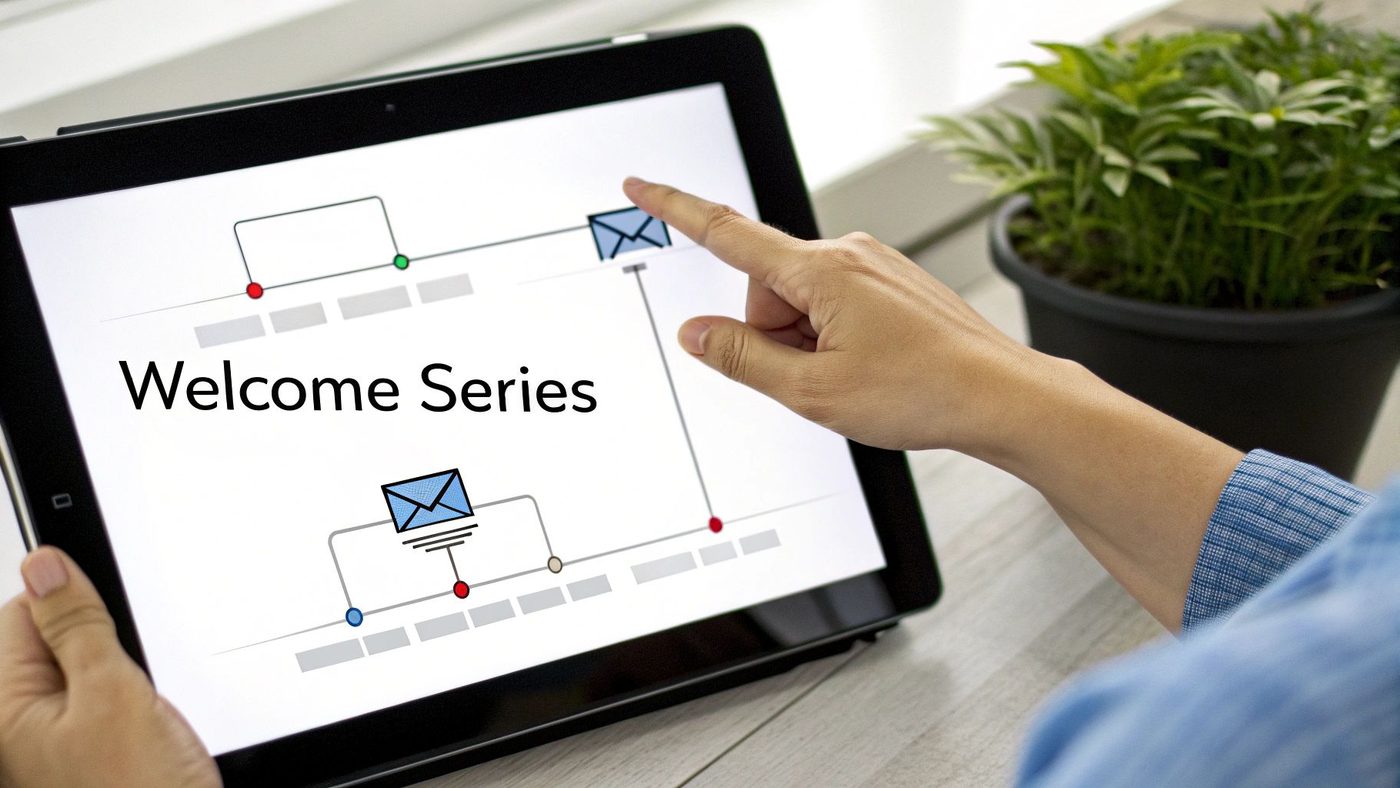
Getting that email address with a great pop-up is a fantastic first step. But let's be honest, that's just the starting line. Now the real work begins: turning that flicker of interest into a genuine customer relationship. This is where automated email flows become your store's secret weapon.
Instead of trying to manually send the perfect message to every new subscriber (which is impossible), you build automated sequences—or "flows"—that do the heavy lifting for you. Think of these as your best salesperson, working 24/7 to welcome new leads, tell your brand's story, and guide them toward their first purchase.
Your Most Important Automation: The Welcome Series
If you only build one automated flow, make it a welcome series. It’s your first real conversation with someone in their inbox, and that first impression is everything. This isn't just about mechanically sending a discount code. It’s about rolling out the red carpet and making them feel like they've just discovered something special.
A great welcome flow does a few critical things right away:
- Delivers the Goods: The very first email has to deliver on the promise you made. If you offered 15% off, that code needs to be front and center. No delays.
- Shares Your Story: Who are you? What's your "why"? This is your chance to build a connection that goes deeper than a simple transaction.
- Highlights Your Heroes: New visitors don't always know where to start. Show them your best-sellers and customer favorites to make their decision easy.
- Builds Instant Trust: Weave in some social proof, like a glowing customer review or a press mention, to show them they’re in good hands.
Setting this up in a tool like Email Wiz is thankfully a breeze. They have pre-built welcome series templates designed specifically for Shopify stores, so you can get a professional, multi-email sequence live in minutes, not hours.
Your welcome series has one primary job: convert that initial burst of interest into a sale. By blending a warm welcome with a clear path to purchase, you capitalize on that peak engagement moment and drive that all-important first purchase.
Anatomy of a High-Converting Welcome Flow
So, what does a winning welcome series actually look like? Let’s map out a classic three-email flow for a fictional Shopify store that sells sustainable activewear. You can easily adapt this proven structure for your own brand.
Email 1: Sent Immediately
- Subject Line: Welcome! Here’s Your 15% Off
- Content: Get straight to the point. Deliver the discount code right at the top. Keep the design clean, with a single, clear "Shop Now and Save" button.
Email 2: Sent 1 Day Later
- Subject Line: Our Story & Why It Matters
- Content: Now you shift from selling to storytelling. Talk about your commitment to sustainability, the unique materials you use, or the problem you set out to solve. This builds an emotional connection.
Email 3: Sent 3 Days Later
- Subject Line: Meet the Fan Favorites
- Content: Showcase 3-4 of your best-selling items. Use amazing product photos and include a short snippet from a 5-star review under each one. This combination of visuals and social proof is incredibly persuasive.
This simple sequence masterfully guides a new lead from a transactional mindset ("I want a discount") to an emotional one ("I really like what this brand stands for") and finally, to a confident one ("That product is perfect for me").
Beyond the Welcome: Smart Nurture Sequences
The welcome series is your opening act, but the show doesn't end there. Other automated flows can keep your audience engaged and moving toward their next purchase.
Here are a few ideas to get you started:
- An Educational Series: Perfect if you sell something with a learning curve, like specialty coffee or advanced skincare. You could create a 5-day flow teaching brewing techniques or explaining ingredient benefits.
- A Behind-the-Scenes Flow: People love feeling like insiders. Give them a peek at how your products are made, introduce them to the team, or share the story behind a new design. It builds incredible brand loyalty.
- A VIP Early Access Flow: Use your email platform to automatically tag your most engaged subscribers as "VIPs." Then, create flows that give this group exclusive early access to sales or new product drops.
The magic of automation is delivering these kinds of personal-feeling experiences at scale. The data doesn't lie—segmented and personalized campaigns just work better. Industry reports for 2024–2025 show that segmentation can boost revenue by as much as 760%, and personalized content can increase click-through rates by around 41%.
These aren't just small improvements; they're game-changers. For a deeper dive, check out our guide on the 5 automated email flows that will skyrocket your Shopify sales. By setting up these intelligent journeys, you create a powerful, hands-off system that turns new leads into loyal customers while you focus on running your business.
Using Smart Segmentation to Drive More Sales
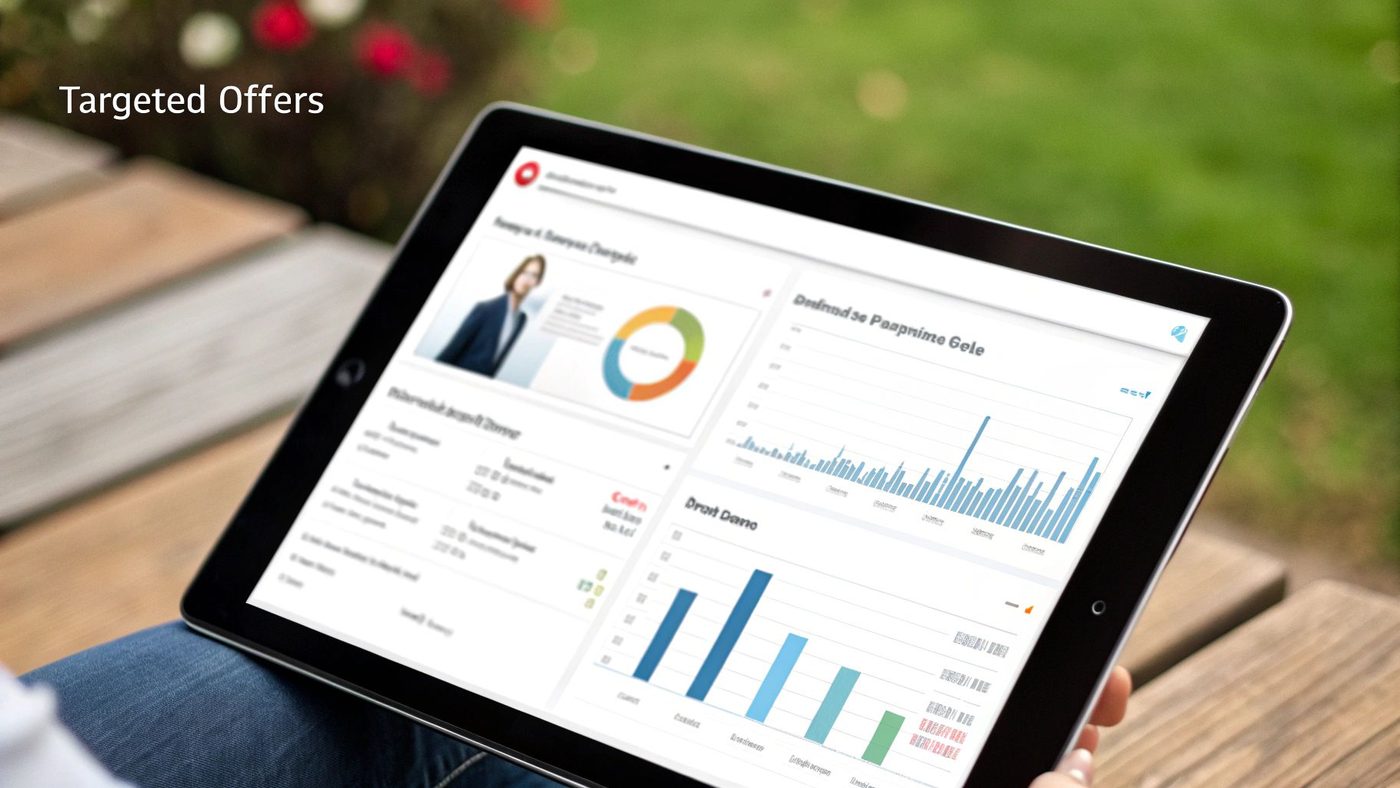
Sending the same generic email to everyone on your list is a one-way ticket to the spam folder. Today’s shoppers have high expectations for relevance. If your message doesn't click with their specific needs or interests, they won't hesitate to tune you out. This is precisely where smart segmentation comes in, transforming your email marketing from a loudspeaker into a one-on-one conversation.
Segmentation is simply the practice of dividing your email list into smaller, more focused groups—or segments—based on shared characteristics. Instead of a single, massive list, you’ll have a collection of micro-lists filled with people who have similar behaviors, interests, or purchase histories. This shift allows you to send hyper-relevant messages that truly resonate, leading to much higher engagement and, ultimately, more sales.
Just think about it: would you pitch a new line of men's running shoes to a customer who has only ever bought women's yoga pants? Of course not. Segmentation prevents these kinds of obvious misfires and makes sure your subscribers get content they genuinely care about.
Building Your Core Customer Segments
The real power here is that you're using data your Shopify store already collects. You don’t need to be a data scientist; you just need to know where to look. With a tool like Email Wiz, which plugs directly into your Shopify data, creating these segments becomes an almost effortless, automated process.
Here are a few of the most impactful segments you can start building right away:
- Purchase History: Group customers by what they've bought. You can get as granular as you want, creating segments for specific products (e.g., "bought running shoes") or broader categories ("bought athletic wear").
- Customer Status: Differentiate between your customer types. This means creating distinct groups for new customers, repeat buyers, high-spending VIPs, and even at-risk customers who haven't made a purchase in a while.
- Engagement Level: Not every subscriber is the same. Group them based on how they interact with your emails, creating segments like "frequent openers," "clicked in the last 30 days," or "inactive subscribers."
- Browsing Behavior: Keep an eye on what people are looking at on your site, even if they don't buy. Segments like "viewed product X but didn't purchase" are pure gold for targeted follow-up campaigns.
Segmentation is the engine of personalization. It moves you beyond just using a first name and allows you to tailor the entire message—from the subject line to the product recommendations—to a subscriber's unique journey with your brand.
For Shopify store owners, this is the key to unlocking hidden revenue from your existing list. By sending the right message to the right person at the right time, you dramatically increase the odds of making a sale.
Practical Examples of Segmentation in Action
Let's make this real. Imagine you run a Shopify store selling artisanal coffee beans. How would you use segmentation to drum up more leads and sales?
Scenario 1: Targeting High-Value Customers
You create a segment called "VIP Coffee Connoisseurs" that includes anyone who has spent over $200 in the last six months. Instead of a generic sale email, you send this group an exclusive offer for early access to a rare, limited-batch Geisha coffee. The message feels special, acknowledges their loyalty, and makes them far more likely to jump on the offer.
Scenario 2: Re-engaging Lapsed Subscribers
You build a segment of subscribers who haven't opened an email in 90 days. You can hit them with a playful "We Miss You!" campaign that includes a compelling 20% off offer to win them back. This targeted approach is infinitely more effective than just continuing to send them your standard weekly newsletter.
Implementing Dynamic Segments in Email Wiz
The beauty of a platform like Email Wiz is how it automates this entire process. There's no need to manually update lists or fiddle with CSV files. You just set the rules once, and the segments update themselves in real time.
For instance, when a new customer makes their second purchase, Email Wiz can automatically move them from the "First-Time Buyers" segment into the "Repeat Customers" segment. This ensures they immediately start receiving messages tailored to loyal customers, like an invitation to join your rewards program.
This dynamic approach is crucial for scaling your email marketing to generate leads effectively. It guarantees your messaging stays timely and relevant, no matter how big your list gets.
By moving beyond one-size-fits-all email blasts, you'll build stronger relationships, boost customer lifetime value, and turn your email list into a predictable, revenue-driving machine. To dive deeper into this, we have a complete guide that details how to segment your email list and drive growth. This strategy is foundational to building a sophisticated email program that truly connects with your customers.
How to Measure and Optimize Your Email Performance
So, you’ve got your lead magnets pulling in subscribers and your automated flows are running. Great. But how do you actually know if any of it is working? The single biggest mistake I see Shopify owners make is treating email marketing as a “set it and forget it” channel.
To really win at this, you need to think like a scientist. You have to measure, analyze, and constantly tweak your approach. Your data is your most valuable asset here. Every email you send is a tiny experiment, and the results tell you exactly what your audience wants (and what they don't).
Diving into your analytics isn't about getting lost in spreadsheets. It's about understanding the story your numbers are telling so you can make smarter decisions that actually drive growth.
Focusing on the KPIs That Matter
Not all metrics are created equal, especially when your goal is generating leads with email. Vanity metrics might give you a temporary ego boost, but they don’t always translate to sales. Inside Email Wiz, the dashboard cuts through the noise and highlights the key performance indicators (KPIs) that directly impact your bottom line.
Here are the core numbers you absolutely must be tracking:
- Sign-up Rate: How well are your on-site pop-ups converting visitors into subscribers? A low rate might mean your offer isn't juicy enough or your pop-up's timing is off.
- Open Rate: What percentage of subscribers actually open your email? This is a direct reflection of your subject line’s power to grab attention in a very crowded inbox.
- Click-Through Rate (CTR): Of those who opened, what percentage clicked a link? This tells you how compelling your email's content, offer, and call-to-action (CTA) really are.
- Conversion Rate: This is the big one. What percentage of email recipients ended up buying something? This metric connects your email efforts directly to revenue.
- Unsubscribe Rate: A high number here is a major red flag. It could mean your content is missing the mark, you’re emailing too often, or your list segmentation needs a serious rethink.
Key Email Lead Generation Metrics and Industry Benchmarks
To give you a starting point, here are the essential metrics to track for your email lead generation campaigns, along with typical e-commerce industry averages to aim for.
| Metric | What It Measures | Good E-commerce Benchmark |
|---|---|---|
| Sign-up Rate | The percentage of site visitors who subscribe to your email list. | 1% - 5% |
| Open Rate | The percentage of recipients who opened a specific email. | 21% - 27% |
| Click-Through Rate (CTR) | The percentage of email openers who clicked on a link. | 3% - 5% |
| Conversion Rate | The percentage of email recipients who made a purchase. | 1% - 3% |
| Unsubscribe Rate | The percentage of recipients who unsubscribed from your list. | Under 0.2% |
Don't panic if your numbers aren't there yet—think of these as targets. They give you a clear goal to work toward as you start optimizing.
Measuring performance isn't just about getting a report card—it's about getting a road map. Each data point, whether good or bad, is a clue that tells you exactly where to focus your energy for the biggest impact.
The Art of A/B Testing Your Way to Success
Once you’re tracking your core KPIs, it's time to start actively improving them. The best way to do that is with A/B testing (or split testing).
The idea is simple: you create two versions of a single email, change just one element (like the subject line), and send them to different halves of your audience to see which one performs better.
It’s a powerful, data-driven way to eliminate guesswork. Instead of wondering what your audience prefers, you let their actions give you the definitive answer. Email Wiz has A/B testing built right in, making it incredibly easy to run these experiments.
What should you test? Start with these high-impact elements:
- Subject Lines: Pit a straightforward, benefit-driven subject line against one that sparks curiosity or uses an emoji.
- Calls-to-Action (CTAs): Test different button copy (e.g., "Shop Now" vs. "Claim My Discount") or even different button colors.
- Offers: Does a 20% discount get more clicks than a "Free Shipping" offer? Testing is the only way to know for sure.
- Email Copy: Experiment with a shorter, punchier email versus a longer, more story-driven one to see what style resonates.
By continuously testing and implementing what you learn, you create a feedback loop of constant improvement. A tiny 1% lift in your conversion rate from a single test can add up to thousands of dollars in revenue over a year.
To truly understand the impact of your campaigns, you need to learn how to calculate marketing ROI and prove the value of your efforts. This data-driven mindset is what separates the amateurs from the pros.
Email Marketing for Lead Generation: Takeaway
Ready to put all this into practice? Email Wiz can set up your entire Shopify email marketing system in seconds, from the pop-ups that capture leads to the automated emails that nurture them. Start generating more leads and sales today.
Frequently asked questions
- What’s the Best Lead Magnet to Use?
- There's no magic bullet here. The "best" lead magnet is completely tied to your brand and who you're trying to reach. For most e-commerce stores, a simple discount like 15% off their first order works wonders. It’s an easy, low-commitment offer that directly nudges them toward that first purchase. The value is immediate, and everyone gets it. But what if you sell something that requires more thought, like a specialized hobby kit or premium skincare? In that case, an educational resource often performs better. A store selling high-end skincare could offer something like a "5-Step Guide to a Glowing Morning Routine." This builds trust, positions you as an expert, and attracts people who are serious about the topic, not just hunting for a deal. Key Takeaway: The most effective lead magnet speaks directly to your customer's motivation. Figure out if they're after a quick win or in-depth knowledge, and you'll know exactly what to offer.
- How Often Should I Be Emailing My List?
- This is the classic tightrope walk of email marketing. You need to stay on their radar without becoming that brand they instantly delete. While there’s no universal rule, a solid starting point for most Shopify stores is sending one to two emails per week, not counting your automated flows like the welcome series. What matters far more than the exact frequency is consistency and value. If your list knows they’ll get a genuinely helpful email from you every Tuesday, they’ll start looking for it. But if you only pop up when you have something to sell, you’ll get ignored. Fast. Here’s a simple way to think about it: Weekly Newsletter: Send one high-value email a week. Mix in useful content, behind-the-scenes stories, and a soft-sell promotion. Targeted Campaigns: Layer in extra emails for specific events or segments—think a special offer for your best customers or an announcement for a new product launch. At the end of the day, your subscribers will tell you what works. Keep a close eye on your engagement metrics. If your open rates start to dip and unsubscribes creep up, it’s a clear signal to adjust your strategy. Let the data be your guide.