How to Improve Customer Retention A Shopify Playbook
Discover how to improve customer retention for your Shopify store. This playbook shares proven email strategies to build loyalty and drive repeat sales.

When you're serious about improving customer retention, your focus needs to shift. It's less about the initial sale and more about building a genuine relationship through smart, personalized email marketing. This approach is what turns one-time buyers into loyal fans who feel seen and valued, and it directly pads your bottom line without the sky-high cost of acquiring new customers.
Why Email Is Your Greatest Retention Tool
In the e-commerce world, rising ad costs have made finding new customers a punishingly expensive game. While growth is obviously important, the real secret to long-term profitability for your Shopify store is keeping the customers you’ve already won over.
This is where email marketing steps in as your most powerful asset. It's not just for blasting out sale announcements; it's a strategic engine for building lasting relationships.
Think about it. Every single person on your email list has already raised their hand and shown interest. They've given you a direct line to their inbox, a channel you completely own. It's a space that's safe from unpredictable algorithm changes and out-of-control ad bids, giving you a reliable way to connect with your audience. Focusing on retention means you stop chasing one-off transactions and start cultivating a community that comes back for more.
The Financial Impact of Retention
Let's talk numbers, because they don't lie. It is dramatically more cost-effective to keep an existing customer than it is to acquire a new one. Even a tiny improvement in your retention rate creates a massive ripple effect on your revenue.
Here's the stat that should make every store owner sit up straight: increasing customer retention by just 5% can boost profits anywhere from 25% to 95%. This isn't just some business school theory; it’s a proven reality that shows just how essential email is for sustainable growth. If you want to dive deeper, you can find more powerful retention statistics that break down the modern e-commerce landscape.
For Shopify merchants, this is a game-changer. It means your automated welcome series, abandoned cart reminders, and post-purchase follow-ups aren't just "nice-to-haves." They are direct, high-leverage investments in your store's future profitability.
Automated Emails Drive Consistent Revenue
The real magic of email is automation. Unlike one-off campaigns that demand constant attention, automated email flows work for you around the clock, engaging customers at the most critical moments of their journey. You get to create a personalized, one-on-one experience at scale, making every customer feel important without you manually hitting "send."
These automated flows are triggered by specific customer actions, making them incredibly timely and relevant. This is the difference between a generic billboard on the highway and a helpful, personal conversation.
To put this into perspective, let's compare how automated emails perform against your standard promotional campaigns. The difference is stark.
Automated Email Performance vs Industry Benchmarks
| Metric | Automated Emails (e.g., Welcome, Abandoned Cart) | Standard Email Campaigns |
|---|---|---|
| Open Rate | 30-50% | 15-25% |
| Click-Through Rate | 5-15% | 2-5% |
| Conversion Rate | 3-10% | 0.5-2% |
This data, often visualized on a dashboard from a platform like Email Wiz, shows the undeniable revenue-generating power of automation.
It's clear that flows like welcome series and cart recovery sequences consistently outperform standard campaigns. They’re not just sending messages; they're responding to customer behavior in real-time, which is why they are so effective at nurturing relationships and driving those crucial repeat purchases.
Laying the Foundation with Automated Retention
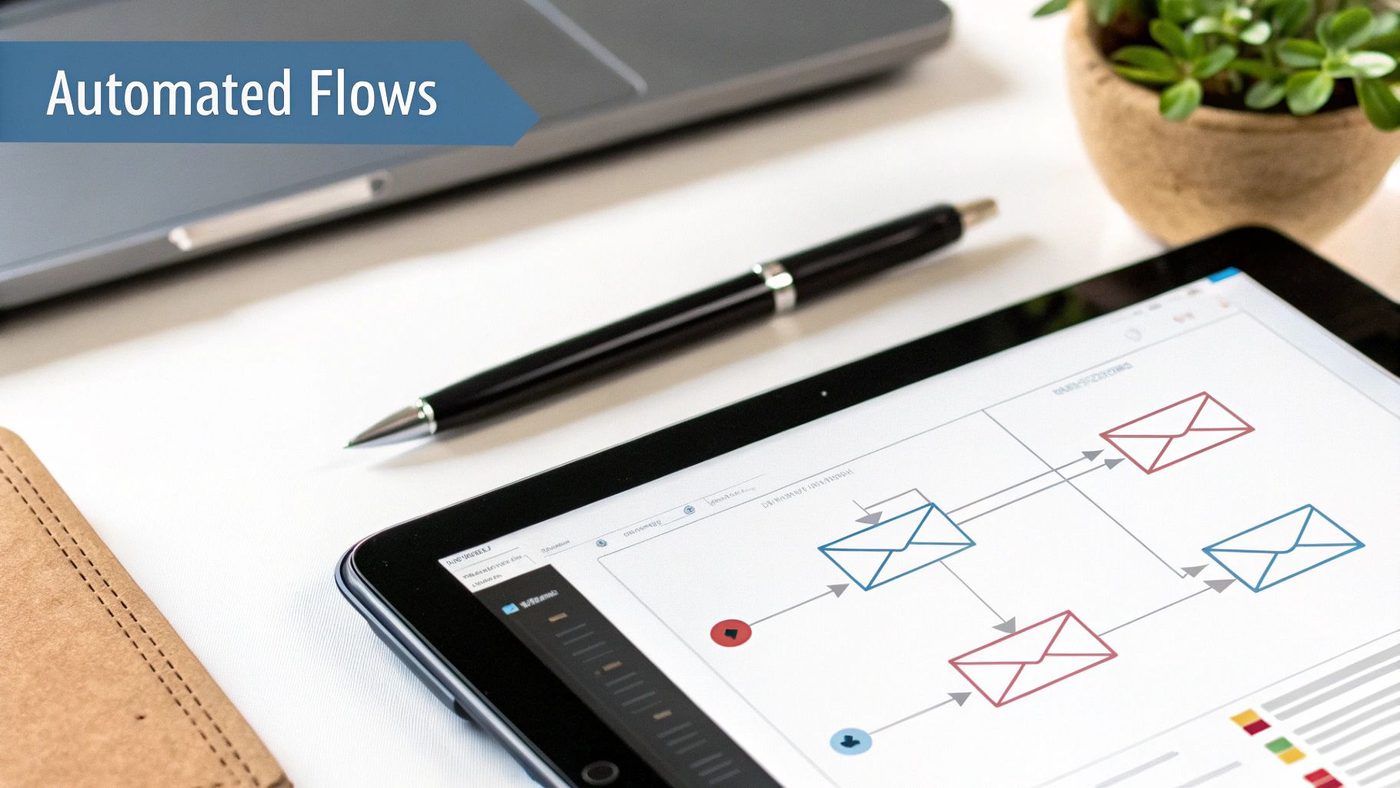
This is where the real magic happens. Automated email flows are the tireless workhorses of your Shopify store, showing up for your customers at just the right moments—all without you lifting a finger. Think of them as your best salesperson, working 24/7 to welcome newcomers, win back lost sales, and build rock-solid trust after every purchase.
Honestly, setting up these core sequences is the single biggest lever you can pull to boost customer retention right out of the gate. They ensure every single customer gets a consistent, thoughtful experience that builds the relationship from their very first click.
Nail the First Impression with a Welcome Series
Your welcome series is your digital handshake, and you only get one chance to make it count. This isn't just a generic "thanks for signing up" email. It’s a carefully planned sequence designed to make a stellar first impression, set expectations, and guide a new subscriber smoothly toward their first purchase.
A truly great welcome flow does more than just dangle a discount. It needs to tell your brand's story, shine a spotlight on your best-sellers, and build confidence with real social proof. The goal is to make subscribers feel like they've just joined an exclusive club, not just another mailing list.
Here’s a simple but incredibly effective three-email cadence to get you started:
- Email 1 (Immediate): Deliver the goods! Send whatever you promised for signing up (like 10% off), briefly introduce your mission, and give them a taste of what's to come. Keep it short, sweet, and all about value.
- Email 2 (1-2 Days Later): Pull back the curtain. Share your brand's origin story or what makes your products different. This is a great spot to introduce a few of your best-selling items to help them start browsing.
- Email 3 (3-4 Days Later): Build that crucial trust. Showcase customer testimonials, user-generated photos, or media shout-outs to calm any lingering purchase jitters.
A well-crafted welcome series can be the difference between a one-time visitor and a lifelong customer. By educating and exciting new subscribers, you’re not just trying to make a sale; you're inviting them into your world. That’s the first real step toward loyalty.
Recapture Lost Sales with Abandonment Flows
Let's talk about the lowest-hanging fruit in all of ecommerce. If you don't have browse and cart abandonment flows running, you're leaving money on the table. It's that simple. These emails automatically trigger when a shopper looks at a product or adds it to their cart but then bounces. They are your safety net, catching potential customers before they're gone for good.
The psychology is straightforward. These shoppers were this close to buying. Life just got in the way—the dog started barking, a work call came through, or they just wanted to price-shop for a minute. A gentle, well-timed reminder is often all it takes to bring them right back. In fact, using a pre-built cart abandonment series from a tool like Email Wiz can lead to 82% higher recovered sales on average. That's a massive impact.
Build Trust and Secure the Next Sale with a Post-Purchase Sequence
So many stores go completely silent the moment a sale is made. This is a massive mistake. The post-purchase window is when your customer is most excited and engaged with your brand. A thoughtful post-purchase flow doesn't just ride that wave of excitement—it uses it to build trust and pave the way for their next order.
This isn't complicated. The sequence simply confirms their purchase, shares shipping updates, and offers helpful info about the product they just bought. It's also the perfect opportunity to ask for a review or introduce them to your loyalty program.
Try a simple three-part flow like this:
- Order Confirmation (Immediately): Give them peace of mind that the order went through. A simple thank you and a clear summary of their purchase is all you need.
- Shipping Confirmation (When it Ships): This is a must. Provide the tracking number and an estimated delivery date. This transparency dramatically cuts down on "where's my order?" support tickets.
- Post-Delivery Check-in (7-14 Days After Delivery): Circle back to see how they're loving their new item. Ask for a review, offer a pro-tip for using the product, or suggest a complementary item.
These automated touchpoints prove you care about the experience long after the credit card is swiped. For even more advanced strategies to streamline these interactions, a good AI Customer Service Automation Guide can be a game-changer. By automating these core communications, you create a seamless journey that gives customers every reason to come back.
Driving Repeat Purchases with Advanced Automations
So, you've got your essential email flows humming along. That's a huge win, and your retention strategy is already in a great place. But to really crank the dial on effective customer retention strategies, we need to get proactive. It’s time to build the next layer of automations—the ones that don't just react to what customers do but actually create new reasons for them to come back.
These more advanced sequences are all about re-engaging customers at just the right moment in their journey. They’re smart enough to anticipate needs, reward your best customers, and bring shoppers who've gone quiet back into the fold. This is how you build a sophisticated retention engine that drives predictable, repeatable revenue.
Re-Engage Lapsed Customers with a Winback Series
Look, no matter how amazing your products are, some customers will just go quiet. It happens. A customer winback series is your game plan for bringing these people back. It's so much cheaper to reactivate an old customer than to find a new one, which makes this one of the most powerful automations you can build.
This sequence usually targets customers who haven't bought anything in a specific timeframe, say 90 or 120 days. The goal is simple: remind them why they liked you in the first place and give them a compelling nudge to return.
I've seen this three-part cadence work wonders for countless stores:
- Email 1 (The Gentle Nudge): Kick things off with a simple "We Miss You" message. Keep the tone light and friendly. This is a great chance to show them what's new since they last stopped by.
- Email 2 (The Incentive): If the first email didn't get a click, it's time to sweeten the deal. A real incentive, like 20% off or free shipping, can be the push they need. Frame it as an exclusive "welcome back" gift just for them.
- Email 3 (The Last Call): This is where you introduce a little friendly urgency. Let them know their special offer is about to expire. You'd be surprised how many on-the-fence customers convert with this final reminder.
Drive Predictable Revenue with Replenishment Reminders
If you sell anything that runs out—coffee, skincare, supplements, you name it—replenishment reminders are an absolute must. These automations are genius because they're triggered based on how long a product typically lasts, reminding customers to reorder just before they're about to run out. It feels helpful, not pushy.
For example, if you sell a 30-day supply of vitamins, you can schedule an email to land in their inbox around day 25. The message is simple and direct: "Running low? Reorder now so you don't miss a day."
This automation is pure gold because it’s based on a genuine customer need. You're not just pushing a product; you're solving a problem for them. It's a simple, effective tactic that builds habit and transforms one-time buyers into subscribers.
Setting this up is straightforward. In a platform like Email Wiz, you can create triggers based on the specific product someone bought and the time that’s passed since the purchase. Just be sure to link directly to the product page to make reordering a one-click affair.
Cultivate Loyalty with Exclusive VIP Campaigns
Let's be real: your best customers deserve the best treatment. They're often the top 20% of your audience driving 80% of your revenue. VIP campaigns are all about rolling out the red carpet, acknowledging their loyalty, and making them feel like true insiders. This goes way beyond just discounts; it’s about building a sense of community and exclusivity.
First things first, you have to decide what "VIP" means for your brand. You could base it on:
- Lifetime Spend: Anyone who has spent over a certain amount (e.g., $500).
- Purchase Frequency: Customers who have made a specific number of purchases (e.g., 5+ orders).
- A Combination of Both: A hybrid approach that pinpoints your most valuable and engaged shoppers.
Once you’ve segmented this elite group, you can start crafting campaigns just for them.
Actionable VIP Campaign Ideas
- Early Access to Sales: Give your VIPs a 24-hour head start on big sales like Black Friday. This costs you nothing but makes them feel incredibly valued.
- Exclusive Product Previews: Before a new product goes live for everyone, let your VIPs see it—or even buy it—first. This builds massive excitement and cements their insider status.
- Surprise and Delight Offers: Send an unexpected gift out of the blue. It could be a free product with their next order or a surprise high-value discount with a message like, "Just a small thank you for being one of our best customers."
When you put them all together, these advanced automations create a powerful, layered approach to retention. By proactively engaging customers at these key moments, you stop waiting for the next sale and start creating it. This is how you build a loyal, profitable customer base that becomes the engine for your Shopify store's growth.
Using Personalization to Boost Customer Loyalty
If automated email flows are the foundation of your retention strategy, then personalization is what turns that foundation into a revenue-generating machine. Blasting the same generic message to your entire list is a surefire way to get ignored. Real customer loyalty happens when people feel like you actually get them.
This is where smart segmentation changes the game. By grouping customers based on how they behave and what they like, you can send messages that are incredibly relevant. Your marketing starts to feel less like a megaphone and more like a helpful conversation.
Grouping Customers for Maximum Impact
Good segmentation isn't about creating dozens of overly complex rules. It’s about starting with a few high-impact groups that let you tailor your messaging in truly meaningful ways. For just about any Shopify store, these are the segments you should build first.
Here are the essentials:
- First-Time vs. Repeat Buyers: The way you talk to someone who just made their first purchase should be completely different from how you engage a five-time loyal customer.
- High-Spenders vs. Bargain Hunters: Identify your VIPs and those who only seem to buy during a sale. This lets you roll out the red carpet for your best customers and send targeted discount campaigns to the price-sensitive crowd.
- Product Interests: Group customers based on the specific products or categories they’ve bought or browsed. This is your key to unlocking powerful cross-sells and upsells.
- Engaged vs. At-Risk Subscribers: Keep tabs on who consistently opens your emails versus who hasn't clicked in 90 days. This allows you to nurture your fans and create specific win-back campaigns for those who’ve gone quiet.
It's no surprise that 80% of marketers see email as their top channel for retention. When done right, automated emails can pull in impressive 42.1% open rates.
Turning Segments into Profitable Campaigns
Once you have these groups defined, the real fun begins. You can now craft campaigns that speak directly to each segment's needs and motivations. This is a critical step in building a system that measurably improves customer retention.
Let's walk through a couple of real-world examples. Imagine you sell high-quality, ethically sourced coffee beans.
Scenario 1: The Cross-Sell OpportunityA customer buys a bag of your signature "Morning Ritual" dark roast. Instead of a generic "thanks for your order" email, your automation—powered by a tool like Email Wiz—recognizes this specific purchase.
- Action: Seven days later, an email goes out specifically about your best-selling French press. It even includes a short guide on getting the perfect brew from dark roast beans. It's a perfectly timed and highly relevant cross-sell.
Scenario 2: The VIP TreatmentYou've created a segment of customers who have spent over $300 in the last six months. These are your VIPs, and they deserve to be treated that way.
- Action: You're about to launch a new single-origin espresso blend. You send an email to this VIP segment 24 hours before the public launch, thanking them for their loyalty and giving them exclusive first access.
This simple act of recognition costs you nothing, but it makes your best customers feel like true insiders. It deepens their connection to your brand, making it much less likely they'll ever shop with a competitor.
Ultimately, personalization is just about paying attention. It proves you understand what a customer likes and what they might need next. To really dig into what drives these connections, you can explore the most direct causes of customer loyalty. Every personalized interaction is another deposit into the bank of customer trust—an asset that will pay dividends for years.
Your 90-Day Plan to Better Customer Retention
An idea without a plan is just a wish. You know which email automations you need, but getting them live in a way that doesn't feel overwhelming is the real challenge. That's where this roadmap comes in. It’s built for busy Shopify owners who need a clear, step-by-step playbook to build a retention machine that actually works.
Forget trying to boil the ocean. We're going to break this down into three manageable 30-day sprints. Each phase builds on the last, so you'll create a solid foundation before adding more advanced strategies. Think of this as your guide to turning email marketing into a reliable, predictable source of revenue.
Days 1-30: Building the Foundation
Your first month is all about getting the absolute essentials live. The goal is to capture the low-hanging fruit and make sure every new customer gets a consistent, welcoming experience from the moment they join your list. Don't chase perfection here; just focus on getting these core automations up and running.
Here’s what you'll tackle first:
- Go Live with Your Welcome Series: This is your first impression. Set up a simple three-part series to welcome new subscribers, share a bit about your brand's story, and nudge them toward that crucial first purchase.
- Activate Abandonment Flows: Stop leaving money on the table. You need to immediately start recovering sales from shoppers who browse products or add items to their cart but don't check out. A tool like Email Wiz can get these pre-built, high-converting flows launched in minutes.
- Set Up a Basic Post-Purchase Sequence: This is all about building trust after the sale. Automate your order and shipping confirmations and add a simple "thank you" email to the mix. It reassures the customer and sets the stage for their next purchase.
- Establish Baseline KPIs: Start tracking your open rates, click-through rates, and—most importantly—the revenue each new flow generates. You can't improve what you don't measure.
Days 31-60: Ramping Up with Advanced Campaigns
Okay, your core flows are running and bringing in data. Month two is when we get more proactive. We’ll shift from reacting to customer actions to actively creating reasons for them to come back. The goal now is to start intentionally driving repeat purchases.
This is where your strategy gets more targeted:
- Launch a Customer Win-Back Series: It's time to bring back old customers. Identify anyone who hasn't bought from you in 90 days and hit them with a two- or three-part series. A gentle "we miss you" message followed by a compelling offer usually does the trick.
- Create Your First VIP Segment: Figure out what a VIP means for your business. Is it someone with 3+ orders? Or maybe over $250 in lifetime spending? Create this segment—it will become your go-to audience for exclusive offers.
- Run Your First VIP-Only Campaign: Treat your best customers like gold. Give them early access to a new product drop, a special VIP discount, or even just a surprise "thank you" gift. Make them feel seen.
This is the turning point. You’re no longer just sending emails; you're building relationships. You're showing your customers you value their loyalty, which is the secret to long-term retention.
Days 61-90: Time to Optimize and Refine
By now, you have a fully functional retention engine. The final 30 days are all about looking at the data and figuring out how to make it even better. The heavy lifting of building is done; now we're focused on refining, tweaking, and squeezing every bit of ROI out of your email program.
Your work becomes much more data-driven:
- Dig Into Performance Data: Get into the numbers. Which emails are converting the best? Which offers are driving the most sales? Find your winners and figure out why they're working so you can replicate that success.
- A/B Test Your Offers: Start experimenting. In your cart abandonment flow, pit a 15% off coupon against a free shipping offer. Small tests like this can lead to huge lifts in recovered revenue.
- Sharpen Your Segments: Can you get more specific? Instead of just a general post-purchase email, try segmenting customers by the product category they bought from. Then, you can send them highly targeted cross-sell emails that feel incredibly relevant.
This 90-day plan gives you a structured path to not just doing email marketing, but mastering it. By the end, your email list will be your store’s most valuable asset.
To make this even easier to follow, here's a table summarizing your entire 90-day journey.
90-Day Retention Action Plan
| Phase | Key Actions | Primary Goal | KPIs to Track |
|---|---|---|---|
| Days 1-30 | Launch Welcome SeriesActivate Abandonment FlowsSet up Post-Purchase Emails | Establish a foundational email marketing presence and capture immediate revenue opportunities. | Open Rate, Click-Through Rate, Conversion Rate, Revenue Per Recipient (for each flow) |
| Days 31-60 | Build Customer Win-Back SeriesCreate a VIP SegmentLaunch First VIP Campaign | Proactively drive repeat purchases and start fostering customer loyalty. | Repeat Purchase Rate, Customer Lifetime Value (CLV), Churn Rate, Segment Growth |
| Days 61-90 | Analyze flow performanceA/B test offers and subject linesRefine customer segments | Optimize the email program for maximum ROI and long-term customer engagement. | A/B Test Results (uplift), Conversion Rate by Segment, Revenue Per Campaign, List Health |
Following this plan removes the guesswork. It provides a clear, actionable framework to systematically build a powerful retention strategy that drives real, measurable growth for your Shopify store.
Measuring the KPIs That Actually Matter
So, you've built out all these amazing email flows. But are they actually working? If you can’t measure your retention efforts, you’re just guessing.
While it's tempting to obsess over open rates and click-throughs, those are just vanity metrics. They don't tell you if you're building a sustainable business. To get the real story, you need to tie your email strategy directly to the numbers that impact your bottom line.
These are the metrics that show your automations are generating real revenue and turning one-time buyers into loyal fans. This is how you prove your hard work is paying off.
The Retention Metrics You Can't Ignore
Let's cut through the noise. There are three core KPIs every Shopify store owner should be watching like a hawk. These will tell you, without a doubt, how well you're doing.
- Customer Lifetime Value (CLV): This is the big one—the total amount of money you can expect a customer to spend with you over their entire relationship with your brand. When your CLV is going up, it’s the clearest sign that what you’re doing is working. It means people are sticking around and spending more.
- Repeat Customer Rate: Plain and simple, this is the percentage of your customers who come back to buy again. A high repeat customer rate is direct proof that your products are great and your post-purchase experience is nailing it.
- Purchase Frequency: How often does the average customer buy from you? Increasing this number is a massive lever for growth. Think about it: a customer who buys a $50 product four times a year is far more valuable than one who buys a $100 product and disappears forever.
By plugging your email platform, like Email Wiz, directly into your Shopify data, you can connect the dots. You can literally draw a straight line from a specific winback campaign to a real, tangible increase in your store's overall CLV.
This is the shift in mindset that matters. You stop chasing short-term sales and start building a foundation for long-term, predictable growth. That's what a killer retention strategy is all about.
A Few Common Questions
As you start putting these retention strategies into play, a few questions always come up. Here’s my take on what Shopify merchants usually ask when they’re getting started.
How Long Does This Actually Take to Work?
You'll see some quick wins, for sure. A solid cart abandonment flow can start recovering sales within 24-48 hours. But the real, deep-impact stuff? That takes a little more time.
You're looking at metrics like Customer Lifetime Value and Repeat Customer Rate, and those don't change overnight. Realistically, you’ll start to see a meaningful lift in those numbers after about 60-90 days of keeping these systems running consistently. The whole point of the 30/60/90-day plan is to build momentum, with each stage layering on top of the last.
Is This Worth It If I Have a Small Customer List?
Yes, absolutely. In fact, I'd argue it's more important when you're just starting out. When you have a smaller customer base, every single relationship is incredibly valuable.
Getting those foundational welcome and post-purchase series running means every new person who trusts you with their email has a fantastic, engaging experience right from the get-go.
Think of it this way: with a smaller audience, you have a golden opportunity to make every interaction feel personal and meaningful. That’s how you turn your first customers into die-hard fans who will stick with you as you scale.
This is where a tool like Email Wiz really shines. It handles the best-practice automations for you, so you can build that loyal foundation from day one without having to become a full-time email marketer.
How Often Can I Email People Without Annoying Them?
This is the million-dollar question, isn't it? The right cadence really depends on your brand and your audience, but a great place to start is with one promotional campaign or newsletter a week.
Remember, that's separate from all the automated, behavior-triggered emails we've talked about. Things like abandoned cart reminders or a win-back series don't feel like spam because they're directly related to an action the customer took (or didn't take). They're relevant, timely, and often, genuinely helpful.
The key is to think beyond just selling. Mix in helpful content, behind-the-scenes stories, or exclusive perks. As long as you're providing consistent value, your audience will look forward to your emails instead of hitting "unsubscribe."
Effective Customer Retention Strategies: Takeaway
Ready to stop guessing and start automating? Email Wiz can set up your entire Shopify email marketing channel—from welcome series to winback flows—with just one click. Start retaining more customers today.