How to Improve Email Open Rates for Your Shopify Store
- Guy Williams

- Jan 22
- 15 min read
Want to get more people to open your emails? It really comes down to two things: making sure your emails actually land in the inbox, and then writing a subject line they can't ignore.
It all starts with building a solid reputation as a trusted sender. After that, you can focus on crafting killer content for the right people at the right time.
Build a Strong Foundation with Sender Reputation
Before a customer even sees your subject line, your email has to get past the gatekeepers: spam filters. I've seen countless Shopify owners spend hours on beautiful designs and clever copy, only to have their campaigns end up in the promotions tab or, even worse, the spam folder. This is precisely where your sender reputation comes into play.
Think of it like a credit score for your email domain. Email providers like Gmail and Outlook are always watching how you send emails to protect their users. A good reputation signals that you're a legit business, which dramatically boosts your chances of hitting the primary inbox.
Why Authentication Is Non-Negotiable
The technical side of email can feel a bit daunting, but there are a few key settings that are absolutely essential for building trust. These aren't just best practices; they're the new standard for modern email marketing. They essentially act as a digital passport for your brand, proving to the world that your emails are actually from you.
Here are the three big ones you need to have in place:
Sender Policy Framework (SPF): This is a list of all the mail servers authorized to send emails from your domain. It’s like telling the internet, "Only emails from these servers are officially from us."
DomainKeys Identified Mail (DKIM): This adds a secure digital signature to your emails. When an email arrives, the recipient's server checks this signature to make sure nothing was altered along the way.
Domain-based Message Authentication, Reporting, and Conformance (DMARC): This protocol works with SPF and DKIM. It gives instructions to email providers on what to do if an email fails those checks—like whether to reject it, quarantine it, or let it through.
Your sender reputation is the bedrock of your entire email marketing strategy. Without proper authentication, even the most brilliant subject line is useless because the email may never be seen.
Setting these records up is a one-and-done task that pays off forever. Skipping this step is one of the most common mistakes I see, and it directly tanks deliverability. For a step-by-step guide, you can learn more about how Shopify merchants can improve email deliverability and keep your sender score high.
Protecting Your Sender Score
Getting your authentication set up is just the beginning. Keeping your sender score healthy means paying attention to your sending habits over time. Things like high bounce rates, spam complaints, and low engagement are all red flags for email providers. If you’re constantly emailing people who never open or, worse, using a purchased list, you're going to wreck your reputation fast.
To excel in your campaigns, you also need to understand the basics of what is EDM in marketing. Getting these fundamentals right is crucial, because every great strategy starts with reliably reaching the inbox.
Write Subject Lines That Actually Get Opened
Think about your own inbox for a second. It's a battlefield. Order confirmations, meeting reminders, newsletters you forgot you signed up for... it’s crowded. Your subject line is your one and only shot to cut through that noise and make someone pause.
In fact, 47% of people decide whether to open an email based on the subject line alone. That single line of text has to do all the heavy lifting. Get it wrong, and your beautifully designed email might as well not exist. Get it right, and you’ve won the most critical battle for your campaign's success.
Go Beyond the Obvious
We all know the basics by now: don't use all caps, and please, stop using "Weekly Newsletter" as your subject line. That’s table stakes. Truly effective subject lines tap into something deeper—they spark curiosity, promise a clear benefit, or create a little bit of FOMO that’s hard to ignore.
To pull this off, you have to think less like a marketer and more like your customer. What problem can you solve for them right now? What's going to make their day a little better?
Here are a few proven approaches I’ve seen work wonders for Shopify stores:
The Curiosity Gap: Hint at something valuable without giving away the whole story. A skincare brand could try, "The one ingredient dermatologists are buzzing about."
The Direct Benefit: Don't be clever, be clear. A coffee subscription company might use, "Your perfect morning brew is one click away."
Urgency & Scarcity: A classic for a reason. "Last Chance ⏰ 25% Off Ends at Midnight" is direct and motivates immediate action.
Your subject line and preheader are a one-two punch. The subject line grabs their attention, but the preheader is what gives them that final, compelling nudge to actually open the email. Never, ever waste that space.
This combination is your best tool for seeing an immediate lift in open rates. Think of the preheader as the movie trailer's tagline—it should expand on the main hook and add another layer of intrigue.
The Power of Personalization and Emojis
Making a subscriber feel like you're talking directly to them is a shortcut to earning their attention. Personalized subject lines can boost open rates by a whopping 26%, and it goes way beyond just dropping in their first name.
Imagine a subject line that says, "Jessica, still thinking about that Nordic Throw Blanket?" This shows you're paying attention to what they've browsed, making the email feel less like a marketing blast and more like a helpful reminder from a friend.
Emojis are another simple but mighty tool. They add a splash of color and personality that helps your email stand out in a sea of black and white text. Believe it or not, using them strategically can increase open rates by up to 56%. When the average ecommerce open rate is hovering around 42.35%, a well-placed emoji can be the difference-maker.
Don't Neglect Your Preheader
The preheader, or preview text, is that little snippet of text you see right after the subject line in your inbox. It’s some of the most valuable real estate in email marketing, yet it's so often ignored.
If you don't customize it, the email client just pulls in the first few words from your email, which usually ends up being something useless like "View this email in your browser." What a wasted opportunity!
Instead, use that space to build on your subject line's promise:
Subject Line | Bad Preheader (Default) | Good Preheader (Custom) |
|---|---|---|
Our Fall Collection Just Dropped 🍂 | View this email in your browser. | Cozy sweaters, warm scents, and more. |
Your Exclusive VIP Offer Inside | To see images, please enable... | A special thank you just for you. |
Flash Sale Ending Soon! | Having trouble viewing this? | Don’t miss out on 40% off everything. |
Ready to really dig in and master this? Check out our complete guide on 8 email subject line best practices to boost your open rates. By mastering both the subject line and the preheader, you give every single campaign a much better shot at getting seen, read, and clicked.
Use Smart Segmentation and Timing
Sending a brilliant email to the wrong person is like telling a great joke to an empty room—it just doesn't land. The old "batch and blast" method of hitting your entire list with the same message is a fast track to the ignore button.
Modern customers expect relevance. If your email doesn’t speak directly to them and their interests, why would they bother opening it?
This is where segmentation becomes your superpower. When you group your audience into smaller, more focused lists, you can craft messages that resonate on a personal level. The proof is in the numbers: marketers using segmented campaigns have seen as much as a 760% increase in revenue. That’s not a typo. Relevance pays off.
Move Beyond Basic Demographics
For a Shopify store, the most valuable insights don't come from a customer's age or zip code. They come from their actions—what they buy, what they browse, and what they leave behind in their cart. This is behavioral segmentation, and it’s the key to sending emails that feel less like marketing and more like a helpful conversation.
Instead of one generic sale announcement, you can create tailored campaigns for all sorts of different customer groups. This is how you really start to see how to improve email open rates, because every message feels timely and personal.
Here are a few high-impact behavioral segments every Shopify store should have in their playbook:
VIP Customers: These are the people who love you. Segment them by their total spend or number of orders. Give them early access to a new collection or a surprise "thank you" discount. It makes them feel appreciated and keeps them coming back.
First-Time Buyers: A new customer just took a chance on you. Welcome them properly! A follow-up email with tips for their new product or an offer on a related item can turn a one-time sale into a loyal fan.
Window Shoppers: You know, the ones who browse but never buy. This segment is full of subscribers who have looked at specific products but haven’t pulled the trigger. A gentle reminder featuring the items they viewed can be surprisingly effective.
Cart Abandoners: This one's a classic for a reason. Someone who adds an item to their cart is this close to buying. A well-timed abandoned cart email that overcomes a last-minute hesitation (like shipping costs) can recover a massive amount of revenue you’d otherwise lose.
Sending the right message to the right person is only half the battle. You also have to deliver it at the right time. Your data holds the key to unlocking when your audience is most likely to engage.
If you want to go deeper on building these groups, our guide on how to segment an email list is a complete roadmap for getting started.
Master the Art of Send Time Optimization
When your email arrives is just as critical as what's inside it. Sending a campaign at 2 AM is a surefire way to get buried. The goal is simple: land at the top of the inbox right when your subscriber is most likely to be checking it.
While industry benchmarks can give you a general idea, the best timing comes from your own audience's behavior. Your email marketing platform's analytics are a goldmine for this. Dive in and look at when your subscribers have opened and clicked on your emails in the past.
You're looking for patterns. Is there a big spike in opens around lunchtime on Tuesdays? Or maybe first thing Monday morning? Once you spot these peak engagement windows, you can start scheduling your campaigns to hit them.
Day of the Week | Peak Open Time | Example Campaign |
|---|---|---|
Tuesday | 10:00 AM | Perfect for your weekly newsletter or a new product drop. |
Thursday | 8:00 PM | Catch the evening scrollers with a limited-time offer. |
Sunday | 11:00 AM | Launch a weekend sale for people browsing before the new week. |
Don't be afraid to experiment. Try sending a campaign on a Tuesday morning, then run a similar one on a Thursday evening a few weeks later. By constantly testing and checking your results, you can fine-tune your timing until your emails always arrive when your audience is ready to act.
Put Your Revenue on Autopilot with Automated Flows
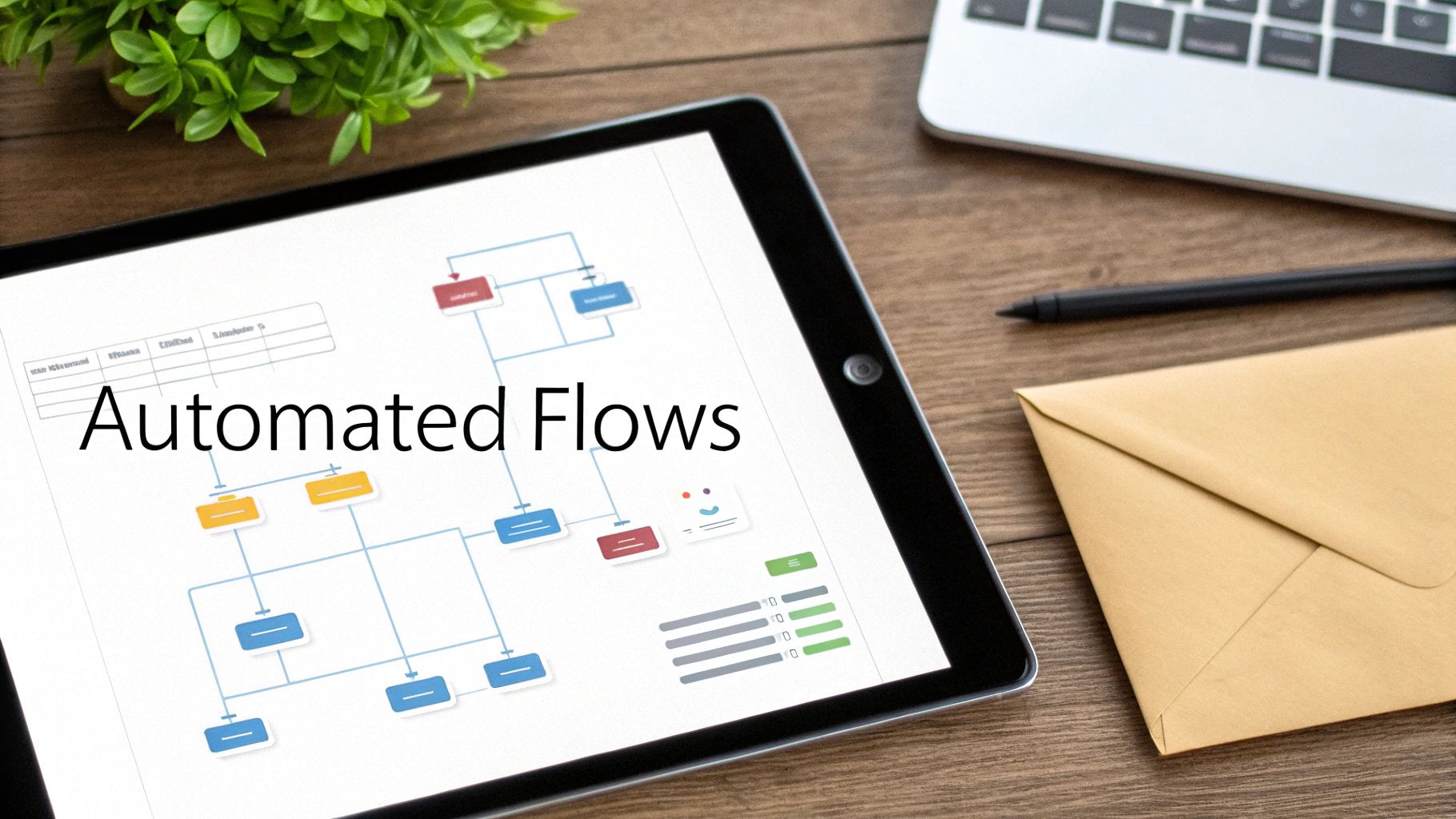
While you're busy crafting weekly newsletters and planning your next big sale, there’s a part of your email strategy that should be working for you around the clock. These are your automated flows—the true workhorses that engage customers at the most crucial moments of their journey.
Think of flows (or sequences) as pre-built conversations triggered by a customer's actions. When someone subscribes, adds an item to their cart, or makes a purchase, your system sends a perfectly timed, relevant message. Done right, they feel less like marketing and more like a genuinely helpful, one-on-one interaction.
Make a Powerful First Impression with Your Welcome Series
Your welcome series is, without a doubt, your single greatest opportunity to hook a new subscriber. The moment someone signs up, their interest in your brand is at its absolute peak. They are literally waiting to hear from you.
This is why welcome emails see incredible average open rates between 69% and 82%. That’s not a typo. These numbers dwarf typical campaign performance, making this flow absolutely critical for driving immediate revenue.
A great welcome series isn’t just a simple "hello." It needs to accomplish a few key things right away:
Deliver the Goods: If you promised a 10% discount for signing up, put it front and center.
Tell Your Story: What makes you special? Share your mission or the unique problem your products solve.
Showcase Bestsellers: Don't make them guess. Guide new subscribers directly to the products people already love.
Recapture Lost Sales with Abandonment Flows
Cart and browse abandonment flows are your safety nets. They’re designed to catch potential customers who showed strong buying intent but, for whatever reason, didn't cross the finish line. Frankly, these are some of the highest-ROI emails you will ever send.
A browse abandonment email is a gentle nudge for a subscriber who viewed a specific product but didn't add it to their cart. Think of it as a helpful store associate asking, "See anything you liked?"
The abandoned cart flow is even more powerful because that person was just one click away from becoming a customer. Your job is to figure out what stopped them and remove that final bit of friction.
Abandonment flows are so effective because they are incredibly timely and relevant. The customer's interest is still fresh, and a well-crafted email can easily overcome last-minute hesitations about shipping costs or simple distractions.
Was it the price? Maybe offer a small discount. Were they unsure about shipping? Clarify your policy. The goal is to make it as easy as possible for them to pick up right where they left off. It's also vital that these emails link to a seamless checkout experience. You can maximize conversion with well-designed Shopify landing pages that perfectly match the email's offer.
Build Loyalty with Post-Purchase and Winback Flows
The relationship doesn't end at checkout. In fact, that's where the real opportunity to build loyalty begins. A simple, automated thank-you email right after a purchase makes customers feel valued and starts paving the way for their next order.
This post-purchase window is also the perfect time to ask for a review, offer tips on how to use their new product, or suggest complementary items. You're keeping the conversation going and turning one-time buyers into lifelong fans.
To really get a handle on what's working, you need to see the data at a glance. In the Email Wiz dashboard, for example, you can quickly see how your flows are performing.
This kind of view instantly shows you which flows are generating the most revenue and getting the best open rates, so you know where to focus your efforts.
Now, let's talk about the other end of the customer lifecycle: winback campaigns. These flows target subscribers who have gone quiet and haven't purchased in a while. It is always cheaper and easier to re-engage a past customer than to find a new one.
Here are a few angles to try in your winback series:
The "We Miss You" Offer: A special, compelling discount to lure them back.
The "What's New" Update: Show off exciting new products they might have missed.
The Feedback Request: Simply ask why they've been away—you'll gather priceless insights.
Setting up a solid foundation of automated flows is like building a machine that nurtures leads, recovers sales, and builds lasting customer relationships—all on its own.
High-Impact Automated Flows for Shopify
Not all flows are created equal. Some have a much bigger impact on open rates and revenue than others. Here’s a quick look at the essential flows every Shopify store should have running.
Automated Flow | Primary Goal | Average Open Rate Potential | Best Practice Tip |
|---|---|---|---|
Welcome Series | Convert new subscribers into first-time customers | 60% - 80%+ | Deliver the sign-up incentive immediately in the first email. |
Abandoned Cart | Recover sales from shoppers who added items to their cart | 40% - 50% | Send the first email within 1-3 hours of abandonment. |
Browse Abandonment | Re-engage interested shoppers who viewed products | 30% - 40% | Feature the exact product they viewed to maximize relevance. |
Post-Purchase | Build loyalty, get reviews, and drive repeat purchases | 35% - 45% | Thank the customer and offer tips for using their new product. |
Customer Winback | Re-engage inactive customers before they churn | 20% - 30% | Remind them why they signed up and offer a compelling reason to return. |
These core flows are non-negotiable for serious Shopify stores. By implementing them, you create a powerful, automated system that drives consistent engagement and revenue, freeing you up to focus on the bigger picture.
Always Be Testing: A Guide to Refining Your Strategy
Getting your email open rates where you want them isn't a "set it and forget it" task. It's a living, breathing part of your marketing. What your audience loves today might be old news tomorrow. The only way to keep winning in the inbox is to stop guessing and start measuring.
This is where A/B testing becomes your best friend. In simple terms, you're creating two versions of an email, changing just one thing, and letting your audience's behavior tell you which one works better. It’s the difference between throwing darts in a dark room and having a clear target with the lights on.
Start with the Big Movers
You can test just about anything, but if you want to see results fast, you need to focus on the elements that have the most immediate impact on opens. Don't get lost in the weeds testing tiny details just yet.
Start with these three high-impact variables:
Subject Lines: This is the heavyweight champion of A/B tests. Try pitting different styles against each other. For example, a direct, benefit-driven subject line like "Your 20% Off Coupon is Inside" versus a more mysterious one like "A Surprise Just For You..."
Sender Name: Does your audience connect more with a person or a brand? You can test sending from "Sarah from [Your Brand]" against the standard "[Your Brand]." You might be surprised—that human touch can often cut through the corporate noise.
Send Times and Days: Fire off the exact same email campaign on a Tuesday morning and then again on a Thursday evening to different segments. The results will give you a clear window into your audience's habits, helping you nail the timing for future sends.
How to Run a Clean Test (and Get Data You Can Trust)
The golden rule of A/B testing is simple: change one thing at a time. If you change the subject line and the sender name in the same test, your results will be useless. You'll have no idea which change actually made the difference.
Think of it this way: You have a new subject line you're excited about. Send Version A (the old subject line) to a small slice of your audience, and send Version B (the new one) to another, identical-sized slice. Wait a few hours, see which one got more opens, and then send the winning version to everyone else. It's that straightforward.
Guessing what your audience wants is expensive. Testing what they respond to is profitable. Every A/B test is a small investment in understanding your customers, paving the way for smarter, more effective campaigns.
Look Beyond the Open
While this guide is all about boosting open rates, remember that an open is just the first step. A great email doesn't just get seen; it gets action. A clever, clickbaity subject line might give you a huge open rate, but if it doesn't lead to clicks or sales, it failed.
When you're looking at your test results, you need to see the whole story.
Click-Through Rate (CTR): Did the winning subject line also get more people to click the links inside?
Conversion Rate: This is the bottom line. Which version actually led to more sales? I'll take a slightly lower open rate with a much higher conversion rate any day of the week.
By tracking these deeper metrics, you make sure you're optimizing for real business growth, not just vanity numbers. This constant cycle of testing, learning, and refining is what separates the email programs that thrive from the ones that just limp along.
Got Questions About Email Open Rates? We've Got Answers.
When you're deep in the weeds trying to get more people to open your emails, a few common questions always seem to pop up. Let's tackle some of the most frequent ones we hear from Shopify store owners so you can clear those hurdles and get back to growing your business.
What’s a Good Email Open Rate, Really?
It’s easy to get hung up on numbers, but what does "good" actually look like? While the global average for email marketing sits around 40%, that figure can be a bit misleading. For ecommerce, you're in a healthy spot if you're seeing open rates between 30% and 45%.
But here’s the real secret: the most important benchmark is your own history. If you’re currently at 25%, getting to 30% is a huge win. Focus on beating your last send, not some abstract industry-wide number.
Remember, an open is just the first step. A campaign with a slightly lower open rate but a much higher click-through and conversion rate is always the winner. The goal is to drive sales, not just get seen.
Why Did My Open Rates Suddenly Drop Off a Cliff?
A sudden nosedive in your open rates can be jarring, but don't panic. It's almost always one of a few usual suspects. Before you start overhauling your entire strategy, take a look at these potential causes:
You're Landing in Spam: This is a big one. If your sender authentication (like SPF and DKIM) isn't set up correctly or you've gotten a few spam complaints, inbox providers might be sending you straight to junk.
Your List is Tired: Are you blasting the same message to everyone, all the time? Your audience might just be experiencing email fatigue. If the content isn't relevant, they'll start to ignore you.
Your Subject Line Flopped: Did you try something new with your subject line? Maybe a new style or a different tone? If it didn't land right with your audience, you'd see the impact almost immediately in your open rates.
Should I Resend an Email to People Who Didn't Open It?
Absolutely, but you have to be smart about it. Resending a campaign to the folks who missed it the first time can be a fantastic way to squeeze more value out of your efforts. In fact, a strategic re-send can lift your total opens by an extra 30%.
The trick is to do it with a little finesse. Give it a day or two, then switch up the subject line to offer a fresh angle. You could even try sending it at a different time of day. Just don't get into the habit of resending every single email to the same non-openers—that’s a fast track to getting unsubscribes and spam complaints.
Ready to stop guessing and start growing? Email Wiz sets up your entire Shopify email strategy in seconds. From automated flows that recover abandoned carts to AI-powered newsletters that write themselves, we make it easy to boost your open rates and drive more revenue. See how it works at Email Wiz.


Comments