Email Marketing Apps: Top 10 Platforms for Growing Online Stores in 2026
- Sam Claren Fausto Dela Paz
- Feb 18
- 9 min read

Updated: May 8
Email marketing apps are no longer optional tools for growing online stores. They power automation, segmentation, retention, and revenue tracking inside modern ecommerce businesses. Choosing the right email marketing apps can determine whether your store builds predictable growth or struggles with inconsistent sales.
Online competition continues to increase every year. Paid acquisition costs rise while organic reach becomes less reliable. As a result, e-commerce brands must invest in owned marketing channels that they control.
Email remains the most powerful owned channel available to online stores. It allows direct communication with customers who have already expressed interest. More importantly, it supports repeat purchases and long-term customer relationships.
However, not all email marketing apps are built for e-commerce. Some focus on creators, others serve B2B sales teams, and many lack deep Shopify integration. Understanding the differences is essential before selecting a platform.
This guide breaks down the top email marketing apps for growing online stores in 2026. You will learn how each platform performs, what features matter most, and which app fits your stage of growth. By the end, you will be able to choose confidently based on strategy rather than marketing hype.
What Are Email Marketing Apps?

Email marketing apps are software tools that allow businesses to send campaigns and automate communication with subscribers. They store customer data, trigger behavior-based flows, and track revenue performance. For e-commerce brands, these apps directly influence customer retention and lifetime value.
Basic email tools allow you to send newsletters and promotional blasts. E-commerce-focused email marketing apps go further by syncing product data, purchase behavior, and customer segmentation. This difference significantly impacts results.
The best email marketing apps combine automation, personalization, and deliverability infrastructure. They also include revenue reporting so brands can measure return on investment clearly. Without these capabilities, scaling becomes difficult.
Email marketing apps built for online stores integrate directly with Shopify and other e-commerce systems. They pull real-time data about orders, products, and browsing behavior. As a result, messaging becomes more relevant and profitable.
Ultimately, email marketing apps act as revenue infrastructure rather than simple communication tools. They help brands create repeat buying behavior through structured automation. That strategic role makes platform selection a long-term decision.
Why Growing Online Stores Need the Right Email Marketing Apps
Online stores face increasing pressure to retain customers. Acquisition through ads alone is rarely sustainable. Therefore, email becomes the foundation for predictable growth.
Customer Retention Is More Profitable Than Paid Acquisition
Acquiring new customers is expensive and competitive. Retaining existing customers requires less investment and generates higher margins. Email marketing apps make retention systematic rather than accidental.
Repeat buyers spend more over time. They trust your brand and require fewer discounts. As a result, lifetime value increases when retention improves.
Automation Creates Predictable Revenue
Automation allows email marketing apps to work continuously. Instead of manually sending campaigns, workflows respond to customer behavior automatically. This creates steady revenue without constant oversight.
Core automated flows cover:
Welcome series A welcome series introduces new subscribers to your brand immediately. It builds trust and often drives the first purchase quickly.
Abandoned cart recovery Cart recovery emails remind shoppers about items left behind. These flows often recover revenue that would otherwise be lost.
Post-purchase follow-up Post-purchase emails educate customers and encourage repeat buying. They strengthen loyalty and increase lifetime value.
Win back sequences Win back flows re-engage inactive customers. They protect list health while attempting to revive dormant subscribers.
Automation transforms email marketing apps into 24-hour revenue systems. Revenue becomes more predictable and scalable. This stability supports long-term business growth.
Segmentation Drives Higher Conversion Rates
Generic campaigns underperform because they lack relevance. Email marketing apps that support advanced segmentation allow brands to tailor messaging precisely. Relevance increases engagement and conversions.
Segmentation types include:
Behavioral segmentation This tracks browsing activity and engagement patterns. Messaging becomes aligned with real-time interest.
Purchase-based segmentation Customers are grouped by spending habits and frequency. This supports loyalty campaigns and VIP offers.
Engagement-based segmentation Subscribers are categorized by open and click activity. This improves deliverability and protects sender reputation.
When segmentation improves, conversion rates increase naturally. Higher engagement also strengthens inbox placement. As a result, performance compounds over time.
How We Evaluated the Best Email Marketing Apps

Not all email marketing apps serve e-commerce equally well. To create this list, we evaluated platforms based on performance-driven criteria. These factors directly impact online store growth.
Key evaluation areas cover:
Shopify integration depth: Deep integration ensures product data and customer activity sync automatically. Accurate syncing improves automation triggers and personalization.
Automation flexibility: Workflow builders should allow conditional logic and branching. This enables lifecycle marketing rather than simple sequences.
Segmentation capabilities: Advanced segmentation improves targeting precision. Precision increases relevance and revenue.
Deliverability infrastructure: Strong deliverability ensures emails reach inboxes consistently. Inbox placement is an important metric and directly influences sales.
Reporting and analytics: Revenue tracking should be clear and actionable. Data visibility supports strategic decisions.
Ease of use: Platforms must balance power with usability. Complex systems slow down implementation.
Pricing scalability: Pricing should remain sustainable as lists grow. Scaling should not create financial strain.
AI capabilities: AI-powered systems reduce manual setup and optimize performance. This is increasingly important for modern e-commerce brands.
This framework ensures objectivity across all platforms reviewed. It also helps readers understand how to evaluate email marketing apps independently. Strategic evaluation protects long-term growth.
Top 10 Email Marketing Apps for Growing Online Stores in 2026
1. Wiz

Wiz is the first autonomous email marketing agent built specifically for Shopify brands. Unlike traditional email marketing apps that require a team to plan, design, and manage campaigns, Wiz installs a complete revenue system and operates it for you. It functions as an intelligent execution layer inside your store, handling strategy, automation, and campaign creation without ongoing manual input.
Within about 30 seconds, Wiz deploys all essential revenue-generating flows based on e-commerce best practices. This includes abandoned cart recovery, welcome sequences, post-purchase flows, and win-back campaigns. Instead of requiring technical setup or lifecycle expertise, the system builds everything automatically using your Shopify data.
What makes Wiz fundamentally different is its built-in AI agent. The AI does not just assist with copy suggestions. It actively creates on-brand email campaigns from simple prompts, generates design and layout, determines audience segmentation, and recommends send timing.
Strengths include:
Autonomous revenue setup Wiz installs your core automation flows in under 30 seconds. These flows are structured according to proven e-commerce lifecycle frameworks without requiring manual configuration.
AI-driven campaign creation Users can provide a simple prompt, and Wiz generates complete on-brand newsletters including copy, visuals, and product placement. The system also suggests who should receive the campaign and when it should be sent.
Automated content planning Wiz can plan your email calendar up to one month in advance. This removes ideation fatigue and ensures consistent communication without requiring a dedicated strategist.
Built natively for Shopify Wiz works directly with your Shopify store and product catalog. It automatically fetches branding elements, product data, and store information without requiring technical integrations.
No dedicated team required Traditional platforms require a copywriter, designer, and lifecycle manager to operate effectively. Wiz replaces that stack by acting as your autonomous email marketing department.
Wiz is best for Shopify entrepreneurs who want predictable email revenue without hiring specialists or learning complex automation systems. It does not simply provide tools. It executes the email marketing strategy on your behalf.
2. Klaviyo

Klaviyo is widely recognized among e-commerce brands. It integrates deeply with Shopify and supports advanced segmentation. Many scaling stores rely on its automation engine.
Strengths include:
Advanced behavioral targeting Klaviyo tracks browsing and purchase behavior precisely. This allows highly personalized messaging.
Strong automation builder The visual workflow builder supports complex logic. Brands can create detailed lifecycle journeys.
Detailed revenue reporting Revenue attribution is built directly into dashboards. Performance visibility improves decision-making.
Limitations include rising costs as subscriber lists grow. The platform may also feel complex for beginners. However, it remains powerful for scaling e-commerce brands.
3. Omnisend

Omnisend focuses exclusively on e-commerce marketing. It combines email and SMS in one interface. Its automation templates simplify implementation.
Strengths include:
Multi-channel support Email and SMS can be coordinated within campaigns. This increases overall reach.
Pre-built workflows Templates for common e-commerce flows reduce setup time. New stores benefit from quick deployment.
Competitive pricing Pricing tiers are accessible for mid-sized brands. This supports growth without high costs.
Omnisend works well for brands that want automation without complexity. Its e-commerce focus keeps features relevant. Many growing stores find it a balanced solution.
4. Mailchimp

Mailchimp is one of the most recognized email marketing apps globally. It supports a wide range of business types. However, its e-commerce depth is less specialized.
Strengths include:
Beginner-friendly interface The dashboard is intuitive and easy to navigate. This reduces onboarding time.
Extensive template library Numerous design templates are available. Campaign creation becomes simple.
Limitations include less advanced e-commerce segmentation. Automation flexibility is also more limited compared to e-commerce-focused platforms. It is best suited for smaller stores with simple needs.
5. ActiveCampaign

ActiveCampaign blends email marketing with CRM functionality. It is known for its powerful automation logic. Hybrid ecommerce brands often prefer its flexibility.
Strengths include:
Conditional workflow logic Complex branching sequences are possible. This supports detailed personalization.
CRM integration Customer relationship management is integrated within the platform. Sales and marketing alignment improves.
The setup process can feel complex for new users. It is best for brands that require deeper customization. Advanced marketers often appreciate its flexibility.
6. Drip

Drip positions itself as an e-commerce lifecycle marketing tool. It emphasizes behavioral segmentation and automation. Mid-market brands often find it appealing.
Strengths include:
Behavioral tagging system Detailed tagging supports precise targeting. Messaging becomes more relevant.
Shopify integration Data syncing ensures product and purchase accuracy. Campaign personalization improves.
Drip may have fewer integrations compared to larger ecosystems. However, its e-commerce focus remains strong. It is best for brands prioritizing behavioral marketing.
7. Kit (formerly ConvertKit)

Kit originated in the creator economy. It now supports ecommerce functionality. Simplicity remains its core strength.
Strengths include:
Easy tagging system Subscribers can be organized simply. Automation remains accessible.
User-friendly interface The platform is intuitive and clean. Implementation is straightforward.
Limitations include less advanced e-commerce segmentation. Larger stores may outgrow its capabilities. It works best for creator-driven ecommerce brands.
8. GetResponse

GetResponse offers email marketing with additional marketing tools. It includes landing pages and webinar functionality. This broad feature set appeals to some brands.
Strengths include:
Integrated funnel tools Landing pages and email automation connect seamlessly. Lead generation becomes easier.
Flexible pricing Tiered plans support different growth stages. Cost control remains manageable.
However, e-commerce depth is not as specialized as Shopify-focused platforms. It works best for brands combining lead generation and ecommerce strategies.
9. Brevo
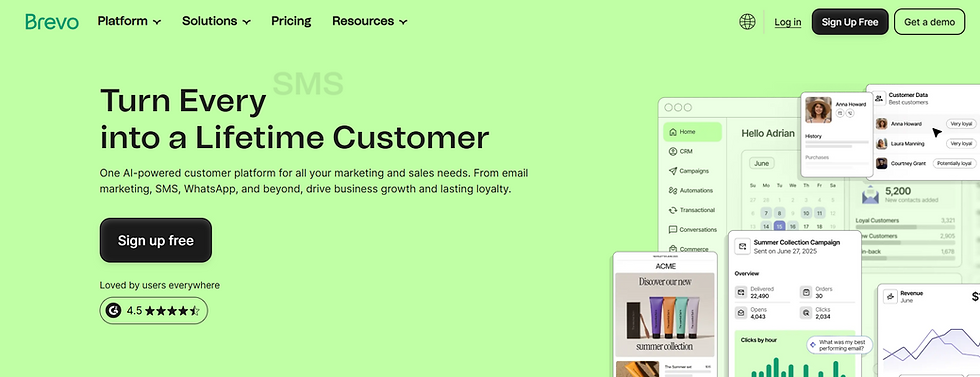
Brevo, formerly Sendinblue, supports email and transactional messaging. It offers flexible pricing structures. International brands often appreciate its features.
Strengths include:
Transactional messaging support Order confirmations and system emails can be managed within the platform. This centralizes communication.
Affordable pricing tiers Plans are competitive for smaller stores. Budget constraints become less limiting.
Segmentation depth may not match e-commerce specialized apps. However, it remains accessible and versatile. Growing brands may consider it during the early stages.
10. HubSpot Marketing Hub

HubSpot Marketing Hub integrates email marketing with a full CRM ecosystem. Enterprise ecommerce brands often value its data capabilities. Analytics and personalization are advanced.
Strengths include:
Unified CRM integration Customer data flows across sales and marketing. Insights become centralized.
Advanced analytics Detailed reporting supports data-driven decisions. Strategic planning improves.
HubSpot pricing is higher compared to most e-commerce-specific tools. It is best suited for enterprise-level operations. Smaller brands may find it excessive.
Common Mistakes When Choosing Email Marketing Apps
Selecting email marketing apps without strategic evaluation leads to frustration. Many brands focus on superficial features rather than long-term fit. Avoiding common mistakes protects growth.
Common mistakes usually are:
Choosing based only on price Lower-cost tools may lack essential e-commerce functionality. Long-term limitations outweigh short-term savings.
Ignoring the deliverability infrastructure Weak deliverability reduces inbox placement. Revenue suffers as a result.
Overcomplicating the stack Too many integrations create operational friction. Simplicity often improves execution.
Failing to evaluate automation depth Limited workflow logic restricts personalization. Scaling becomes harder over time.
Not planning for growth Platforms should support future expansion. Migration later can disrupt performance.
Strategic selection reduces operational stress. Strong foundations support sustainable e-commerce growth. Email marketing apps should enable, not complicate, your strategy.
Frequently Asked Questions About Email Marketing Apps
What are the best email marketing apps for Shopify?
The best email marketing apps for Shopify integrate deeply with e-commerce data. Platforms such as Wiz, Klaviyo, and Omnisend are built specifically for online stores. Their automation capabilities support retention and lifetime value growth.
Are free email marketing apps worth it?
Free plans can work for very small lists. However, limitations often restrict automation and segmentation. Growing stores usually require paid plans for scalability.
Can I switch email marketing apps later?
Switching is possible but requires planning. Data export, deliverability warming, and workflow rebuilding take time. Therefore, choosing carefully at the beginning is beneficial.
Best Email Marketing Apps: Takeaway
Email marketing apps are foundational to e-commerce growth in 2026. They determine how effectively stores retain customers and generate repeat revenue. Selecting the right platform influences long-term stability.
The best email marketing apps align with your store size and strategy. They balance automation, segmentation, and usability. Most importantly, they support predictable revenue growth.
Ready to put your email marketing on autopilot? With Wiz, you can launch a complete AI-powered email system from welcome flows to holiday campaigns in just 30 seconds. Visit https://emailwiz.ai to see how growing Shopify brands are increasing customer lifetime value through intelligent automation.



Comments