Klaviyo Pricing Explained: Plans, Hidden Costs, and Scaling Considerations (2026 Guide)
Klaviyo pricing is one of the most searched topics among Shopify and ecommerce founders evaluating email marketing platforms. As brands scale their subscriber lists and increase campaign frequency, understanding Klaviyo pricing becomes critical for forecasting margins and long-term profitability. In this guide, we break down Klaviyo pricing plans, SMS costs, hidden expenses, and scaling considerations in a clear and neutral way. Klaviyo is a powerful ecommerce-focused email and SMS marketing...

Klaviyo pricing is one of the most searched topics among Shopify and ecommerce founders evaluating email marketing platforms. As brands scale their subscriber lists and increase campaign frequency, understanding Klaviyo pricing becomes critical for forecasting margins and long-term profitability. In this guide, we break down Klaviyo pricing plans, SMS costs, hidden expenses, and scaling considerations in a clear and neutral way.
Klaviyo is a powerful ecommerce-focused email and SMS marketing platform. It is widely known for its advanced segmentation engine and deep Shopify integration. Many high-growth brands rely on it to drive revenue from lifecycle marketing.
However, Klaviyo pricing follows a subscriber-based model. This means costs increase as your list grows. For scaling ecommerce brands, the Klaviyo cost structure deserves close attention.
What Is Klaviyo and How Its Pricing Model Works
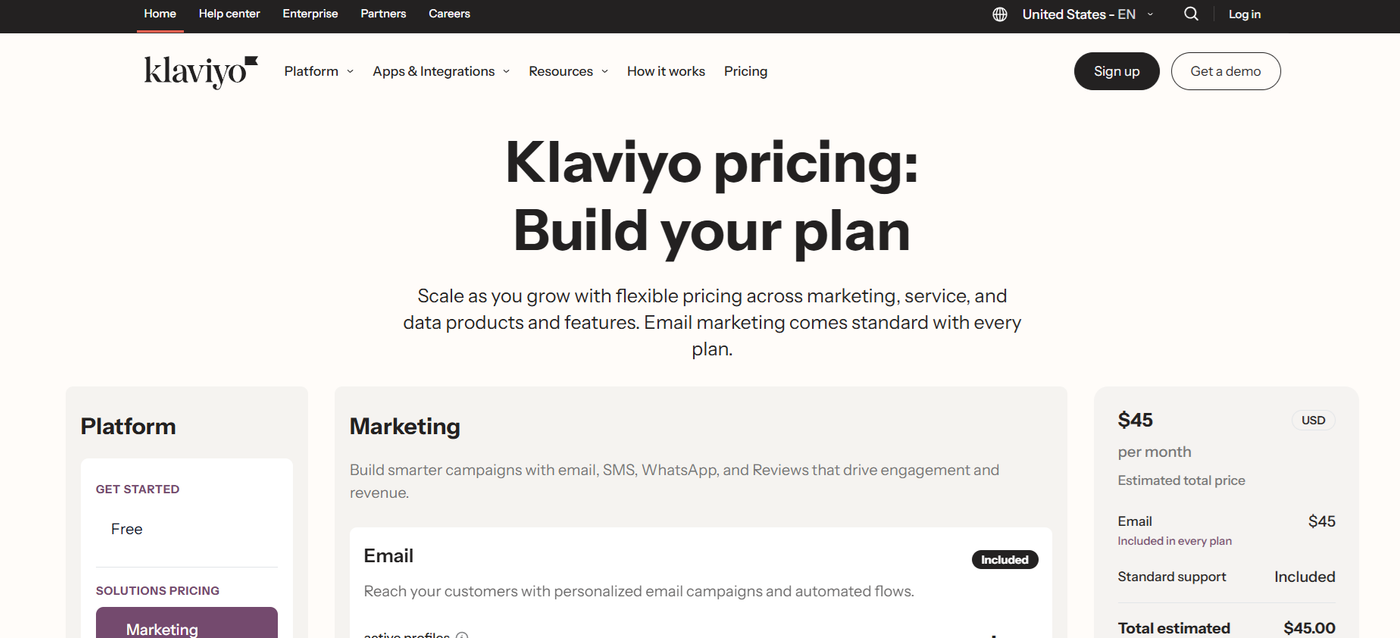
Klaviyo operates primarily on a contact-based pricing system. You pay according to the number of active profiles stored in your account. Email and SMS are priced separately.
The platform offers a free plan for small lists. Paid plans increase in price as subscriber count grows. This structure is transparent but variable.
Klaviyo pricing scales linearly with growth. As you move into higher contact tiers, monthly costs increase. This model benefits early-stage stores but becomes more significant at scale.
Klaviyo Pricing Explained
Klaviyo’s email pricing is based on active contacts. The more contacts stored, the higher the monthly cost. Email sending limits also increase with higher tiers.
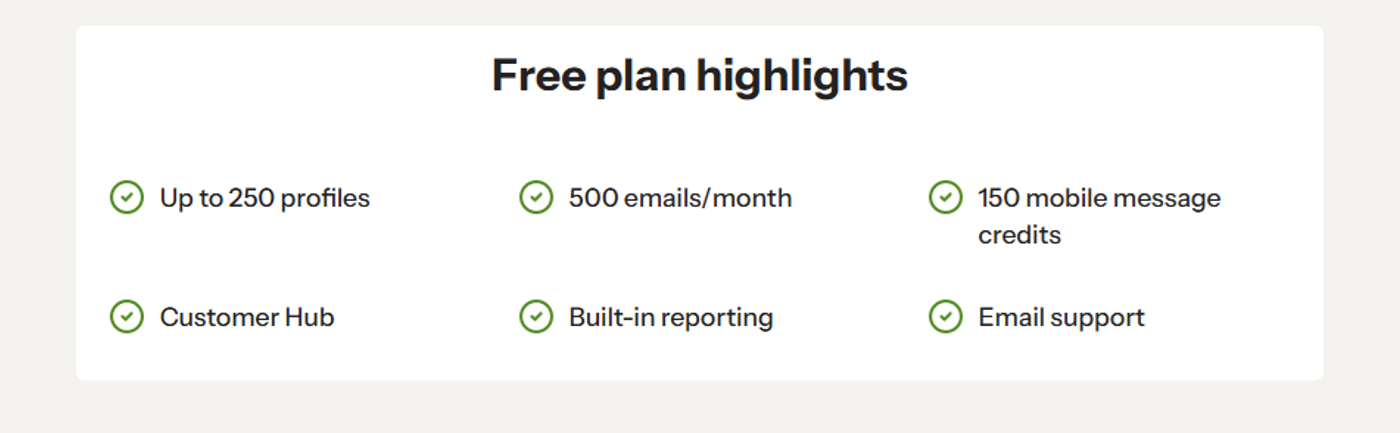
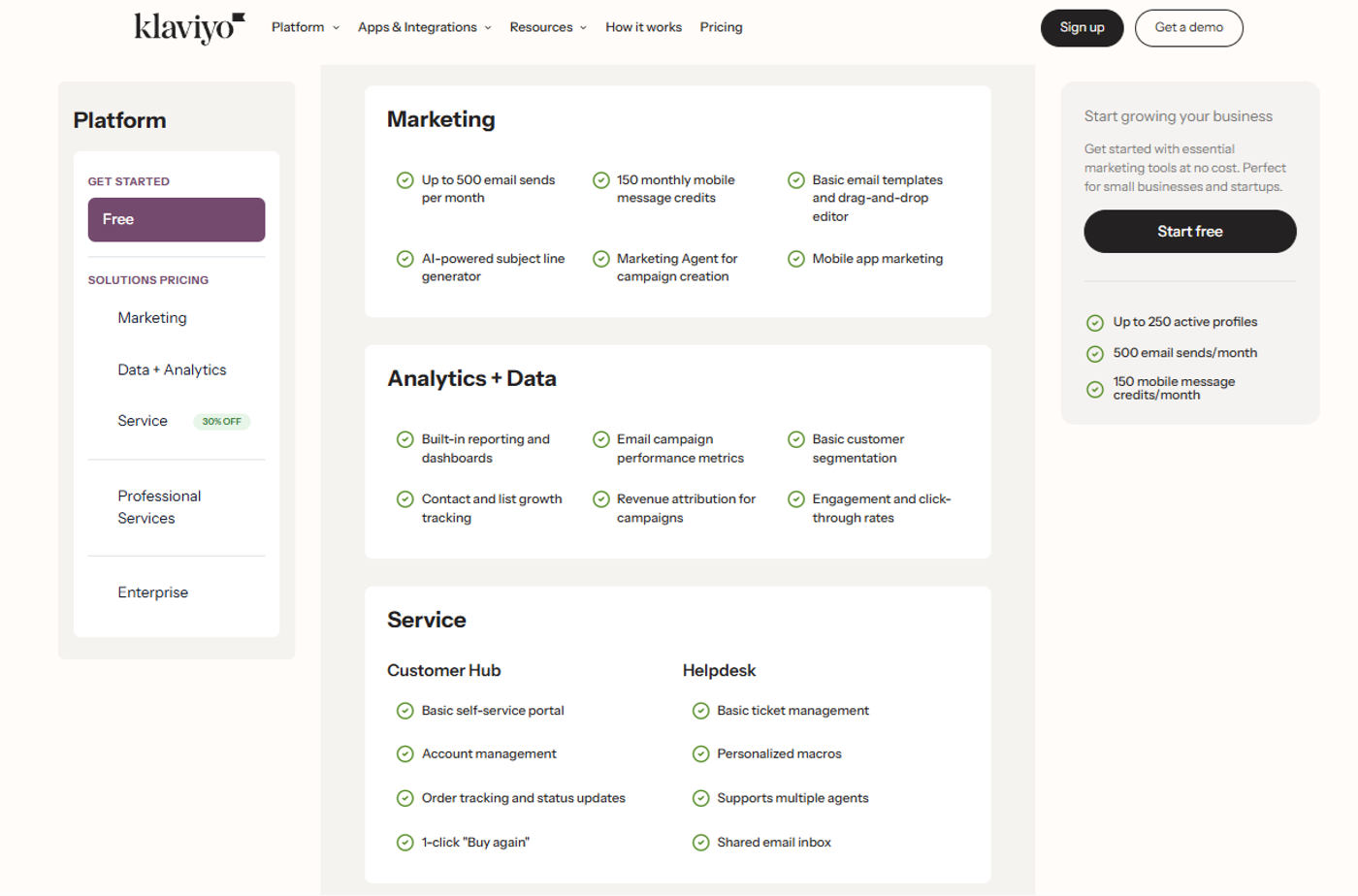
Free Plan
- Price: $0 per month
This plan supports up to 250 active profiles and 500 email sends. It allows merchants to test core functionality before upgrading. - Basic features included
Users can create simple campaigns and automation flows. Advanced reporting and higher send limits require upgrading.
The free tier is ideal for very small stores. However, most growing brands exceed 250 contacts quickly.
Email Plan Pricing by Contact Volume
Klaviyo cost for email plans typically follows this structure:
- Up to 500 contacts: approximately $20 per month
Suitable for small but growing lists. Email send limits scale with contact count. - Up to 1,000 contacts: approximately $30 per month
This tier supports higher email volume. Automation features remain available. - Up to 5,000 contacts: approximately $100 per month
Costs begin to rise more noticeably. Segmentation and automation continue to function fully. - Up to 10,000 contacts: approximately $150 to $175 per month
This is common for mid-sized ecommerce brands. Monthly expenses become a significant budget line. - Up to 25,000 contacts: approximately $400 per month
Scaling brands see a substantial jump at this level. Budget forecasting becomes more important. - Up to 50,000 contacts: approximately $720 per month
High-growth brands must carefully evaluate return on investment at this stage.
These figures are estimates based on the pricing calculator available on Klaviyo’s official site. Exact pricing may vary depending on region and usage. However, the core pattern remains consistent.
Klaviyo SMS Pricing
Klaviyo SMS pricing is separate from email. It is billed based on message volume rather than contact count. Carrier rates and destination country affect pricing.
SMS credits are purchased based on expected send volume. For example, sending 1,000 SMS messages may cost between $15 and $25, depending on the destination. Larger volumes increase total monthly spend.
Email and SMS combined can significantly increase the total cost. Brands running frequent promotions across both channels should budget accordingly. Multi-channel growth compounds expenses.
How Klaviyo Pricing Scales as You Grow
Klaviyo pricing increases predictably as your list grows. However, rapid ecommerce growth can accelerate tier upgrades. This makes forecasting essential.
Subscriber Growth Impact
- Doubling contacts increases cost tier: Moving from 5,000 to 10,000 subscribers can raise your monthly bill by over 50 percent. Growth directly impacts expenses.
- Inactive contacts still count: Even unengaged profiles may contribute to billing tiers. List hygiene becomes financially important.
Scaling ecommerce brands often focus on list building. However, more contacts also mean higher recurring costs.
Send Volume Considerations
- Frequent newsletters increase operational demand: While pricing is contact-based, campaign frequency increases internal workload. Teams must manage segmentation and content.
- Automation intensity increases complexity: More triggers and flows require ongoing optimization. This adds labor cost beyond subscription fees.
Klaviyo pricing is transparent, but the total cost of ownership includes more than the subscription price.
Hidden Costs of Klaviyo Pricing
Klaviyo itself does not hide fees. However, indirect costs often surprise growing brands. These are operational rather than contractual.
1. Operational Labor
- Campaign drafting requires human input
Copywriting, design, and segmentation require time. Many brands hire a specialist. - Strategy and optimization demand expertise
Advanced segmentation requires ongoing testing. This can require agency or internal staffing.
Hiring an email marketer can cost several thousand dollars per month. This significantly increases total email marketing spend.
2. Time Investment
- Workflow building takes effort
Setting up abandoned cart and post-purchase flows requires configuration. Testing and refinement add hours. - Ongoing monitoring is necessary
Deliverability, list hygiene, and engagement metrics must be tracked regularly.
Time has financial value. Founder hours spent on email management could be allocated elsewhere.
3. List Hygiene Management
- Inactive contacts inflate cost tiers
Unengaged subscribers still count toward billing thresholds. Pruning becomes necessary. - Deliverability affects revenue
Poor list management can reduce inbox placement. Lower engagement impacts ROI.
These costs are not flaws in Klaviyo. They are realities of managing advanced marketing tools.
Is Klaviyo Pricing Worth It?
Klaviyo pricing is often justified for brands that fully leverage its capabilities. Advanced segmentation and revenue attribution can drive substantial ROI. Many high-growth ecommerce brands find value in its depth.
However, value depends on execution. If advanced features are underutilized, cost efficiency declines. Small teams may struggle to extract full potential.
Early-stage brands may find Klaviyo pricing reasonable. Scaling brands must evaluate subscription growth alongside operational complexity. Budget clarity becomes essential.
Comparing Klaviyo Pricing to Alternative Models
Traditional email platforms often use subscriber-based pricing. As lists grow, expenses rise. This model aligns cost with database size.
However, operational demands increase alongside pricing. More contacts mean more segmentation work. More campaigns require more drafting.
Other AI-driven platforms focus on operational efficiency. Instead of emphasizing manual configuration, they reduce staffing dependency. Pricing models may prioritize predictability.
Before Choosing an Email Platform, Consider These Pricing Factors
Choosing a platform involves more than comparing subscription fees. Operational workload and staffing impact total cost. Below are important considerations.
Consider Total Cost of Ownership
Software subscription is only part of the expense. Labor and time investment add a high cost. Evaluate both together.
Consider Pricing Predictability
Subscriber-based pricing fluctuates as your list grows. Forecasting long-term costs becomes complex. Predictable subscription tiers simplify planning.
Consider Automation Autonomy
Manual systems require hiring or internal expertise. Autonomous systems reduce dependency on staff. This affects long-term budget stability.
A Shopify Focused Alternative with Predictable Scaling
Wiz represents a different operational model. It is built specifically for Shopify stores. It installs essential revenue-generating flows in about 30 seconds.
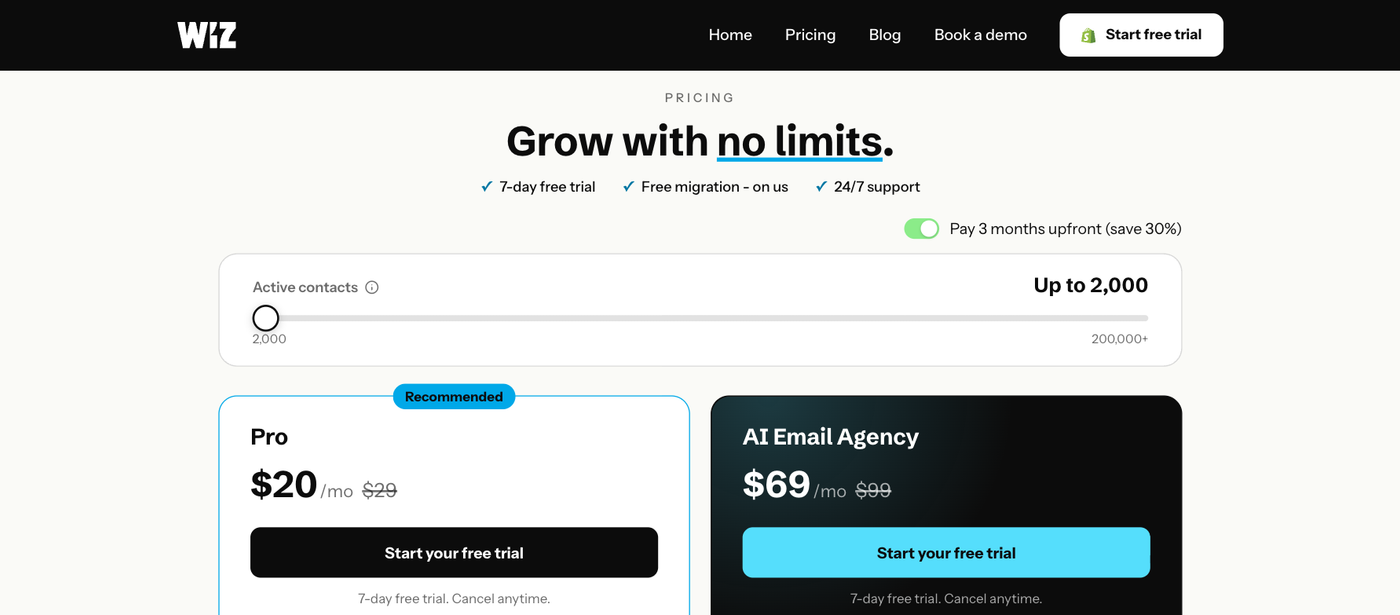
Wiz pricing starts at $20 per month for up to 2,000 active contacts. This entry point is lower than many traditional platforms at comparable tiers. Pricing is structured around monthly active contacts rather than raw subscriber count.
Unlike traditional tools, Wiz generates on-brand campaigns automatically. It reduces manual drafting and segmentation work. This lowers indirect labor costs.
For lean ecommerce teams, operational autonomy can be financially meaningful. Reducing the need for a dedicated email strategist improves margin efficiency. Predictability becomes a strategic advantage.
Final Thoughts
Klaviyo pricing is transparent and structured around subscriber count. For brands that fully leverage advanced segmentation and automation, it can deliver a strong ROI. However, scaling costs and operational demands should be considered carefully.
Total cost includes more than the subscription price. Labor, time, and segmentation management all affect profitability. Budget clarity requires evaluating both direct and indirect expenses.
In 2026, ecommerce brands increasingly prioritize operational autonomy. Platforms like Wiz combine automation, AI-generated campaigns, and predictable pricing starting at $20 per month. When evaluating Klaviyo pricing, consider not only what you pay, but how much time and effort the system requires. Visit https://www.emailwiz.ai/ to learn more.
Frequently asked questions
- How much does Klaviyo cost per month?
- Klaviyo pricing ranges from free for up to 250 contacts to several hundred dollars per month at higher tiers. For example, around 10,000 contacts may cost approximately $150 to $175 per month.
- Does Klaviyo charge for inactive subscribers?
- Klaviyo pricing is based on active profiles stored in your account. Inactive contacts still count toward billing tiers. Regular list cleaning helps manage costs.
- Is SMS included in Klaviyo pricing?
- SMS is billed separately based on message volume. Costs depend on carrier rates and country destination. Email and SMS combined increase total monthly spend.
- Why does Klaviyo pricing increase quickly at scale?
- Pricing increases with subscriber count. Rapid ecommerce growth moves brands into higher billing tiers. Operational workload also increases alongside subscription cost.