How to Build a High-Converting Welcome Series for Ecommerce Brands
A welcome series is one of the most powerful revenue drivers in ecommerce today. When structured correctly, a welcome email series turns new subscribers into first-time buyers with predictable consistency. In 2026, no serious online store should operate without a high-converting welcome series running automatically. Many ecommerce brands invest heavily in paid traffic but overlook what happens after someone joins their email list. The moment a visitor subscribes is the highest point of...

A welcome series is one of the most powerful revenue drivers in ecommerce today. When structured correctly, a welcome email series turns new subscribers into first-time buyers with predictable consistency. In 2026, no serious online store should operate without a high-converting welcome series running automatically.
Many ecommerce brands invest heavily in paid traffic but overlook what happens after someone joins their email list. The moment a visitor subscribes is the highest point of curiosity and intent. If you fail to guide that moment properly, momentum disappears quickly.
A well-built welcome series captures attention, builds trust, and accelerates first purchase behavior. It establishes the tone of your brand relationship from the start. More importantly, it creates measurable and repeatable revenue.
This guide explains how to design, structure, and optimize a high-converting welcome series. You will learn what emails to send, how to time them, and how to personalize them effectively. By the end, you will understand how to turn your welcome email series into foundational growth infrastructure.
What Is a Welcome Series in Email Marketing?
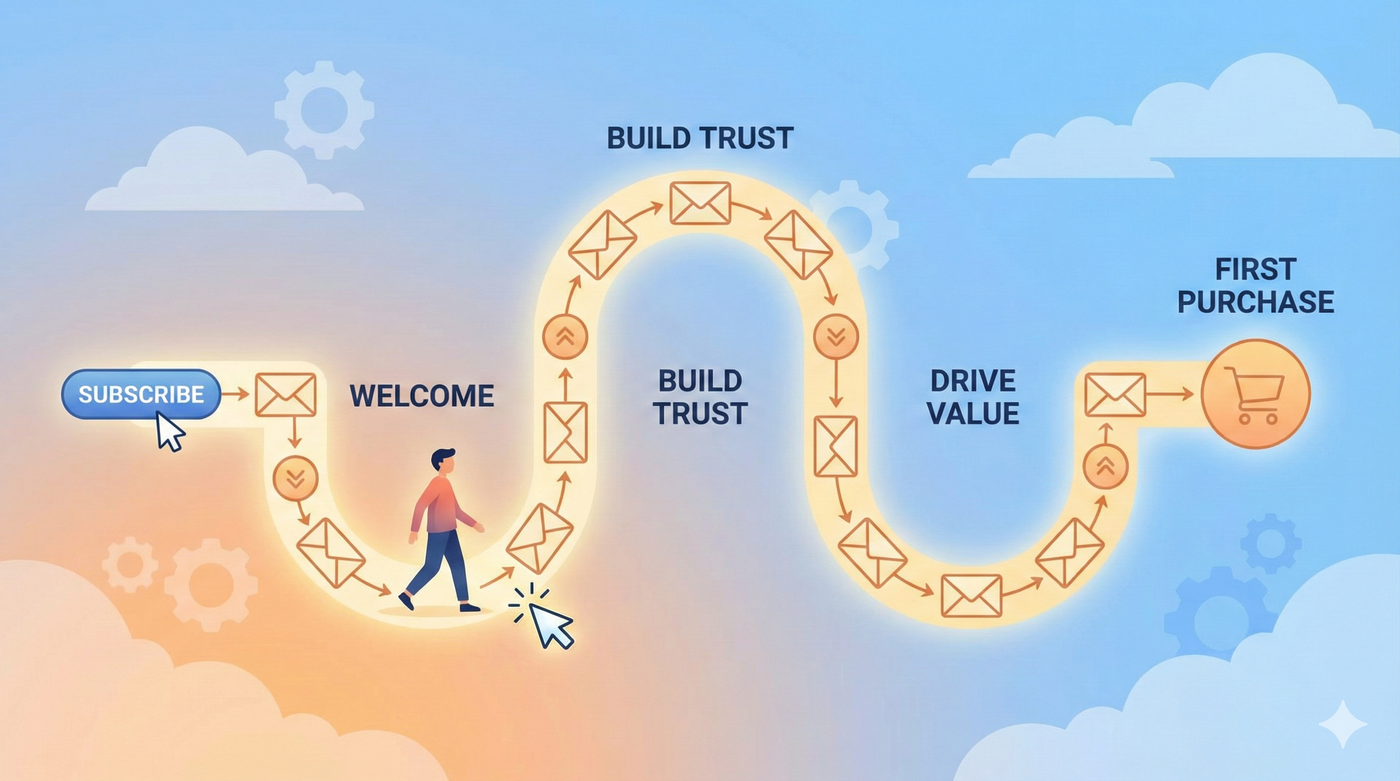
A welcome series is an automated sequence of emails triggered when someone subscribes to your list. Instead of sending a single confirmation email, you guide new subscribers through a structured journey. That journey is designed to build trust and drive a first purchase.
Unlike campaigns, a welcome series runs continuously in the background. Every new subscriber enters the same optimized path automatically. This makes it scalable and consistent.
A single welcome email delivers information. A welcome series builds persuasion over time. Take time to look over some samples that can serve as your reference. That difference significantly impacts revenue.
Why a Welcome Series Outperforms Most Campaigns
Campaigns generate short-term spikes in revenue. A welcome series creates steady, predictable conversion opportunities. It works every day without manual effort.
New subscribers are actively evaluating your brand. They are deciding whether to trust you and whether to buy. The welcome series shapes that decision intentionally.
When built properly, a welcome series increases first purchase conversion rates significantly. It also strengthens engagement signals that improve deliverability. Strong deliverability supports long-term growth.
The Psychology Behind a High-Converting Welcome Series
A welcome email series works because it aligns with natural buyer psychology. New subscribers are in discovery mode. They are open to learning more.
Trust must be established quickly. Confidence reduces hesitation. Emotional connection increases purchase likelihood.
Persuasion principles such as reciprocity and social proof play an important role. Delivering value immediately creates positive momentum. That momentum leads to action.
The Ideal Welcome Series Structure for Ecommerce
A high-converting welcome series typically includes three to five emails. Each email serves a specific purpose within the buyer journey. Together, they move a subscriber from curiosity to purchase. Knowing the proper welcome email format that converts is also essential.
Email 1: Immediate Value Delivery
The first email must be sent instantly. It delivers the promised incentive clearly and sets expectations. Speed reinforces professionalism.
This email should remain simple and focused. Avoid overwhelming subscribers with excessive information. Guide them toward one clear action.
Email 2: Brand Story and Positioning
The second email introduces your brand identity. It explains why you exist and what makes your products different. Emotional positioning increases connection.
People buy from brands they believe in. Story builds belief. Belief reduces friction.
Email 3: Best Sellers and Social Proof
The third email focuses on products. It highlights top sellers and includes customer testimonials. Social proof reduces hesitation.
Seeing other customers express satisfaction builds confidence. Confidence accelerates purchasing decisions. This email often drives the first sale.
Optional Email 4: Objection Handling
This email addresses common concerns such as shipping, returns, and quality. Transparency removes uncertainty. Removing uncertainty increases conversion.
Many buyers hesitate due to unanswered questions. Proactively addressing those concerns builds trust. Trust improves performance.
Optional Email 5: Incentive Reminder
If your welcome series includes a discount, a reminder email can drive urgency. Scarcity increases motivation. Motivation increases action.
However, urgency should feel helpful rather than aggressive. Maintain brand tone consistency. Protect perceived value.
Timing Strategy for a High-Converting Welcome Series
Timing directly affects performance. The first email should be sent immediately after signup. Delay reduces engagement dramatically.
The second email typically performs well 24 hours later. The third email often works within 48 hours of signup. This spacing maintains momentum without overwhelming the subscriber.
Behavioral adjustments improve results further. If someone purchases early, remove them from the sequence. Personalization protects experience quality.
Personalization in a Welcome Series
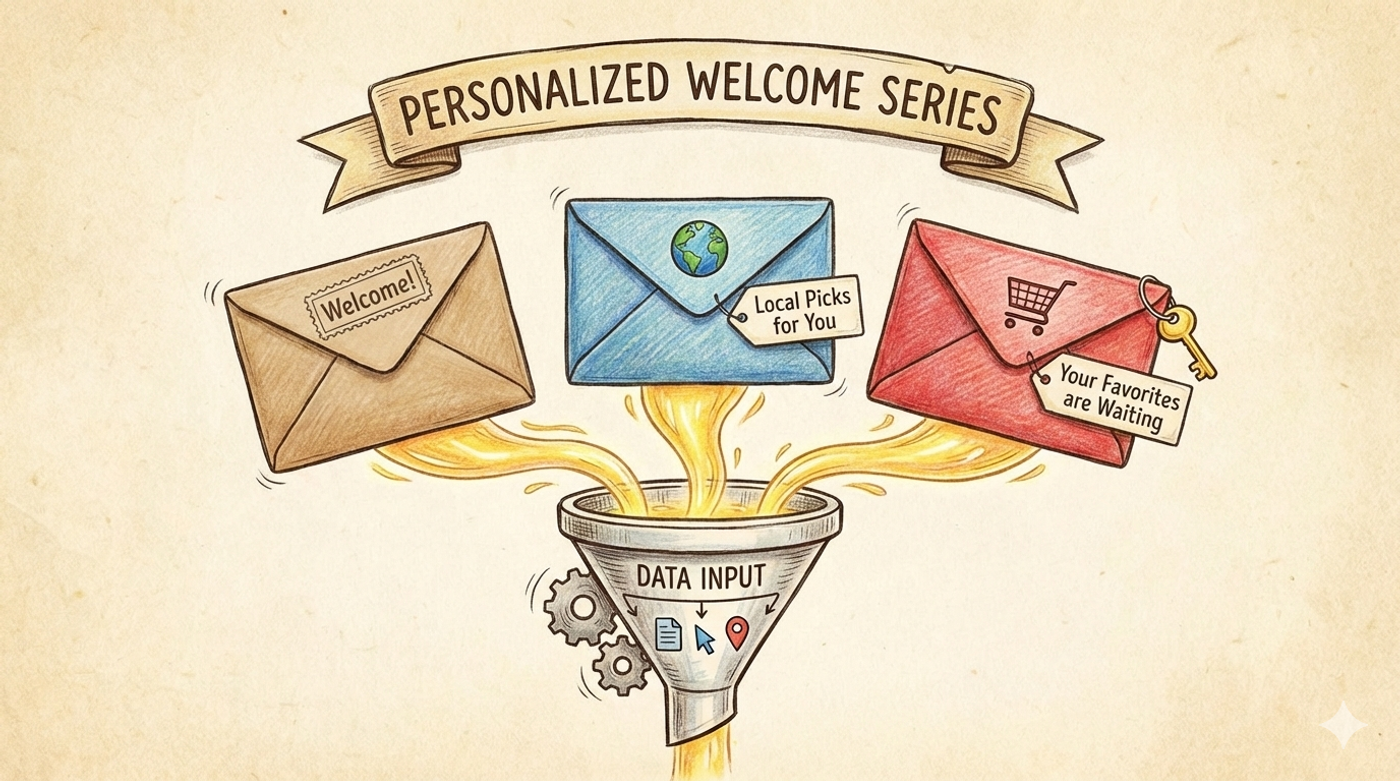
Personalization transforms a generic welcome email series into a revenue engine. Even small personalization elements can improve click-through rates. Relevance always outperforms volume.
You can personalize based on signup source, browsing behavior, or geographic location. Context improves messaging accuracy. Accurate messaging increases engagement. Dynamic content blocks allow different subscribers to see different products. This keeps one automation efficient while still feeling tailored. Efficiency and relevance can coexist.
Designing Emails That Convert
Most subscribers read email on mobile devices. Clean design improves readability and usability. Simplicity increases clicks. Each email should focus on one primary call to action.
Too many options dilute focus. Clear direction improves conversion rates.
Visual hierarchy matters significantly. Headlines should stand out clearly. Buttons should be easy to tap on mobile screens.
Metrics That Matter for Welcome Series Performance
To optimize your welcome series, you must measure what matters. Data transforms assumptions into strategy. Monthly review cycles work best.
Key metrics to watch:
- Open rate
Open rate indicates how effective your subject lines are. Higher open rates signal strong curiosity and alignment with subscriber expectations. - Click-through rate
Click-through rate measures how compelling your content is. Strong clicks suggest that your messaging resonates with intent. - Conversion rate
Conversion rate reflects how well your welcome series drives first purchases. This is the most important metric for revenue impact. - Revenue per subscriber
Revenue per subscriber shows the overall financial value of your list. Growth in this metric indicates long-term optimization success. - Time to first purchase
This measures how quickly subscribers convert. Shorter timelines improve cash flow and operational stability.
Common Welcome Series Mistakes to Avoid
Even well-intentioned brands make avoidable mistakes. Small errors compound over time. Awareness improves execution.
Common mistakes include:
- Sending only one welcome email: A single email rarely builds enough trust. Multiple touchpoints create persuasive momentum.
- Waiting too long to send the first email: Delay reduces engagement and weakens intent. Immediate response reinforces credibility.
- Overloading new subscribers with information: Too much content overwhelms readers. Focused messaging increases clarity and action.
- Discounting too aggressively: Excessive discounting reduces perceived value. Strategic offers protect margins.
- Ignoring segmentation signals: Generic messaging underperforms. Behavioral alignment increases conversions.
Advanced Welcome Series Optimization
As your store grows, your welcome series can evolve. More advanced logic improves personalization. However, complexity should match scale.
Conditional branching can adjust messaging based on clicks or product views. VIP logic can tailor messaging to higher-value subscribers. These refinements increase efficiency.
Predictive send time optimization can improve engagement further. Sending emails when subscribers are most active increases open rates. Higher engagement strengthens deliverability.
Why Execution Is the Real Barrier
Designing a welcome series conceptually is simple. Building, writing, designing, and maintaining it consistently is more challenging. Many founders delay implementation due to complexity.
Creating persuasive copy requires time and testing. Designing mobile-optimized layouts requires skill. Managing segmentation and automation logic adds additional workload.
Without structured systems, the welcome series often becomes outdated. Inconsistent updates reduce performance. Revenue opportunity gets lost silently.
A Smarter Way to Launch Your Welcome Series
For many Shopify brands, the obstacle is not knowing what to do. The obstacle is having the time and expertise to execute consistently. Automation should reduce complexity, not create it.
Modern AI-powered systems now remove that burden entirely. Instead of manually building workflows, brands can deploy a complete welcome series in seconds. This shifts the focus from setup to growth.
Wiz operates as an AI Email Marketing Agent built specifically for Shopify brands. It installs a fully optimized welcome series in about 30 seconds, automatically pulling branding and product data from your store. It writes on brand copy, designs emails, and runs your automation continuously without requiring a dedicated team.
This approach transforms the welcome series into true revenue infrastructure. Infrastructure runs consistently. Consistency drives predictable growth.
Final Thoughts on Building a High-Converting Welcome Series
A welcome series is not optional in modern ecommerce. It is foundational growth infrastructure. Stores that ignore it leave predictable revenue on the table.
When built properly, a welcome series increases first purchase rates and strengthens lifetime value. It compounds over time. Compounding creates stability.
Whether built manually or deployed through intelligent automation, your welcome series must operate continuously. The first impression shapes every future interaction. Make it structured, persuasive, and intentional.
Ready to launch a high-converting welcome series without building complex workflows manually? Wiz, the first AI email marketing agent for Shopify, installs and runs your complete welcome series in about 30 seconds, automatically creating on-brand emails, structuring the flow, and optimizing timing without requiring a team. Visit https://emailwiz.ai to let your welcome series operate autonomously and turn new subscribers into predictable revenue from day one.
Frequently asked questions
- What is a welcome series?
- A welcome series is an automated email sequence triggered after someone subscribes. It introduces your brand and guides subscribers toward their first purchase. It runs continuously for every new contact.
- How many emails should a welcome series include?
- Most ecommerce brands use three to five emails. The ideal number depends on product complexity and buying cycle length. Focus on value rather than volume.
- When should the first welcome email be sent?
- The first welcome email should be sent immediately. Immediate delivery reinforces professionalism and trust. Delay reduces conversion potential.
- Should every welcome series include a discount?
- Not necessarily. Educational value and social proof often convert effectively without heavy discounting. Incentives should support strategy, not replace persuasion.
- How much revenue can a welcome series generate?
- For many ecommerce brands, the welcome series becomes one of the highest-performing automations. Revenue impact depends on traffic and optimization consistency. Proper structure significantly increases first purchase conversion rates.