What Is Click to Open Rate and Why It's Your Most Important Metric
- Guy Williams

- Jan 18
- 11 min read
Let's get straight to it. Your click-to-open rate (CTOR) tells you one simple but incredibly important thing: out of all the people who opened your email, what percentage of them actually clicked on a link?
It’s the metric that cuts through the vanity of open rates to show you what really happened after they saw your subject line.
Beyond the Open: What Click-to-Open Rate Really Means
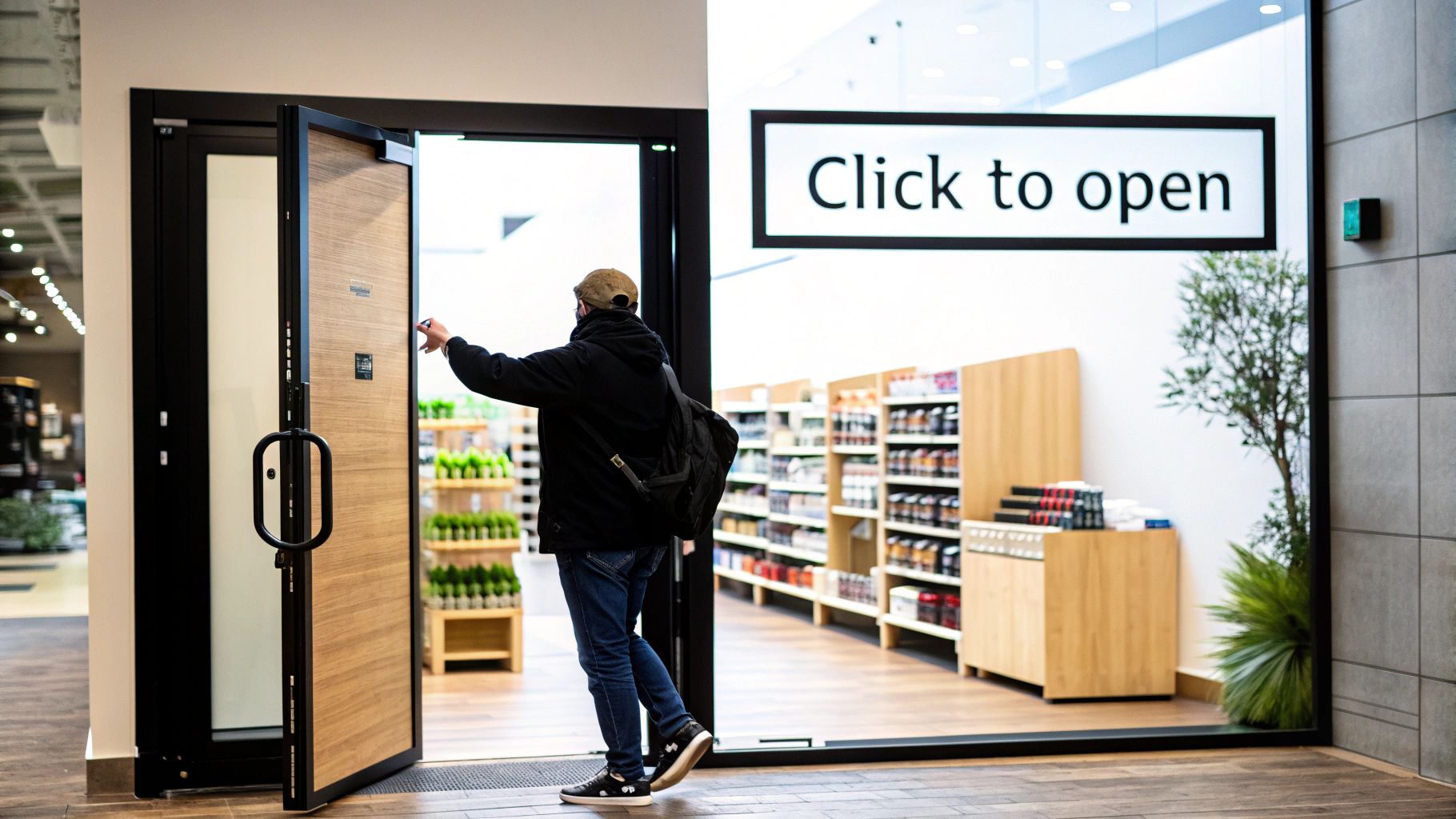
Think of your email campaign like a physical shop. The subject line is your window display, and a good open rate means you got people to walk through the door. But what did they do once they were inside?
That’s what CTOR answers. Did they just look around and leave, or did they actually pick up a product (your links) and head to the checkout counter (your call-to-action)? A high CTOR means your in-store experience—the email content itself—was compelling.
In a world where privacy updates can sometimes skew open rates, CTOR has become one of the truest measures of genuine engagement. It’s a reality check on how well your message resonates once someone is reading it.
A high open rate with a low CTOR is a major red flag. It means your subject line wrote a check that your email content couldn't cash.
For any Shopify store owner, a solid CTOR is directly tied to your bottom line. It influences:
Website Traffic: Every click is a direct pipeline to your product pages.
Sales Conversions: An engaged subscriber who clicks is miles closer to making a purchase than one who just opens and deletes.
List Health: It proves you're sending valuable, relevant content that your audience actually wants to interact with.
To see the full picture, it helps to understand how CTOR fits alongside other key metrics like figuring out what is a good CTR. By focusing on CTOR, you move past just getting attention and start measuring the actions that actually drive revenue.
CTOR vs CTR vs Open Rate At a Glance
It's easy to get these metrics mixed up, but they each tell a very different part of your email's story. Here’s a quick breakdown to keep them straight.
Metric | What It Measures | What It Reveals About Your Strategy |
|---|---|---|
Open Rate | The percentage of recipients who opened your email. | The strength of your subject line, brand recognition, and send-time. It measures how well you grab attention in the inbox. |
Click-Through Rate (CTR) | The percentage of all recipients (opened or not) who clicked a link. | The overall performance of an entire email campaign from delivery to action, but it's diluted by those who never opened. |
Click-to-Open Rate (CTOR) | The percentage of openers who clicked a link. | The effectiveness and persuasiveness of your email's content, design, and call-to-action. This is a pure measure of engagement. |
Ultimately, while open rates tell you if you got them in the door and CTR gives a broad overview, CTOR is what tells you if your message truly connected.
Calculating and Understanding Your CTOR

Thankfully, you don't need a math degree to figure out your CTOR. The calculation is refreshingly simple and focuses only on the people who actually saw your message.
The formula looks like this: (Unique Clicks ÷ Unique Opens) × 100 = CTOR
The key here is to use unique clicks and opens. This ensures you're measuring how many individual subscribers took action, not just counting every time one super-fan clicked the same link over and over.
Putting the Formula into Practice
Let's walk through a real-world scenario. Say you run a Shopify store and just launched a flash sale email.
Here’s how the numbers might shake out:
Unique Opens: 2,000 subscribers opened your email.
Unique Clicks: 250 of those people then clicked on your "Shop the Sale" button.
Plugging those numbers into the formula, we get: (250 ÷ 2,000) × 100 = 12.5% CTOR
So, your CTOR is 12.5%. This means that of everyone who was interested enough to open your email, one in eight was compelled enough by your message to actually click through to your store.
What Your CTOR Is Really Telling You
This little percentage is far more than just a vanity metric; it's a powerful diagnostic tool for your email content. For instance, a high open rate paired with a disappointingly low CTOR is a massive red flag.
It’s the classic bait-and-switch. Your subject line was the flashy window display that drew people in, but the email content—the inside of the store—was underwhelming and didn't deliver on the initial promise.
This mismatch forces you to ask the hard questions. Was the call-to-action (CTA) button buried? Did the copy fall flat? Did the offer inside match the hype of the subject line? Understanding your CTOR helps you pinpoint exactly where your message is breaking down, turning a simple number into a clear roadmap for improving your next campaign.
Why CTOR Is a Powerful Driver for Ecommerce Growth

While a high open rate feels great, the click-to-open rate (CTOR) is where the rubber meets the road. This is the metric that actually tells you how compelling your email content is, and it's the one that has a real impact on your bottom line. Think of it this way: the open rate gets them in the door, but the CTOR is what convinces them to stick around and shop.
A strong CTOR is a direct pipeline to your website. Every click represents a real person browsing your products, checking out new arrivals, and dropping items into their cart. This traffic is the fuel for any successful online store, turning each email send into a genuine sales opportunity.
The Tale of Two Shopify Stores
Let's look at a quick example. Imagine two competing e-commerce stores.
Store A is obsessed with open rates. They use flashy, clickbait-style subject lines like "You Won't BELIEVE This!" People open the emails out of pure curiosity but are immediately let down when the content doesn't deliver on the hype. The result? Great open rates, but a terrible CTOR and very few sales.
Store B takes a different approach. They focus on delivering real value. Their subject lines are clear, benefit-driven, and accurately reflect the email's content—be it useful tips, an exclusive offer, or a compelling product story. Their audience not only opens the emails but clicks through because they trust the brand to deliver something worthwhile.
Over time, Store B builds a much more loyal, engaged, and profitable customer base. Their audience isn't just opening emails for the sake of it; they're actively participating. This leads to higher customer lifetime value and more predictable revenue. A healthy CTOR is a clear sign of a healthy email list.
This focus on genuine engagement is key. When you optimize for clicks, you naturally start building more effective automated campaigns, like your welcome series or abandoned cart flows. To dive deeper, check out our guide on maximizing your Shopify store profits with automated email campaigns.
Ultimately, CTOR isn't just another number to track—it’s a powerful predictor of your store’s future success.
What’s a Good Click-to-Open Rate, Anyway?
Figuring out a "good" click-to-open rate isn't about chasing some magic number. The truth is, the most useful benchmarks are the ones that actually make sense for your store, your industry, and—most importantly—the kind of email you’re sending.
Context is king here. Think about it: an urgent abandoned cart email sent to a motivated shopper is going to perform worlds differently than your regular weekly newsletter. Comparing their CTORs is like comparing a sprinter to a marathon runner. They're both running, but the goals, a good pace, and how you measure success are completely different.
The real goal of benchmarking isn't just seeing how you stack up against everyone else. It’s about digging into the details of your own email strategy to spot the biggest opportunities to improve.
Finding the Right Numbers for Your Store
To get your bearings, it helps to look at some general industry data. Across all industries, the average CTOR lands somewhere around 10.5%. But that number can swing wildly depending on your niche. For a deeper dive, the latest email marketing stats from Dyspatch are a great resource to see how your sector performs.
Use those broader numbers as a starting point, but the real insights come from breaking down your performance by campaign type:
Promotional Campaigns (like newsletters): A CTOR in the 10-15% range is a healthy, solid goal for these sends.
Automated Flows (like welcome series or cart reminders): These are your heavy hitters. Since they're triggered by specific customer actions, you should aim much higher—often in the 20-30% range, if not more.
Getting clear on these differences is the first real step toward making smart improvements. To go even further, check out our complete guide on benchmarking in marketing for Shopify stores. This way, you can stop chasing averages and start focusing your energy where it will actually drive more sales.
6 Common Reasons Your Click-to-Open Rate Is Low (And How to Fix It)
So, your click-to-open rate is stuck in a rut. Don't panic—it happens. A low CTOR isn't some unsolvable mystery; it's usually a clear sign of a disconnect between what your subscribers expected and what they actually got.
The biggest culprit is almost always a mismatch between your subject line and the email's content. Your subject line writes a check that your email body has to cash. If you promise an amazing deal but then bury it in a wall of text, people will feel duped and simply leave.
A weak or hidden call-to-action (CTA) is another common engagement killer. If your audience has to hunt for what to do next, you've already lost them. Your CTA should be the most obvious, unmissable thing in the entire email.
The Content and Design Disconnect
These days, poor mobile design will absolutely tank your CTOR. Most people are opening your emails on their phones, and an experience that forces them to pinch, zoom, and scroll endlessly is a one-way ticket to the trash folder. A clunky design just gets in the way of your message.
Unfocused content is another issue I see all the time. An email that tries to push three different products, announce a new blog post, and ask for a review is just overwhelming.
A confused subscriber never clicks. An email with a single, clear purpose will always outperform one that pulls the reader in five different directions at once.
Finally, take an honest look at your offer. Is it genuinely compelling? If the discount is underwhelming or the "exclusive content" feels like something they could find anywhere, there’s no real reason for them to click through.
To help you pinpoint the issue, here’s a quick troubleshooting table.
Diagnosing Low CTOR: Common Causes and Quick Fixes
This table is your go-to diagnostic tool. Find the symptom that best describes your email, and you'll find the likely problem and a straightforward way to fix it.
Problem Area | Symptom | How to Fix It |
|---|---|---|
Subject Line & Content | High opens, but very few clicks. | Ensure the email's hero section and headline directly deliver on the promise made in your subject line. No bait-and-switch. |
Call-to-Action (CTA) | Readers scroll but don't take action. | Make your CTA button large, use a contrasting color, and write clear, action-oriented copy like "Shop the Sale" instead of "Learn More." |
Mobile Design | Analytics show low engagement from mobile users. | Use a single-column layout, large fonts (16px or more), and tappable buttons. Always test on a real device before sending. |
Email Focus | The email feels busy or has multiple competing CTAs. | Pick one primary goal for each email. If you must include secondary links, make them less prominent than your main CTA. |
The Offer | Clicks are low even with a clear design and CTA. | A/B test your offer. Try a higher discount, a free gift with purchase, or a different type of value proposition. |
Visuals & Copy | The email looks generic or the text is uninspired. | Use high-quality, engaging images or GIFs. Write copy that speaks to a specific pain point or desire, not just generic product features. |
Working through these common pitfalls one by one is the surest way to get your CTOR moving in the right direction. It's all about closing the gap between the initial promise and the final experience.
Proven Strategies to Improve Your Click-to-Open Rate

Alright, you know what’s causing your low click-to-open rate. Now what? It’s time to roll up your sleeves and get to work. Improving this metric isn't about throwing random ideas at the wall; it's about a focused strategy built on a handful of solid principles.
The goal is simple: make the journey from opening your email to clicking your call-to-action completely seamless and irresistible. This means every single element, from your copy to your layout, needs to rally behind one clear objective. Nail that, and your subscribers will be far more likely to click through to your store.
Craft Compelling and Focused Content
Your email content has one job: deliver on the promise your subject line made. If you teased a hot new product, that product better be front and center the moment they open it.
A powerful way to stay on track is to give every email one primary goal.
Are you trying to drive sales for a new collection? Announce a free shipping weekend? Share a blog post? Pick one, and build the entire email around it. A confused reader never clicks.
Remember, a great subject line earns the open, but the preview text and the first sentence are what convince them to stick around. Those first few lines need to hook them by reinforcing the value you're offering. For more ideas on getting that initial open, check out these 8 email subject line best practices to boost your open rates.
Use Smart Segmentation and Automation
Blasting the same generic message to your entire list is a surefire way to tank your CTOR. Real engagement comes from sending the right message to the right person, and that starts with smart segmentation.
Break your audience down into meaningful groups based on real data:
Purchase history: Send an upsell offer to customers who just bought a related item.
Browsing behavior: Follow up with subscribers who viewed a product but didn’t add it to their cart.
Engagement level: Reward your most active openers and clickers with a special discount.
Automated flows are your secret weapon here. Think about welcome emails—they get massive engagement, with some studies showing open rates as high as 83.63%. A subscriber is never more excited than when they first sign up, which makes for a sky-high CTOR.
Email Wiz is built to capitalize on this by automating high-intent flows. It can turn a simple pop-up signup into a powerful welcome series that guides new subscribers toward their first purchase. To get the most out of every send, try implementing these 10 Email Campaign Best Practices to boost opens and clicks.
Your Top CTOR Questions, Answered
Let's tackle some of the most common questions that pop up when marketers start digging into their click-to-open rates.
What’s a Good Click-to-Open Rate for Ecommerce?
This is the million-dollar question, and the honest answer is: it depends.
While the general benchmark for most industries hovers between 10-15%, that number doesn't tell the whole story. If your weekly newsletter hits that range, you're doing great. It means your content is resonating with a decent chunk of your subscribers.
But for high-intent emails—the automated ones triggered by a specific action—you should aim much, much higher. Think about your welcome series or an abandoned cart email. These messages are expected, so a CTOR in the 20-30% range (or even higher) is a realistic and healthy goal.
How Does Apple's Mail Privacy Protection Affect CTOR?
Ah, the infamous MPP. Apple's Mail Privacy Protection can definitely throw a wrench in your metrics. By pre-loading images and pixels, it often inflates your open rates, making it look like everyone opened your email, even when they didn't.
So how does this impact CTOR? Since the formula is (Clicks ÷ Opens), a falsely high number of opens will artificially lower your CTOR. This is precisely why savvy marketers now lean on CTOR as a more reliable measure of genuine engagement than the open rate alone.
How Often Should I Be Checking My Click-to-Open Rate?
You don’t need to obsess over it daily, but you should have a regular rhythm. For a big one-off campaign like a Black Friday announcement, give it about 24-48 hours to breathe. That’s enough time to get a clear picture of how it landed with your audience.
For your automated flows like welcome series or win-back campaigns, checking in weekly or bi-weekly is a smart move. This schedule helps you spot meaningful trends and find opportunities to improve without getting bogged down by normal day-to-day variations.
Ready to turn clicks into customers without the complexity? Email Wiz sets up your entire Shopify email strategy with AI in about 30 seconds. Get started for free at emailwiz.ai.



Comments