Your Shopify Email Marketing Drip Campaign Playbook
- Guy Williams

- Jan 20
- 16 min read
Updated: May 6
An email marketing drip campaign is basically a series of automated emails that get sent out to customers based on what they do—or don't do—on your site. For any Shopify merchant juggling a million tasks, this is your secret weapon for nurturing leads, winning back lost sales, and building a loyal following without being glued to your laptop.
Why Your Shopify Store Needs an Email Drip Campaign
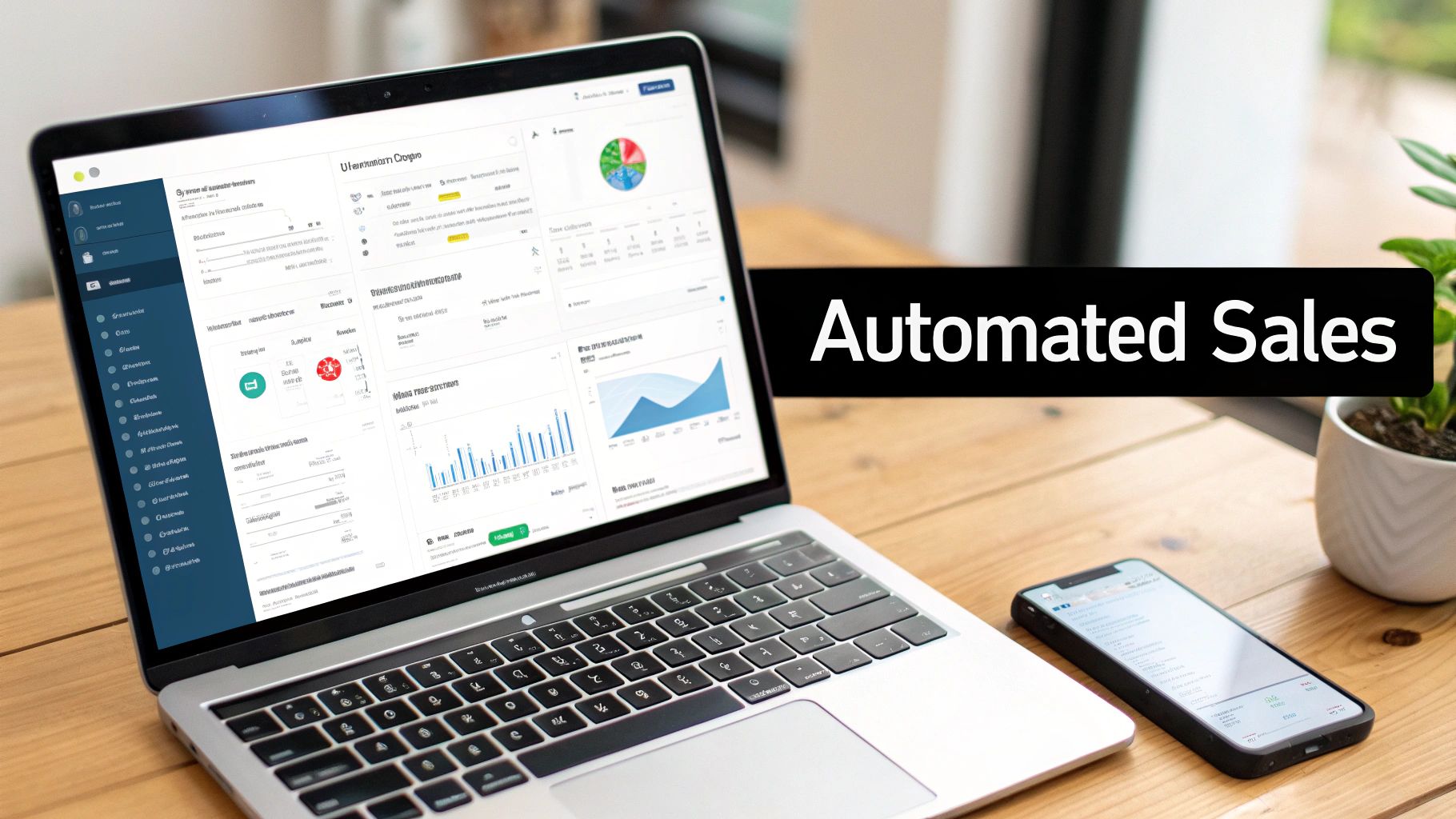
This is what it looks like when your email marketing runs itself. Tools like Email Wiz let you see exactly how these automated flows are performing, connecting your efforts directly to revenue. It’s not just about sending emails; it’s about watching those emails turn into sales.
Think about it. Instead of hitting your entire list with a generic "20% off" blast, a drip campaign sends the right message at the right time. It's like having a dedicated salesperson working around the clock, guiding each customer along their own unique path to purchase.
This set-it-and-forget-it approach is how you tackle some of the biggest headaches in ecommerce. By setting up these evergreen flows, you're creating a system that consistently engages customers at critical moments, putting a serious chunk of your revenue on autopilot.
The Power of Automation in Email Marketing
The real genius of a drip campaign is the automation. Trying to manually follow up with every new subscriber or abandoned cart is a recipe for burnout. Automation makes it not just possible, but easy, to connect with everyone personally.
And the numbers don't lie. Automated emails bring in a staggering 320% more revenue than their non-automated counterparts. When you factor in that email marketing has an average return of $36 for every $1 spent, you can see why this isn't something to ignore.
A drip campaign isn't just a marketing tactic; it's an automated communication engine. It's built to react to customer behavior, turning a casual browser into a loyal advocate for your brand.
This is how you make sure no opportunity slips through the cracks. We dive much deeper into these strategies in our guide on maximizing Shopify store profits with automated email campaigns.
Solving Common Ecommerce Hurdles
Drip campaigns are the solution to the problems that keep Shopify merchants up at night. They're a practical, scalable way to address the roadblocks that stall growth.
Here’s a look at the most common automated email flows every Shopify store should have up and running. These are your foundational campaigns for building relationships and driving revenue.
Table: Essential Drip Campaigns for Shopify Stores
Campaign Type | Primary Goal | Trigger |
|---|---|---|
Welcome Series | Nurture new leads, drive first purchase | User subscribes to email list |
Abandoned Cart | Recover lost sales, create urgency | User adds item to cart but doesn't buy |
Post-Purchase | Build loyalty, get reviews, cross-sell | Customer completes a purchase |
Win-Back | Re-engage lapsed customers | Customer hasn't purchased in X days |
With these simple flows, you’re tackling the biggest challenges head-on:
Converting New Subscribers: A welcome series is your chance to make a killer first impression. You can introduce your brand story, build immediate trust, and offer a little something to get them to make that first purchase while they're most engaged.
Recovering Abandoned Carts: An automated reminder about what they left behind is often all it takes. This simple flow can recapture a massive amount of otherwise lost revenue.
Retaining Existing Customers: A post-purchase series is perfect for saying thanks, asking for a review, and suggesting other products they might love. This is how you turn one-time buyers into repeat customers.
Re-engaging Inactive Customers: A win-back campaign automatically pokes customers who've gone quiet, reminding them why they loved your brand in the first place and giving them a reason to come back.
By putting these touchpoints on autopilot, you’re building a marketing machine that works for you 24/7. And when you're ready to fit these email flows into your bigger marketing picture, a comprehensive marketing campaign planning template can help you map everything out for sustained growth.
Building Your High-Converting Welcome Series

The moments right after a customer subscribes are pure gold. Their interest is at its peak, and they’ve just handed you a direct line to their inbox. This is your single best chance to make a lasting impression, and a well-crafted welcome series is the perfect tool for the job.
This isn't just about a polite "hello." A welcome flow is a strategic part of your email marketing drip campaign designed to build immediate trust, introduce your brand's personality, and guide that new subscriber toward their all-important first purchase.
The numbers don't lie. Welcome emails are hands-down the most powerful automation in your arsenal. On average, they generate a staggering 320% more revenue than other promotional emails and boast an average open rate of 91.43%. That kind of engagement is unheard of, which is exactly why this flow deserves your full attention.
The Anatomy of a Perfect 3-Email Welcome Flow
You can always add more emails later, but a simple three-part series is the ideal starting point for any Shopify store. It creates just enough touchpoints to build a real connection without flooding a brand-new subscriber's inbox.
Email 1: The Instant Welcome & Reward (Send Immediately)
This first email needs to land within minutes of signup. Its entire job is to confirm their subscription and deliver on the promise you made—whether that was a discount code, a free guide, or access to exclusive content.
Goal: Deliver the incentive and make a stellar first impression.
Subject Line Idea: "Welcome to the Club! Your 15% Off is Inside."
Copy Focus: Keep it short and to the point. Thank them for joining, present the offer clearly, and have one big, bold call-to-action (CTA) like "Shop Now and Save."
Email 2: Your Brand Story & Social Proof (Send 1 Day Later)
Now that you've delivered the goods, it’s time to build a deeper connection. This is where you get to share what makes your brand different. Why did you start your business? What mission are you on?
Next, back it up with social proof. Feature a glowing customer testimonial, showcase a best-selling product with its 5-star reviews, or link out to your Instagram feed if it’s full of great user-generated content. This shows them they’re joining a real community.
Email 3: The Final Nudge & Urgency (Send 3 Days Later)
Think of this as the friendly last-chance reminder. If they haven't used their welcome offer yet, this email creates a little bit of urgency without being pushy. Remind them their special discount is about to expire.
Goal: Drive the conversion by creating a little scarcity.
Subject Line Idea: "Last Chance! Your Welcome Offer Expires Tonight."
Copy Focus: Reiterate the value of the offer and maybe highlight a few best-sellers to make shopping easy. You're framing this as a final opportunity to get a great deal as a new member.
Pro Tip: Your welcome series isn't just for selling; it's for learning. Pay close attention to what subscribers click on in these early emails. That data is gold for segmenting and personalizing your campaigns down the road.
For brands that deal with high-value leads or more complex sales, supplementing your automated flow with a dedicated lead follow-up service can be a game-changer, ensuring no potential customer slips through the cracks.
And if you're looking for even more inspiration, check out our guide on 8 high-converting welcome email examples for Shopify stores.
Claw Back Lost Sales with an Abandonment Flow

It’s one of the most frustrating moments for any Shopify merchant: watching a shopping cart brimming with products get left behind at the last minute. This is exactly where a sharp, targeted abandonment flow stops being a "nice-to-have" and becomes your most valuable tool for turning a near-miss into a sale.
These automated email sequences are so effective because they re-engage shoppers who were this close to buying. They had high intent, but something got in the way—a distraction, a sudden question, or simple hesitation. Instead of letting that revenue vanish, you can gently guide them back to finish what they started.
Not All Abandonment Is The Same
Before you build anything, it’s crucial to know the difference between the two main types of abandonment. Each one reflects a different level of buying intent, so your messaging needs to match.
Browse Abandonment: This flow kicks in when a logged-in subscriber looks at the same product a few times but doesn't add it to their cart. They're clearly interested, but something is holding them back. Your job here is to simply remind them of that cool thing they were checking out and reignite that initial spark.
Cart Abandonment: This is the big one. The shopper took the crucial step of adding items to their cart but bailed before paying. Their intent is much, much higher. Your emails can be more direct, focusing on overcoming those final hurdles like shipping costs or decision paralysis.
For most stores, the cart abandonment flow is the place to start. It delivers the biggest and fastest return, hands down.
If you set up only one automation, make it this one. Abandonment flows target shoppers who are literally one click away from purchasing, making them the absolute lowest-hanging fruit for recovering sales and boosting your bottom line.
The data doesn't lie. Abandoned cart emails pull in an incredible average open rate of 50.50%—more than double the e-commerce average—and generate around $3.45 in revenue per recipient. This makes them one of the most efficient, cost-effective weapons in your marketing arsenal.
The Proven 3-Email Abandonment Sequence
I’ve found that a three-part sequence hits the sweet spot. It gives you multiple chances to recover the sale without flooding your customer's inbox. The real magic is in the timing and the gradual escalation of your message.
Here’s a look at the Email Wiz dashboard, which shows just how quickly that recovered revenue from abandoned carts can add up.
Seeing the direct impact on your bottom line is all the proof you need that a solid abandonment strategy works.
Email 1: The Gentle Reminder (Send 1-4 Hours Later)
The first email should be nothing more than a simple, helpful nudge. Life is full of distractions, and people genuinely forget.
Goal: Remind them what’s in their cart and make it ridiculously easy to get back to it.
Subject Line Idea: "Did you forget something?" or "Your items are waiting for you!"
Copy Focus: Keep the tone light and friendly, almost like a customer service touchpoint. "Hey, we saved your cart for you" is the vibe. Show them clear pictures of the products they chose and have one big, obvious button that links straight back to their cart. Don't even think about offering a discount yet.
Email 2: The Social Proof Nudge (Send 24 Hours Later)
If they didn't bite on the first email, it's time to build their confidence. This is your chance to use the power of your happy customers to ease any doubts.
Goal: Dissolve hesitation by showing them that other people love these exact products.
Subject Line Idea: "Don't miss out on these customer favorites"
Copy Focus: Pull in a great 5-star review or a short, punchy testimonial for one of the items sitting in their cart. This kind of social proof is often the final push a hesitant buyer needs to feel good about their decision.
Email 3: The Final Incentive (Send 48 Hours Later)
This is your last shot. For anyone still on the fence, a small, time-sensitive incentive can create the urgency they need to finally click "buy."
Goal: Create a little urgency and give them a compelling reason to purchase right now.
Subject Line Idea: "A special offer, just for you" or "Your cart expires soon..."
Copy Focus: Now’s the time to offer a modest discount—think 10% off or free shipping. The key is to frame it as a limited-time deal to push them to act. Make it clear this is their final chance to snag a deal on the products they already want.
This structure systematically breaks down the biggest barriers to purchase: distraction, hesitation, and price sensitivity. To dive even deeper, check out our guide on how abandoned cart emails can recover lost Shopify sales.
Building Loyalty with Post-Purchase Automations

The moment a customer hits "buy" isn't the finish line. It's the starting gun for building a real, lasting relationship. So many merchants get stuck in the acquisition trap, forgetting that the easiest sale you'll ever make is to someone who already trusts you. This is where a sharp post-purchase email marketing drip campaign becomes an absolute powerhouse for your Shopify store.
Sure, the standard order confirmation email is a must-have, but it's just table stakes. A truly strategic post-purchase flow does so much more. It transforms a one-off transaction into a memorable brand experience, reassuring customers they made the right call and building excitement for their delivery.
By automating this sequence, you're not just shipping a product; you're building a system that delights customers and systematically boosts your customer lifetime value (LTV).
Crafting a High-Impact Post-Purchase Flow
The secret to a great post-purchase series is delivering genuine value before asking for anything else. If you immediately jump to pushing another sale, you'll come off as greedy. Instead, focus on making their current experience even better.
This approach builds a ton of trust and keeps your brand top-of-mind for all the right reasons. A well-planned sequence can do everything from managing shipping expectations to collecting powerful social proof.
Email 1: The Enhanced Confirmation (Send Immediately): Don't just rely on the default Shopify notification. Use your brand's unique voice to say thanks, recap their order, and let them know what to expect next with shipping. A link to an order processing FAQ is a nice touch here.
Email 2: The Shipping Notification (Send When Order Ships): This is a purely functional email, but it’s also one of the most-opened emails you will ever send. People want to know where their stuff is! Make the tracking link impossible to miss. A simple, "Good news! Your order is on its way!" builds that crucial anticipation.
Email 3: The Review Request (Send 7-14 Days After Delivery): Timing is everything here. You have to give the customer enough time to actually use and form an opinion about the product. I've found that framing the request as "help other shoppers make a great choice" feels less transactional and gets a much better response.
Turning One-Time Buyers into Repeat Customers
Once you’ve nailed that initial post-purchase flow, it's time to layer in more strategic emails to encourage that all-important second purchase. This is where you can start weaving in smart cross-sells and re-engagement tactics.
A fantastic way to do this is with a "how-to" or "product care" email. For example, if someone bought a premium coffee blend, send them an email a week later with a brewing guide. You can naturally recommend your branded French press or grinder within that helpful content. It’s a value-add that also happens to be a perfect sales pitch.
The post-purchase window is your golden opportunity to solidify the customer relationship. By delivering helpful content and smart recommendations, you transition from a simple retailer to a trusted resource, dramatically increasing the odds of a repeat purchase.
This is also the perfect time to invite customers to join your loyalty program or follow you on social media. Give them more ways to connect with your brand and stay in the loop between purchases.
Winning Back Customers Who Have Gone Quiet
Even the happiest customers sometimes go dormant. A win-back campaign is a specific type of email marketing drip campaign designed to automatically re-engage these lapsed buyers before they're gone for good.
First, you need to define what "inactive" means for your business. Is it someone who hasn't purchased in 90 days? 180? Once you decide, you can use a tool like Email Wiz to set up a trigger that sends a friendly "We miss you" email to that specific segment.
The key to a successful win-back message is a compelling, can't-say-no offer. This is where you pull out a slightly bigger discount, like 20% off, or a free gift with their next purchase. Frame it as an exclusive "welcome back" offer to make them feel special and give them a real reason to check out what’s new. You'd be amazed how many "lost" customers this one simple automation can bring back into the fold.
Fine-Tuning Your Flows for Maximum Impact
Getting your email drip campaign strategy up and running is a fantastic start. But the real money is made in the fine-tuning. Optimization is where you take a good email system and turn it into a powerful, revenue-generating engine for your Shopify store.
This isn't about throwing things at the wall to see what sticks. It's about listening to what your data is telling you, understanding how your customers behave, and making smart, strategic adjustments to get better results. Let's dive into the practical side of this: how to use segmentation, testing, and the right metrics to unlock your campaign's true potential.
Deliver Hyper-Relevant Content With Smart Segmentation
Blasting the same generic email to your entire list is one of the biggest missed opportunities in ecommerce. Segmentation is simply the practice of splitting your audience into smaller, more focused groups based on things they have in common. This lets you send messages that feel like they were written just for them.
Instead of a one-size-fits-all email, you can get way more personal by creating segments based on the data you already have in Shopify and Email Wiz. Think about groups like:
Purchase History: Group customers who bought a specific product (e.g., "French Press Buyers") and send them a follow-up about your new single-origin coffee beans.
Purchase Frequency: Isolate your VIPs—the customers who buy from you again and again. These are the people you should be rewarding with exclusive perks, like early access to a new collection.
Engagement Level: What about subscribers who always open but never seem to click? You can create a segment just for them and hit them with a special offer to nudge them over the line.
Location: Got a pop-up shop coming to Chicago? It makes no sense to email your customers in Los Angeles about it. Segment by location to send relevant, local promotions.
When you segment your audience, you stop broadcasting and start having a conversation. You're showing your customers that you see them and understand what they care about, which is how you build real, lasting brand loyalty.
A/B Test Your Way to Better Results
Ever wonder if a different subject line would grab more attention? Or if saying "Grab Yours" instead of "Shop Now" on a button would get more clicks? The only way to know for sure is to test it.
A/B testing (or split testing) is your best friend here. It's the simple process of creating two versions of an email, sending each to a small, random slice of your audience, and seeing which one performs better.
The golden rule? Only change one thing at a time. If you test a new subject line and a new hero image in the same email, you'll have no idea which change actually made the difference. Keep it clean and simple.
Here are a few high-impact elements I always recommend starting with.
A/B Testing Ideas for Your Drip Campaigns
Element to Test | Variation A (Control) | Variation B (Test) |
|---|---|---|
Subject Line | Your Weekly Deals Are Here! | Psst... We Picked These Deals for You |
Call-to-Action Text | Shop Now | Explore the Collection |
Send Time | Tuesday at 10:00 AM | Thursday at 8:00 PM |
Offer | 15% Off Your Order | Free Shipping on All Orders |
Email Body Copy | Detailed product descriptions | Short, punchy bullet points |
Image Style | Lifestyle product photos | Clean studio product shots |
Once enough people have received your test, you'll have clear data showing which version worked best. From there, you just roll out the winner to the rest of your audience. This data-driven approach takes all the guesswork out of your marketing decisions.
Track the Metrics That Actually Matter
It’s easy to get bogged down in a sea of data. Metrics like open rates and click-through rates are useful for a quick pulse-check on engagement, but they don't really tell you if you're making money. For any Shopify store, your focus must be on the numbers that tie directly to your bottom line.
Forget the vanity metrics and start obsessing over these Key Performance Indicators (KPIs):
Conversion Rate: This is the big one. What percentage of people who received your email actually clicked through and made a purchase? This is the ultimate measure of a campaign's success.
Revenue Per Email (RPE): This gives you a hard dollar value for your efforts. Just take the total revenue from a campaign and divide it by the number of emails delivered. Now you know exactly what each email is worth to your business.
Customer Lifetime Value (LTV): A great email strategy should get people to spend more with you over time. Keep an eye on how your flows, especially post-purchase and winback campaigns, are influencing the total value of each customer.
Keeping a close watch on these 3 KPIs gives you an unfiltered view of what's truly working. It allows you to confidently cut what isn't and double down on the strategies that are actually driving growth.
Your Top Questions About Shopify Drip Campaigns, Answered
Jumping into automated email marketing can feel like a big step, and you probably have a few questions. As a Shopify merchant, you need to know that your effort will translate into sales. Let's tackle some of the most common questions I hear from store owners.
How Long Should My Drip Campaign Be?
There's no single right answer here—it really depends on the goal of your campaign.
For a welcome series, I've found that a sequence of 3-5 emails spread over about a week works wonders. This gives you enough runway to properly introduce your brand, build a little trust, and nudge new subscribers toward that all-important first purchase without coming on too strong.
An abandoned cart flow, on the other hand, needs to be quick and to the point. Think short and sharp. A series of 2-3 emails sent over 24-48 hours is usually the sweet spot. You want to stay top-of-mind while the purchase intent is still hot. Start with these timeframes as your baseline, then keep an eye on your data to see if you need to tweak anything.
Can I Run Multiple Drip Campaigns at Once?
Not only can you, but you absolutely should. A solid email strategy isn't about running one campaign; it's about having several automated flows working together in the background. It's perfectly normal to have a welcome series, an abandoned cart flow, and a post-purchase sequence all active simultaneously.
Don't worry about them clashing. Modern email automation platforms are designed for this. They use specific triggers and filters to make sure customers only get the messages that make sense for them, right when they need them. This creates a logical, seamless experience instead of a confusing mess of emails.
The real power of an email marketing drip campaign is in creating a responsive system. By running multiple flows, you're building a network of automated touchpoints that can engage a customer at any stage—from curious browser to loyal fan.
What Is the Most Important Metric to Track?
Open and click-through rates are fine for a quick pulse check, but they're vanity metrics. They don't pay the bills. For any Shopify store, the metrics that truly matter are conversion rate and the total revenue generated by each campaign.
You need to know, without a doubt, how many people who received an email actually bought something. By focusing on the revenue directly tied to each automation, you can quickly see which campaigns are your heavy hitters. That's the data that should drive all your decisions, telling you where to double down to grow your sales.
How Much Time Does It Take to Set Up?
If you were to build a single drip campaign from scratch—writing all the copy, agonizing over the design, and wrestling with the technical triggers—it could easily eat up a few days of your time. For busy entrepreneurs, that's often a non-starter.
Thankfully, AI-powered tools have completely changed the game. You can now get all of your core flows—welcome, abandoned cart, post-purchase—up and running in a matter of minutes. The best platforms handle the copywriting, design, and technical setup for you, turning what was once a multi-day headache into a simple click.
Ready to launch your entire email drip campaign strategy in under a minute? With Email Wiz, you can set up all the essential revenue-driving automations with a single click. Let our AI handle the writing, design, and setup so you can focus on growing your Shopify store. Get started with Email Wiz today.


Comments