What Is Segmentation and How Does It Drive Shopify Sales?
- Guy Williams

- Jan 1
- 14 min read
At its core, segmentation is simply the art of breaking down your big audience into smaller, more manageable groups based on things they have in common. It’s the difference between shouting into a crowd and having a real conversation. This simple shift is what turns generic email blasts into messages that people actually want to open.
What Is Segmentation in Simple Terms
Let's skip the marketing jargon. Think of segmentation like being a really thoughtful gift-giver. You wouldn't buy the exact same present for your best friend, your grandma, and your new boss, right? Of course not. You'd think about what makes each person tick—their tastes, their needs, what they'd actually love.
That’s exactly what customer segmentation is in the e-commerce world. Instead of sending one generic email to your entire list, you group your customers. This lets you talk to them about what they care about, making them feel like you genuinely get them.
To break it down even further, here's a quick look at the core idea.
Segmentation At a Glance
Concept | What It Means | Why It Matters for Your Store |
|---|---|---|
Audience Grouping | Splitting your large email list or customer base into smaller, distinct groups. | Stops you from sending irrelevant offers that annoy customers and lead to unsubscribes. |
Shared Traits | The "glue" that holds a segment together. Can be anything from purchase history to location. | Allows you to craft hyper-relevant messages that speak directly to a specific group's needs or interests. |
Targeted Messaging | The action you take. You send different emails, offers, or ads to different segments. | Drastically increases open rates, click-through rates, and, most importantly, sales. |
This table captures the essence of it: group people by what they have in common so you can talk to them in a way that resonates.
From Broad Audience to Focused Groups
The whole point is to stop thinking of your customers as one giant, faceless mob. You start organizing them into meaningful clusters.
This entire strategy hinges on a few simple truths:
Relevance is King: People pay attention to things that are relevant to them. A new parent cares about baby products, not hiking gear for a solo trip.
Personalization Drives Sales: An offer that feels like it was picked just for them is way more powerful than a generic 10% off coupon sent to everyone.
Efficiency Is Smart Business: Why waste time and money marketing to people who will never buy a certain product? Focusing on the right groups gets you better results, faster.
Before you can get really good at segmentation, it helps to first nail down your Ideal Customer Profile (ICP). Once you know who your perfect customer is, spotting similar people in your audience becomes a whole lot easier.
By grouping customers, you can tailor everything—your messaging, your product recommendations, your special offers—to fit what they actually want and need. Your marketing stops being an annoying interruption and starts feeling like a helpful, welcome part of their day. That’s how you build real loyalty and turn one-time buyers into lifelong fans.
Why Segmentation Is a Game Changer for Your Shopify Store

So, we know what segmentation is in theory. But let’s get down to what really matters: why is this an absolute must-have for any Shopify store looking to grow? In a world of overflowing inboxes, your customers have developed a serious case of "email blindness." They've become experts at ignoring generic, one-size-fits-all marketing.
Segmentation is the cure.
When you send messages that are genuinely relevant to specific groups, you cut through the noise. Suddenly, your emails stop feeling like a sales pitch and start feeling like a helpful tip from a friend. This simple shift from shouting at everyone to having a real conversation is where the magic happens.
And this isn't just a hunch; the numbers are staggering. Segmented emails don't just perform a little better—they blow generic campaigns out of the water.
Marketers who use segmented campaigns report a mind-blowing 760% increase in email revenue. For Shopify stores specifically, up to 58% of all revenue can be driven by well-crafted segmented and personalized emails.
This incredible lift happens for one simple reason: relevance drives action. When an email speaks directly to a customer's interests, their past purchases, or where they are in their buying journey, they are exponentially more likely to open it, click, and buy. You can dig into more of these powerful email segmentation statistics to see the full picture.
From More Work to Smarter Work
I know what you might be thinking. "Great, but doesn't this just mean a ton more work?" The thought of creating dozens of unique emails for tiny slices of your audience sounds exhausting, and for a busy store owner, it's a non-starter.
But that's the old way of thinking. Modern tools have completely changed the game.
With smart automation, especially from a tool like Email Wiz that’s built specifically for Shopify, the entire process is streamlined. It’s not about manually crafting endless campaigns. It’s about setting up smart rules once, then letting the system automatically send the right message at exactly the right moment.
Automated Triggers: Send a special "thank you" discount to a customer right after their second purchase—without you lifting a finger.
Dynamic Content: Display different product recommendations inside a single email template, tailored to each recipient's browsing history.
Pre-Built Segments: Get started immediately with proven, high-impact segments like "VIPs," "At-Risk Customers," or "First-Time Buyers."
This approach flips the script, turning your email marketing from a time-suck into an automated revenue engine that works for you around the clock.
Building Real Loyalty and Long-Term Value
Beyond the immediate sales boost, segmentation is how you build genuine, long-lasting customer relationships. It’s how you show your customers that you're actually paying attention to them as individuals.
When customers feel seen and understood, they don't just buy more; they stick around. This dramatically increases their customer lifetime value (CLV), which is the total amount they'll spend with your brand over time. It also keeps your unsubscribe rates low, protecting the health of the email list you worked so hard to build.
By consistently delivering value to the right people, you turn one-time buyers into loyal fans who can't wait to see what you do next.
The 5 Key Types of Customer Segmentation
Now that we've covered why segmentation is such a game-changer, let's get into the practical side of things. Think of these segmentation types as different lenses for viewing your customer base. Each one gives you a new perspective, and the real magic happens when you start combining them to get a complete picture.
For your Shopify store, these five types are your foundation—the most effective ways to start grouping customers and making your marketing smarter.
Demographic Segmentation: The "Who"
This is probably the segmentation type you’re most familiar with. It’s all about grouping people based on objective, factual data—the basics of who they are. While it might seem simple, don't underestimate its power. This data gives you crucial context.
Here are the most common demographic points you'll use:
Location: Where in the world are your customers? Knowing this lets you send timely promotions based on seasons (think winter coats for Canadians in November) or even local holidays.
Age: Are you talking to a Gen Z student or a Millennial parent? Their product interests, a sense of humor, and even the time they open emails can be wildly different.
Gender: For many stores, especially in fashion, beauty, or wellness, this is a core way to make sure you’re showing the right products to the right people.
For instance, a clothing brand can easily use location data to email customers in Arizona about a new swimwear line while showing its new fleece collection to shoppers in Maine. It’s simple, but it just makes sense.
Psychographic Segmentation: The "Why"
If demographics tell you who is buying, psychographics help you understand why they’re buying. This is where you move beyond the facts and figures and into your customers' mindsets, grouping them by their attitudes, values, and interests.
This is less about hard data and more about understanding what makes them tick:
Lifestyle: Are they a city-dwelling minimalist, a suburban parent juggling kids, or a weekend adventurer?
Values & Beliefs: Do they prioritize sustainability? Are they driven by brand names and luxury, or are they all about finding the best bargain?
Interests & Hobbies: What do they love to do? Are they fitness junkies, avid readers, or tech enthusiasts?
Imagine you run a Shopify store selling eco-friendly products. You could create a segment of "conscious consumers" who have shown interest in your brand's mission. You'd send them emails highlighting your sustainable sourcing or zero-waste packaging—content that speaks directly to their values and builds a much deeper connection.
Key Takeaway: Psychographics are your secret weapon for building an emotional bond. When your marketing reflects your customers' values, you stop just selling things and start building a community around a shared identity.
Behavioral Segmentation: The "How"
This is where things get really interesting for e-commerce. Behavioral segmentation groups customers based on their direct interactions with your store. It’s not about who they are or what they believe, but strictly about what they do.
You're watching their digital body language, looking at things like:
Pages Visited: Did they spend ten minutes browsing your "New Arrivals" section?
Products Viewed: Which specific items did they click on? Did they come back to look at the same product three times?
Search History: What terms have they typed into your store’s search bar?
Past Purchases: Are they a one-time buyer or someone who orders every month?
Here’s a classic example: a shopper keeps looking at the same pair of hiking boots but never adds them to the cart. With behavioral segmentation, you can automatically send them an email an hour later featuring rave reviews for those exact boots or maybe a guide on "How to Choose the Perfect Hiking Boot." It’s incredibly relevant and helpful marketing.
Transactional Segmentation: The "What"
Think of this as a close cousin to behavioral segmentation, but with a laser focus on purchasing history. It’s all about the money—what people buy, how often, and how much they spend. This is how you identify your most valuable customers.
The key metrics to track here are:
Average Order Value (AOV): Who are your high rollers?
Purchase Frequency: Who are the loyal regulars who keep coming back?
Last Order Date: When did they last make a purchase? Is it recent, or have they been quiet for a while?
Product Categories Purchased: Do they only buy one type of product, or do they shop across your entire catalog?
One of the best ways to use this is to create a "VIP" segment. Group together customers with a high AOV and frequent purchase history. Then, treat them like gold. Give them early access to sales, exclusive discount codes, or a personalized note from the founder. A little appreciation goes a long way in keeping your best customers loyal.
Lifecycle Segmentation: The "When"
Finally, lifecycle segmentation looks at where a customer is in their overall journey with your brand. The way you speak to someone who just discovered you should be completely different from how you talk to a loyal advocate who has been with you for years.
This approach ensures your timing is always perfect. The main stages are:
New Subscriber: They’ve raised their hand and shown interest, but haven't bought anything yet. Your job is to welcome them and give them a reason to make that first purchase.
First-Time Buyer: They just crossed the finish line! Now’s the time to roll out the red carpet with an amazing post-purchase experience to turn them into a repeat customer.
Repeat Customer: These are your fans. Keep them engaged with new product announcements and loyalty perks.
At-Risk Customer: This is someone who used to buy from you consistently but has gone silent. It’s a critical moment to act.
By identifying "at-risk" customers (for example, someone who hasn't purchased in 90 days but used to buy monthly), you can launch a "win-back" campaign. Send them a special "We Miss You" offer to pull them back in before they churn for good. This is how smart brands prevent customer loss and build a sustainable business.
Putting Segmentation Into Action With Real Examples
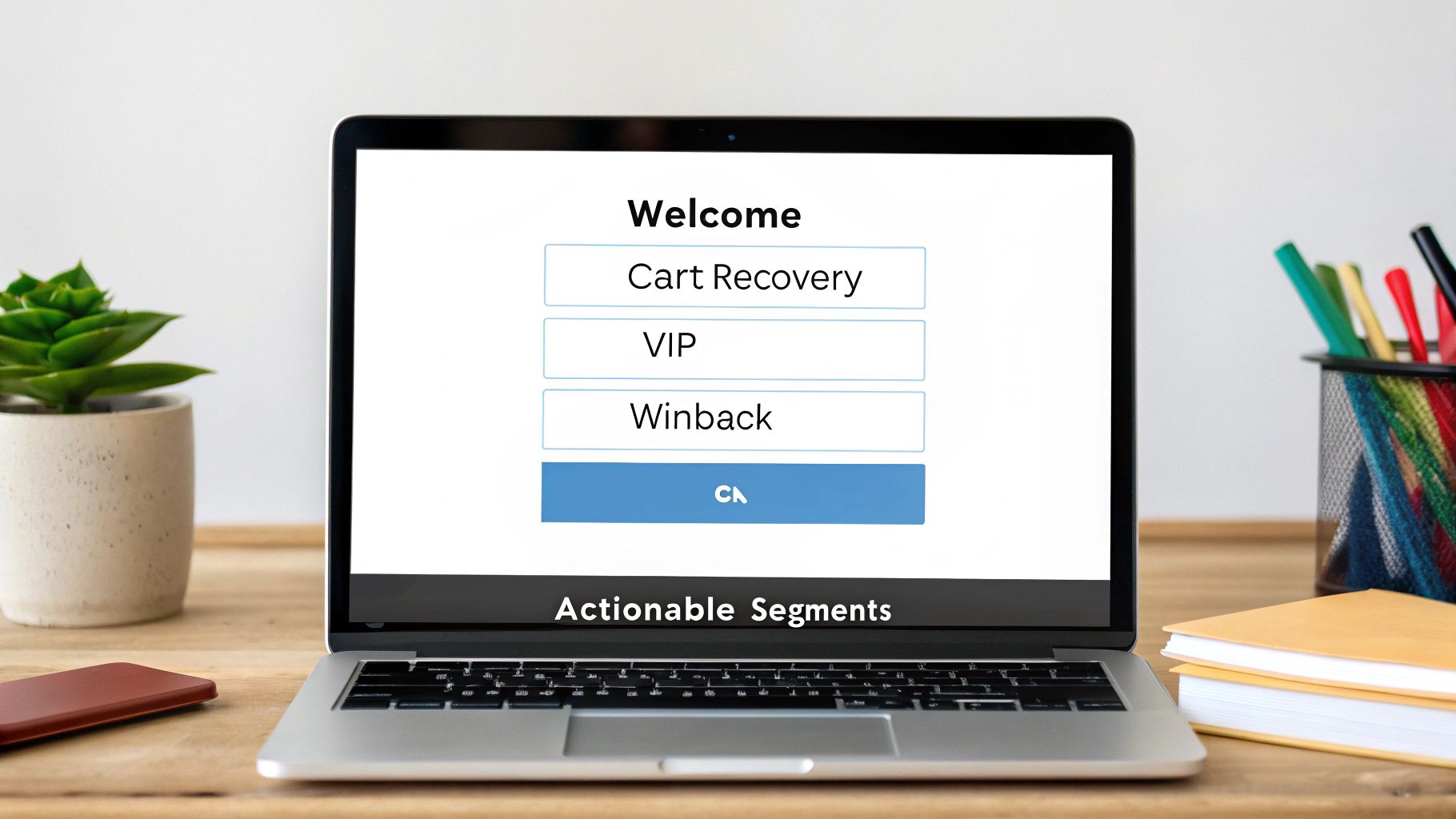
Knowing the theory is one thing, but seeing segmentation actually drive revenue is what it's all about. The good news? You don't need dozens of complicated segments to make a real difference. By focusing on just a few high-impact groups, any Shopify store can start turning customer insights into profit.
Let's walk through some of the most essential segments you can build right now. These examples are foundational because they target customers at make-or-break moments in their journey—from their very first interaction to a potential last goodbye. Keep in mind that solid segmentation also strengthens your social media advertising strategies, ensuring you reach the right people across every channel.
The Welcome Series: Making A Great First Impression
This is your shot to turn a casual browser into a loyal fan. This segment is for everyone who just gave you their email address but hasn't yet clicked "buy." Their interest is at its peak, so you need to act fast.
Who It Targets: All new email or SMS subscribers with zero purchases.
Marketing Goal: Convert these curious subscribers into first-time buyers while introducing them to what makes your brand special.
Example Campaign: A simple three-part email series works wonders. Email one delivers their sign-up discount, email two tells your brand's story, and email three shows off your best-sellers with glowing customer reviews.
The Cart Recovery Crew: Closing The Deal
Every abandoned cart is a sale that almost happened. This is easily one of the most profitable segments you can create, targeting shoppers who got all the way to the checkout page and then vanished.
The potential payoff is massive. Segmented cart recovery campaigns see 10% higher conversions than generic, one-size-fits-all reminders. And when up to 52% of customers admit they’ll shop elsewhere if emails feel impersonal, a targeted cart abandonment flow becomes a must-have.
Key Insight: This isn't just about sending a reminder. It's your chance to figure out why they hesitated. Your emails can tackle common issues by including an FAQ, offering a small discount on shipping, or using a bit of urgency to get them over the finish line.
The VIP Club: Rewarding Your Best Customers
Your top customers are the backbone of your business. The VIP segment is all about identifying these loyal shoppers and treating them like gold, which encourages them to keep coming back and tell their friends about you.
Who It Targets: Customers who have spent over a certain amount (like $500 total) or made a specific number of purchases (say, 3+ orders).
Marketing Goal: To boost customer lifetime value (CLV) and turn happy customers into passionate brand advocates.
Example Campaign: Make them feel special with exclusive perks. Think early access to new products, a unique VIP-only discount, or even a personal thank-you note from the founder.
The Winback Campaign: Reigniting The Flame
Bringing an old customer back is way cheaper and easier than finding a new one. This segment targets shoppers who used to buy from you but have gone quiet. It's your opportunity to remind them why they loved you in the first place. For more ideas, check out our deep dive into 10 actionable customer segment examples.
To make these concepts even clearer, here’s a simple table that breaks down some of the most effective segments for Shopify stores.
High-Impact Segments for Your Shopify Store
Segment Name | Who It Targets | Marketing Goal | Example Email Campaign |
|---|---|---|---|
Welcome | New subscribers, 0 purchases | Convert subscriber to first-time buyer | 3-part series: Welcome discount, brand story, and best-sellers. |
Cart Recovery | Added to cart but didn't buy | Recover lost sales | Gentle reminder with cart items, followed by an offer. |
VIP Customers | High-spending or frequent buyers | Increase loyalty and LTV | Exclusive access to sales, new products, or special discounts. |
Winback (Inactive) | Past customers, no purchase in 90+ days | Re-engage and win back their business | A "we miss you" email with a compelling offer or survey. |
Using just a few of these segments can completely change the way you communicate with your customers, turning generic blasts into personal conversations that drive sales.
How Email Wiz Automates Smart Segmentation for You
Knowing you should be using segmentation is one thing. Actually doing it is another beast entirely. Manually sifting through customer lists, creating complex rules, and building out campaigns takes a ton of time and technical know-how—resources most Shopify store owners are short on. This is where that frustrating gap between knowing and doing opens up.
Email Wiz was built from the ground up to close that gap. We designed our platform to do all the heavy lifting, turning your raw customer data into an automated system that drives real revenue. You don't need to be a data scientist to get expert-level results, because our AI handles it for you.
From Manual Guesswork to Automated Intelligence
The moment you connect Email Wiz to your Shopify store, our AI gets to work analyzing your customer data. It instantly starts spotting key patterns in purchase history, browsing habits, and email engagement. This allows it to create powerful, pre-built segments without you ever having to touch a single rule or filter.
Instead of spending weeks trying to figure out who your VIPs are or which customers are at risk of lapsing, Email Wiz flags them for you. It builds and constantly updates these dynamic segments in the background, so they’re always accurate.
This means your marketing stays relevant 24/7. A customer who just made their third purchase is automatically moved into the "VIP" segment. Someone who hasn't opened an email in 60 days gets flagged for a win-back campaign. It all happens on its own.
Launch High-Impact Campaigns in Minutes
The real magic happens when you connect these smart segments to proven email automations. Email Wiz comes loaded with pre-built flows that are already optimized to get results. These aren't just basic templates; they're complete, ready-to-launch campaigns powered by intelligent segmentation right out of the box.
Some of the automated flows you can switch on instantly include:
Welcome Series: Turns new subscribers into first-time buyers.
Cart & Checkout Recovery: Sends targeted reminders to bring back shoppers and recover lost sales.
Post-Purchase Follow-Ups: Builds immediate loyalty and encourages that next purchase.
Winback Campaigns: Re-engages customers who have gone cold, winning them back before they're gone for good.
This all-in-one approach lets you launch a sophisticated email marketing program in minutes, not months. To see exactly how these flows work, check out our guide on the top automated email flows that will skyrocket your Shopify sales.
Email Wiz takes all the complexity and guesswork out of segmentation. It gives you a professional, revenue-focused email strategy with a single click, so you can get back to what you do best: growing your business.
Common Questions About Customer Segmentation
Getting into segmentation can feel like a big leap, so it's completely normal to have a few questions before you dive in. Let's walk through some of the most common ones we hear from Shopify store owners. The goal here is to clear the air and give you the confidence to get started.
How Many Segments Are Too Many?
This is a great question, and the answer is probably simpler than you'd expect: start with fewer than you think you need. It’s incredibly tempting to go wild and create dozens of super-specific segments right away. But honestly, that’s a fast track to getting overwhelmed and creating an email strategy that's impossible to manage.
Instead of chasing a high number, focus on quality and impact. I always recommend starting with three to five core segments that hit the most critical points in the customer journey. These almost always include:
New Subscribers: The folks who just signed up but haven't bought anything yet.
VIP Customers: Your best customers—the loyal, high-spending fans.
Cart Abandoners: People who were this close to buying and just need a little nudge.
Inactive Customers: Those who haven't purchased or engaged in a while.
Once you have these running smoothly and you understand how they work, you can start layering on more complexity. The sweet spot is a segment that’s big enough to matter but specific enough for your message to land perfectly.
What Is the Difference Between a Segment and a Tag?
This one trips up a lot of people. While both help you organize your audience, they work in fundamentally different ways.
I like to use a closet analogy. Tags are like the little labels on your clothes: "blue," "cotton," "shirt." They’re static, one-off labels you apply manually to describe a specific, fixed attribute.
A segment, on the other hand, is like creating a whole section in your closet for "work clothes" or "gym outfits." It's a dynamic group that automatically updates based on rules you set. When you buy a new workout shirt, it automatically finds its home in the "gym outfits" section without you having to think about it.
So, a customer might be tagged as "bought_during_BFCM," but they would fall into a segment of "Holiday Shoppers" that automatically includes anyone who made a purchase between November and December. The segment does the work for you.
How Soon Will I See Results?
You'll see some wins almost immediately, but the real magic takes a bit of time. It's all about setting realistic expectations. A finely-tuned cart abandonment flow, for instance, can start recovering sales within 24 hours because it’s targeting a fresh, high-intent action.
But the bigger, more impactful benefits of segmentation—like a higher customer lifetime value and genuine brand loyalty—are part of a longer game. Those results compound over time as you consistently show up in your customers' inboxes with messages that feel like they were written just for them. I'd say give your strategy a solid 30 to 90 days to really see meaningful trends in your open rates, click-throughs, and revenue.
For a deeper dive, check out our guide to email segmentation best practices.
Do I Need a Huge Email List to Start?
Not at all! This is probably the biggest myth I hear. Honestly, I'd argue that segmentation is even more critical when you have a smaller, growing list.
Think about it: when your list is small, every single subscriber is pure gold. Sending a generic, one-size-fits-all email to 200 people can cause a much higher percentage of your audience to unsubscribe than if you did the same with a list of 20,000. Starting with smart segmentation habits from the beginning ensures you're building a healthy, engaged list from day one.
Ready to stop guessing and start growing? Email Wiz takes the complexity out of segmentation by using AI to automatically group your customers and send the right message every time. Launch a professional email program in seconds. Get started with Email Wiz today.


Comments