Boost Your click through open rate: Key Metrics & Tips
Discover the click through open rate and what it reveals about email engagement. Learn how to optimize this metric with practical, actionable tips.


When you're trying to figure out if your emails are actually working, there's one metric that tells the truth better than any other: the click through open rate (CTOR). So, what is a good email open rate? Think of it as your most honest engagement metric. It zeroes in on the percentage of subscribers who not only opened your email but were so intrigued by your content that they clicked a link inside.
What Click Through Open Rate Really Tells You
It's easy to get hung up on surface-level numbers like open rates and click-through rates (CTR). They're important, sure, but they don't give you the full picture. Open rates can be misleading thanks to new privacy settings, and CTR measures clicks against your entire send list—including people who never even saw your message.
That's where the click through open rate, or CTOR, comes in. It cuts through all that noise. It focuses only on the people who actually opened your email and tells you how good your content was at getting them to take the next step.
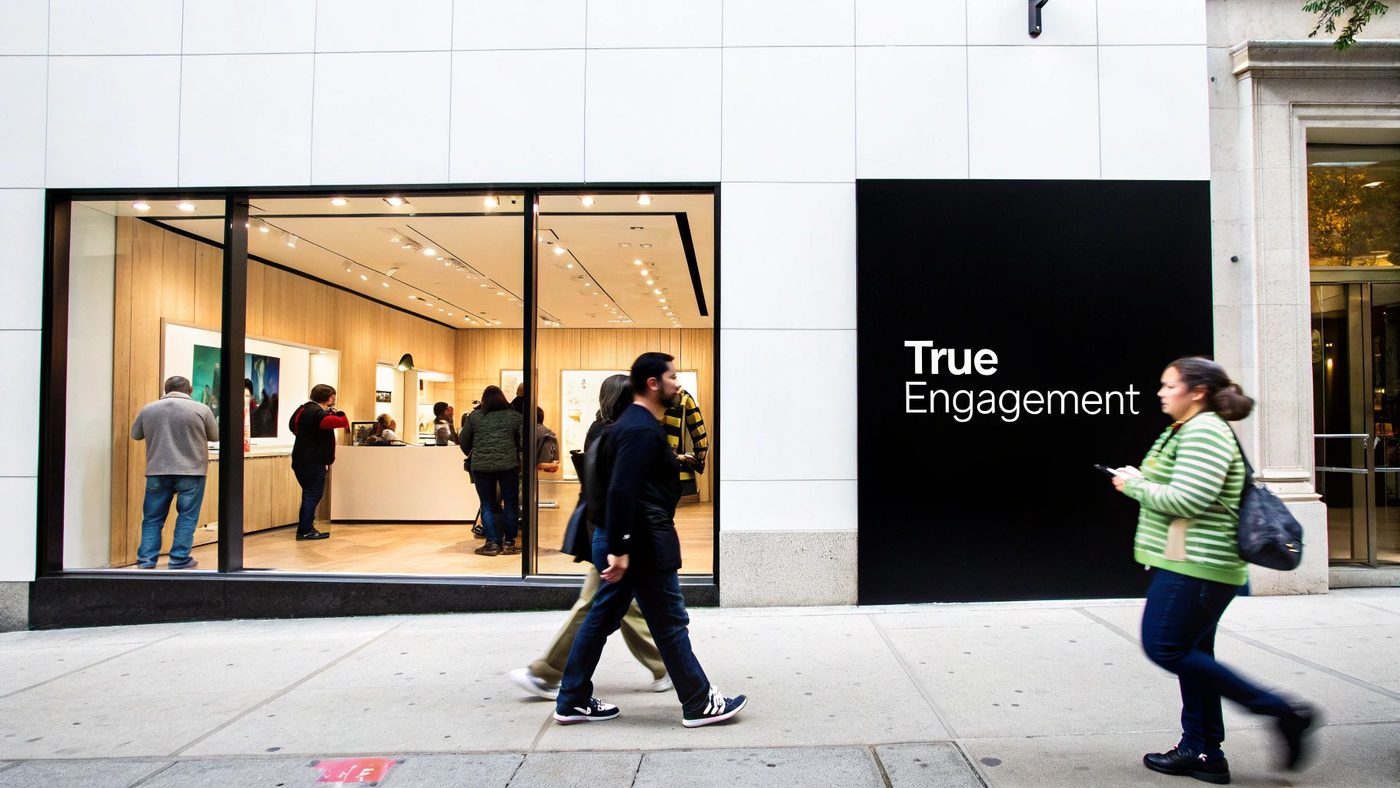
A Retail Store Analogy
Let's imagine your email campaign is a new shop on a bustling street.
- Open Rate: This is like counting every person who walks by and glances at your window display. It shows they noticed you, but that’s about it.
- Click-Through Rate (CTR): This counts how many people from the entire street decided to walk into your store. It’s a better signal, but it lumps everyone together, including those who were just passing by with no intention of shopping.
- Click Through Open Rate (CTOR): This is the real deal. It measures the percentage of people who, after being drawn in by your window display (opening the email), actually stepped inside to browse and try something on (clicking a link). This is genuine interest.
A high CTOR is proof that the promise you made in your subject line was successfully delivered by the content inside your email. You hooked them, and you reeled them in.
CTOR Formula: The calculation is simple: ((Unique Clicks / Unique Opens) x 100). This little formula is your window into the true performance of your email's content.
Getting a handle on this is more important than ever. With features like Apple’s Mail Privacy Protection, open rates can get artificially inflated, making them less reliable. CTOR, on the other hand, helps you see what real engagement looks like.
To give you a benchmark, a massive GetResponse study in 2022 found that the average click-to-open rate across all continents was 7.01%. If you want to dive deeper, you can explore the full email marketing statistics report they published.
CTOR vs Open Rate vs CTR A Quick Comparison
To put it all together, let’s quickly break down the key differences between these metrics. Each one answers a different question about your campaign's performance.
| Metric | What It Measures | What It Reveals |
|---|---|---|
| Open Rate | Percentage of recipients who opened your email. | The effectiveness of your subject line and sender name. |
| Click-Through Rate (CTR) | Percentage of total recipients who clicked a link. | Overall engagement from your entire send list. |
| Click Through Open Rate (CTOR) | Percentage of openers who clicked a link. | The quality and relevance of your email's content and call-to-action. |
Looking at this, it becomes clear why CTOR provides a much deeper insight. It isolates the performance of your email's body, helping you understand if your message truly resonated with the audience that gave you their attention.
Calculating Your Click Through Open Rate

Alright, let's get down to the nuts and bolts. Figuring out your click through open rate is actually pretty simple once you see the formula. The real magic of this metric is that it ignores all the subscribers who didn't open your email and zooms in on one critical question: of the people who did open it, how many found the content compelling enough to click?
Here’s the formula you need:
CTOR = (Unique Clicks ÷ Unique Opens) x 100
Notice the word "unique"—it's the most important part. We're counting individual people, not just raw totals. If one super-fan opens your email five times and clicks three links, that still only counts as one unique open and one unique click. This keeps your data clean and gives you a true measure of how many subscribers took action.
A Practical Example
Let's make this real. Imagine you just sent out your latest promotional email and the numbers roll in:
- Unique Opens: 2,000 people opened the email.
- Unique Clicks: 250 of those people clicked a link inside.
Plugging that into the formula, we get: (250 Clicks ÷ 2,000 Opens) x 100 = 12.5% CTOR.
What does this 12.5% really tell you? It means that out of everyone who was interested enough to open your email, one in eight was then persuaded by your message to take the next step. That's a strong signal that your copy, design, and call-to-action are working well together.
Of course, you don’t have to break out the calculator every time you send a campaign. Good email platforms do the heavy lifting for you. For instance, tools like Email Wiz automatically track and display your CTOR for every send.
The Email Wiz dashboard shows you this metric right alongside your other key performance indicators.
When the data is right there at your fingertips, you can spend less time doing math and more time figuring out what truly resonates with your audience.
How Does Your CTOR Stack Up? A Look at Industry Benchmarks
Okay, you’ve calculated your click-to-open rate. Now for the million-dollar question: is it any good? The honest answer is, it depends. A "good" CTOR for a media company is worlds apart from what a B2B service might see, so comparing your results to some generic, one-size-fits-all average is a recipe for frustration.
Think of it like this: you wouldn't compare a local coffee shop's daily customer count to a giant supermarket's. They operate in different worlds with different expectations. The same logic applies here. Every industry has its own unique audience, content style, and engagement habits that shape what a successful email campaign looks like.
Setting the Right Expectations
So, what should you be aiming for? Recent 2025 email marketing benchmarks show an overall average CTOR of 5.63%, but that number hides the real story. The data actually shows a massive spread, from a low of 2.93% in some sectors to a high of 10.71% in others. This just goes to show how critical context is.
For instance, media and publishing brands consistently hit the high end of that range, often reaching that 10.71% benchmark. It makes perfect sense when you think about it—their subscribers signed up specifically to get great content, so they're already primed to click through and read an article or watch a video.
An e-commerce store, on the other hand, might have a perfectly healthy CTOR that's lower. Their emails are usually trying to drive a direct sale, which is a much bigger ask than just clicking to read something.
Key Takeaway: Stop worrying about a universal "average" that doesn't apply to you. Instead, use benchmarks from your own industry to create a realistic scorecard. This is how you spot real opportunities to improve and grow within your specific market.
Average Click Through Open Rate by Industry
To give you a better feel for where you stand, let’s break down the numbers by sector. This table gives you a quick snapshot of what to aim for.
| Industry | Average CTOR (%) |
|---|---|
| Media & Publishing | 10.71% |
| Nonprofit | 7.14% |
| SaaS | 6.81% |
| B2B Services | 5.63% |
| Retail | 4.62% |
| Hospitality & Travel | 3.94% |
Having this data in hand changes the conversation. You can stop asking, "Is my CTOR good?" and start asking, "How can I improve my CTOR for my audience?" That’s the shift that leads to real results—focusing on creating emails that truly connect with the people who matter most.
Finding the Root Cause of a Low CTOR

So your click-through-open rate is low. Don't panic—this is actually a fantastic clue. It tells you there's a disconnect between the promise you made in your subject line and what your subscribers found when they opened the email. Think of it this way: you got them to open the door, but once they looked inside, there was nothing that made them want to come in.
That drop-off in engagement is the first step toward figuring out what went wrong and, more importantly, how to fix it.
The Most Common Culprits
In my experience, a weak CTOR almost always boils down to a handful of common issues. One of the biggest offenders is a classic bait-and-switch. You write a flashy subject line like "Your Exclusive Invite Is Inside!" but the email content is just your standard weekly newsletter. That kind of thing instantly erodes trust and kills any motivation to click.
Weak or confusing calls-to-action (CTAs) are another major problem. If your subscriber doesn't know what you want them to do next, they'll simply do nothing. Is your "Shop Now" button buried at the very bottom of a wall of text? Is the button text a vague, uninspiring "Click Here"? You're not giving them a compelling reason to act.
A low CTOR isn't just a number; it's feedback. It tells you that your message, design, or offer isn't compelling enough to the people who were already interested.
We also have to talk about mobile. With over 41% of emails now opened on phones, a clunky mobile experience is a real engagement killer. If your email looks gorgeous on a desktop but is a jumbled, unreadable mess on a smaller screen, you can bet your click rate will suffer.
Finally, and this is a big one, you might be sending the wrong message to the right people—or the right message to the wrong people. If your content isn't truly relevant to the segment you're sending it to, they have no reason to engage further. This is where knowing how to segment your email list becomes absolutely critical.
Nailing down which of these is hurting your campaigns will give you a clear roadmap for what to fix first.
Proven Strategies to Increase Your Click Through Open Rate

Getting someone to open your email is half the battle; getting them to click is where the real magic happens. A high click-through-open rate is a sign that you nailed it—the promise you made in the subject line was perfectly matched by the value you delivered inside. It's all about creating a smooth, irresistible path from the inbox to your call-to-action (CTA).
This journey begins with a message that makes sense from start to finish. If you tease a “50% Off Flash Sale” in the subject line, the very first thing people see inside should be a bold headline and eye-catching visuals screaming about that same offer. Any bait-and-switch, however small, will make them hit the back button.
From there, you need to be a good guide. Great email design isn't just about looking pretty; it creates a visual roadmap that leads the reader’s eye straight to the click. Use white space to avoid clutter, make your CTA button pop with a contrasting color, and organize the information so that taking the next step feels like the most natural thing to do. We go into a lot more detail on this in our guide to high-conversion marketing email design.
Craft Compelling Calls to Action
Your CTA is arguably the single most important element for driving up your CTOR. Let's be honest, vague phrases like "Learn More" or "Click Here" are boring. They don’t inspire action because they don’t communicate any specific value. You have to do better.
Instead, use action-packed language that tells the subscriber exactly what they're getting.
- Be Specific: Instead of a generic "Download," try "Get Your Free E-commerce Checklist."
- Create Urgency: Swap out "Shop Now" for something more exciting like "Shop the 24-Hour Flash Sale."
- Highlight Value: Change a boring "Submit" button to "Claim My 20% Discount."
The goal of a great CTA is to remove all friction and ambiguity, making the decision to click an easy and confident one for the subscriber.
Guesswork doesn't cut it here. A platform like Email Wiz helps you take the data-driven route by making it simple to A/B test different CTA copy and designs. You can quickly see which words and colors get your audience clicking, letting you optimize for the best results.
Personalize the Experience with Segmentation
The days of blasting the same email to your entire list are long gone. Your subscribers expect you to know them, and that means sending content that’s actually relevant to their lives. This is where segmentation becomes your secret weapon.
By grouping your audience based on things like what they’ve bought before, which pages they’ve browsed, or how often they engage, you can send targeted content that feels like it was written just for them. For example, why send a promotion on running shoes to your entire list when you can send it just to the people who’ve bought athletic gear before? Their click-through-open rate will be miles higher.
This isn't just a theory; the numbers back it up. Recent data shows that emails targeted based on user behavior can rocket CTOR as high as 21.64% in some industries. It’s a powerful reminder to send the right message at the right time. For more ideas, you can check out some essential marketing automation best practices to get started.
With Email Wiz, smart segmentation is built right into the platform. It automatically analyzes your customer data to build these dynamic groups for you, helping ensure every campaign is timed and personalized to drive clicks.
A Few Common Questions About CTOR
As you start digging into click-to-open rate, a few questions always seem to come up. Let's walk through them so you can feel confident using this metric.
Is CTOR More Important Than CTR?
Ah, the classic debate. The truth is, one isn't "better" than the other—they just answer different questions. Think of your click-through rate (CTR) as a wide-angle lens. It measures clicks from your entire send list, giving you the big picture of how your campaign landed with everyone you sent it to.
Your click-to-open rate (CTOR), on the other hand, is like a magnifying glass. It zooms in on the people who actually opened your email and tells you how persuasive your content was for that specific group. A high CTR means you have a great offer for your whole list. A high CTOR means the email itself—the copy, the images, the call-to-action—did its job brilliantly.
How Often Should I Check My CTOR?
Honestly, you should be glancing at it after every single send. It’s the quickest way to spot a potential problem, like a subject line that made a promise the email content didn't keep.
But the real magic happens when you track CTOR over time. A single campaign can always be a fluke, good or bad. It's the trend over a month or a quarter that tells you the real story about what your audience responds to. This bigger-picture view is what helps you build a smarter content strategy, rather than just reacting to one-off results.
Key Insight: The classic red flag is a high open rate paired with a low click-to-open rate. This tells you something incredibly valuable: your subject line was fantastic, but the content inside fell flat.
This is actually great news because it tells you exactly where to focus your energy. Stop worrying about the subject line for a minute and start refining your email's body, your offer, and your CTA. If you need a refresher on what makes a great first impression, check out these email subject line best practices.
Conclusion: What is a Good Email Open Rate?
Ready to stop guessing and start growing? Email Wiz sets up your entire Shopify email channel in 30 seconds, using AI to write, design, and automate campaigns that turn opens into revenue. Get started with Email Wiz today!