How to Recover Lost Revenue with Abandoned Cart Emails in 2026
An abandoned cart is one of the most common and costly problems in ecommerce today. Every time a shopper adds products to their cart and leaves without completing checkout, revenue disappears. Learning how to recover abandoned cart revenue is one of the fastest ways to increase profit without increasing ad spend. Many online stores focus heavily on driving traffic. However, traffic does not guarantee conversions. If abandoned cart recovery is weak, acquisition spending becomes less efficient....

An abandoned cart is one of the most common and costly problems in ecommerce today. Every time a shopper adds products to their cart and leaves without completing checkout, revenue disappears. Learning how to recover abandoned cart revenue is one of the fastest ways to increase profit without increasing ad spend.
Many online stores focus heavily on driving traffic. However, traffic does not guarantee conversions. If abandoned cart recovery is weak, acquisition spending becomes less efficient.
This guide explains how abandoned cart emails work, why they produce such high returns, and how to structure them correctly. You will also learn how automation turns abandoned cart recovery into a predictable infrastructure. By the end, you will understand how to convert hesitation into consistent revenue.
What Is an Abandoned Cart in Ecommerce?
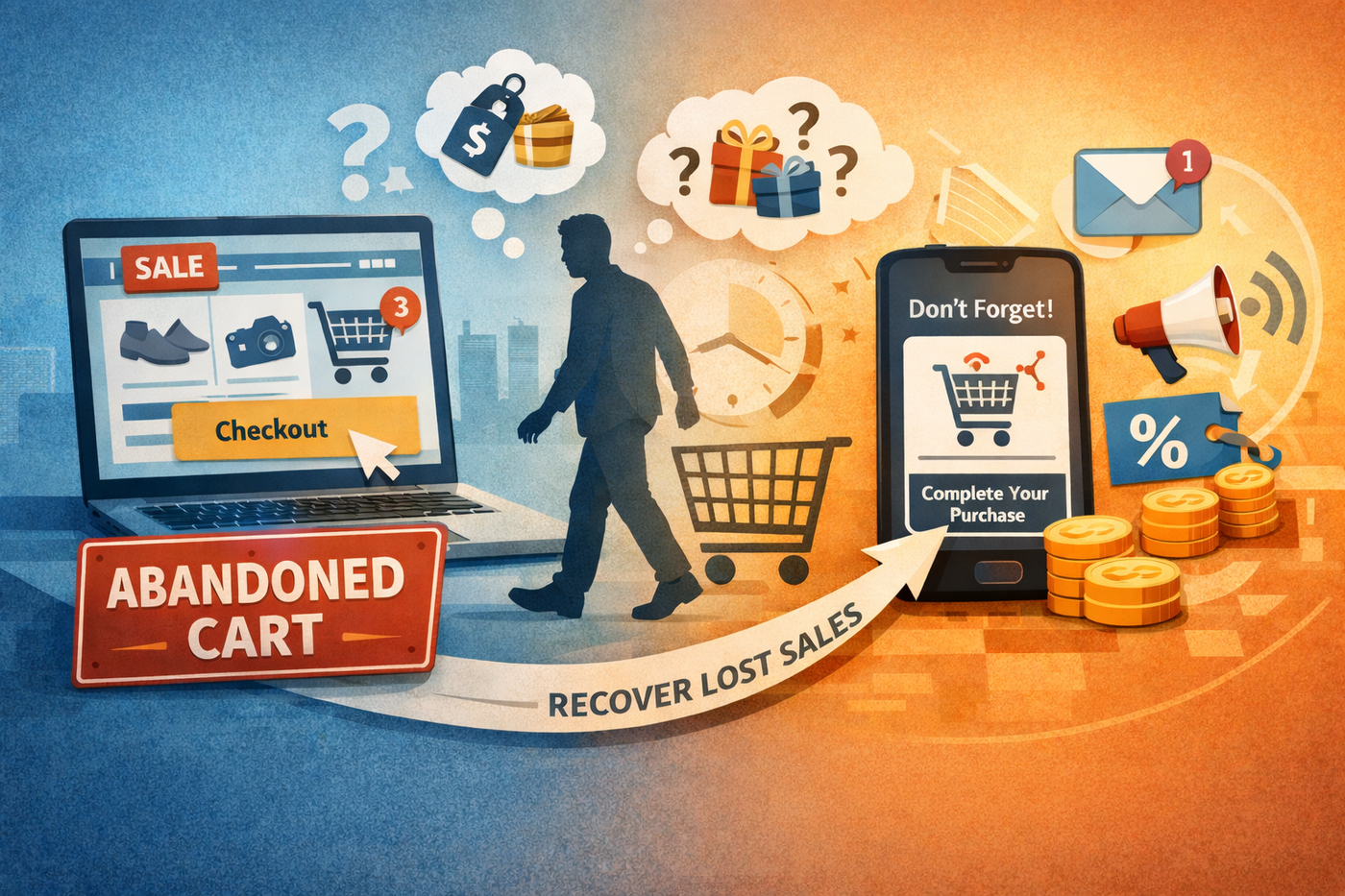
An abandoned cart occurs when a shopper adds one or more items to their online shopping cart but exits before completing checkout. This behavior indicates strong purchase intent because the customer has already selected specific products. Unlike casual browsing, adding items to cart reflects serious consideration.
Abandoned cart sessions are extremely common across e-commerce industries. Many shoppers become distracted, compare alternatives, or hesitate at the final moment. Without follow-up, those sessions typically result in zero revenue.
Recognizing abandoned cart activity as an opportunity rather than a failure changes your approach. Each abandoned session represents recoverable revenue. Proper automation allows you to capture it consistently.
Why Abandoned Cart Happens
Cart abandonment rarely happens because customers dislike your product. More often, it results from friction, distraction, or hesitation during checkout. Understanding these behavioral triggers allows you to design smarter abandoned cart recovery systems.
Common reasons for abandoned cart behavior include:
- Unexpected shipping costs: When additional fees appear at checkout, the total price increases suddenly. This often causes shoppers to pause and reconsider the purchase.
- Complicated checkout processes: Long forms, required account creation, or multiple steps introduce friction. Even small obstacles can reduce completion rates.
- Mobile distractions: Many shoppers browse and shop on mobile devices. Notifications or interruptions can easily pull them away before finishing checkout.
- Trust concerns: If return policies, payment security, or delivery timelines are unclear, hesitation increases. Customers may leave to research your brand further.
- Comparison shopping: Some shoppers add items to cart while evaluating competitors. They may intend to return but forget without a reminder.
Each of these factors can be addressed through structured abandoned cart emails. Timely follow-up reduces hesitation and restores purchase momentum. Automation ensures consistent execution.
The Real Cost of Abandoned Cart for Online Stores
Industry research consistently shows abandoned cart rates above 60 percent. This means that more than half of high-intent shoppers leave without purchasing. Without recovery automation, that lost revenue compounds over time.
If you rely heavily on paid acquisition, abandoned cart recovery becomes even more important. You are already paying for traffic. Failing to recover abandoned cart sessions reduces return on ad spend.
Over time, low recovery rates increase dependency on constant new customer acquisition. This reduces margin stability and makes growth unpredictable. Recovering even a fraction of abandoned cart revenue can dramatically improve profitability.
Why Abandoned Cart Emails Deliver the Highest ROI

Abandoned cart emails target shoppers who have already shown strong intent. This makes them more likely to convert compared to general promotional campaigns. Intent-driven communication consistently outperforms cold messaging.
Because abandoned cart emails are triggered by behavior, they feel relevant and timely. The message directly references the product left behind. Relevance increases open rates, click rates, and conversions.
For many e-commerce stores, abandoned cart emails generate the highest revenue per send. They require no additional traffic. Instead, they maximize the value of existing visitors.
The Ideal Abandoned Cart Email Sequence Structure
A single reminder email is rarely enough to recover most abandoned cart sessions. A structured sequence improves performance significantly. Timing and message variation both matter.
Email 1: The Immediate Reminder
The first abandoned cart email should send within one hour of abandonment. This captures the shopper while intent remains high. Early reminders typically recover the largest percentage of sales.
This email should clearly display the abandoned product and include a direct checkout button. The tone should remain helpful rather than aggressive. Many shoppers simply need a nudge.
Email 2: Value Reinforcement
A second email should follow within 12 to 24 hours if no purchase occurs. This message reinforces product benefits and addresses hesitation. It builds confidence rather than urgency.
Including testimonials and trust signals reduces uncertainty. Removing perceived risk increases completion rates. Structured reassurance improves abandoned cart recovery.
Email 3: Urgency or Incentive
The third abandoned cart email typically introduces urgency or a limited incentive. Timing usually falls within 24 to 48 hours after abandonment. At this stage, hesitation often requires stronger motivation.
Limited-time messaging increases action rates. Discounts should remain strategic to protect margins. Intelligent testing determines the optimal structure.
Should You Always Offer a Discount?
Discounting too quickly can reduce profitability. Many abandoned cart shoppers convert with reminders and reassurance alone. Offering incentives should be strategic rather than automatic.
High average order value stores often benefit from value-focused messaging. First-time buyers may require additional reassurance. Testing ensures long-term sustainability.
Timing Strategy for Abandoned Cart Emails
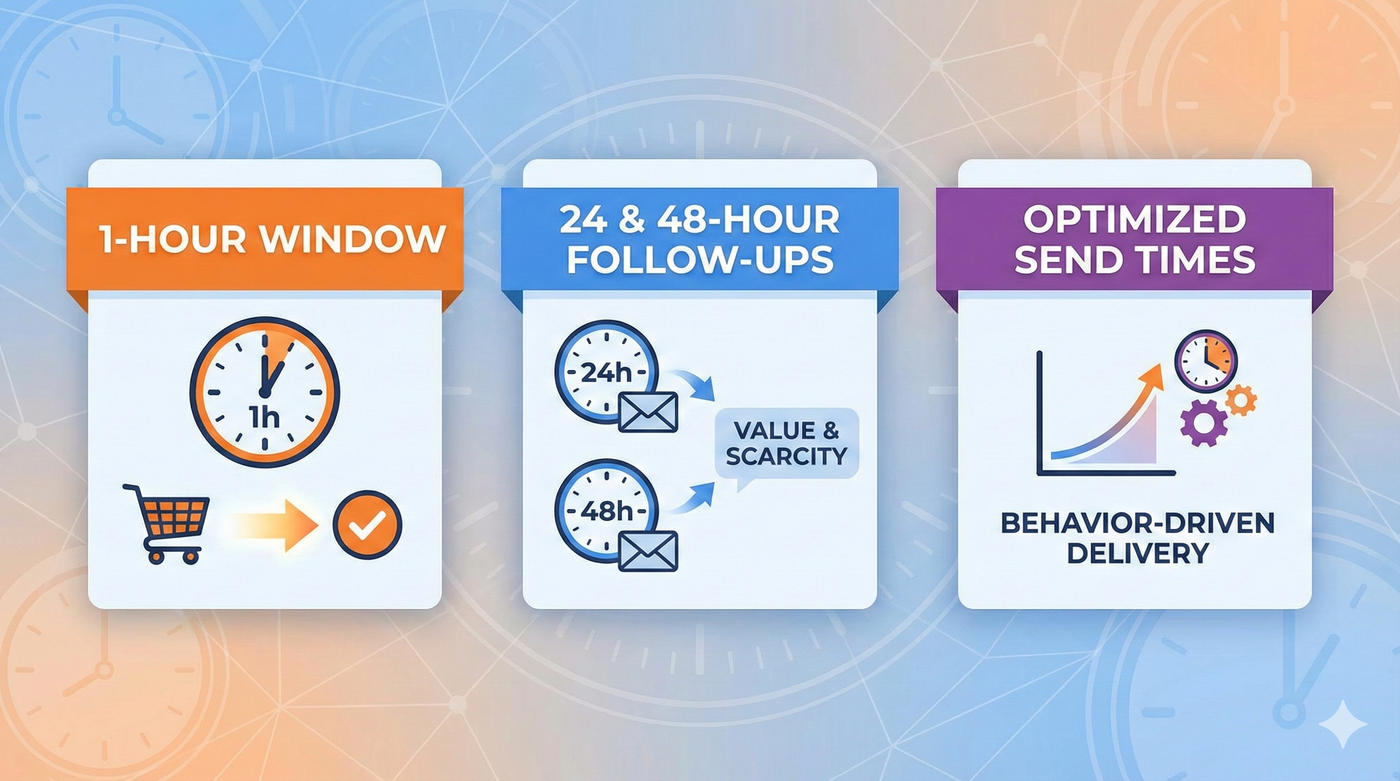
Timing plays a critical role in abandoned cart recovery performance. The first hour after abandonment represents the highest intent window. Sending a reminder quickly increases the likelihood that shoppers return before their interest fades.
Spacing between follow-up emails should balance urgency and respect. A second message within 24 hours reinforces value, while a third within 48 hours can introduce scarcity if needed. After this period, purchase probability decreases significantly.
Advanced systems may optimize send times based on subscriber behavior. Delivering emails when recipients are most active increases engagement. Higher engagement strengthens deliverability and revenue.
Personalization Strategies for Abandoned Cart Emails
Personalization increases the effectiveness of abandoned cart emails because it reinforces relevance. When messaging reflects real behavior, it feels timely and helpful. This alignment increases conversion rates.
Here are 5 effective personalization strategies:
- Dynamic product blocks
Emails should automatically display the exact items left in the cart. Visual reminders strengthen purchase intent and reduce friction. - Customer purchase history references
Mentioning previous purchases builds familiarity and trust. Repeat buyers respond well to recognition. - Location-based messaging
Shipping timelines or regional details make communication more precise. Clear expectations reduce hesitation. - Behavior-based follow-ups
If a subscriber opens but does not click, the next email can adjust messaging. Conditional logic increases relevance. - Cart value segmentation
High-value carts may receive different messaging than low-value carts. This protects margins while maximizing recovery.
Personalization should feel supportive rather than intrusive. Transparency builds trust. Balanced targeting improves long-term engagement.
Deliverability and Abandoned Cart Performance
Even the best abandoned cart emails fail if they land in spam folders. Deliverability determines inbox placement. Inbox placement directly influences revenue.
Domain authentication strengthens sender credibility. Removing inactive subscribers protects engagement metrics. Healthy lists maintain a strong reputation.
Avoid excessive promotional language and spam triggers. Maintain clarity and authenticity. Long-term deliverability protects abandoned cart performance.
Metrics That Matter for Abandoned Cart Recovery
Tracking the right metrics ensures continuous optimization. Without data, improvement becomes guesswork. Reporting transforms abandoned cart recovery into a measurable system.
Key metrics to monitor include:
- Recovery rate
This measures the percentage of abandoned cart sessions converted into purchases. Higher rates indicate effective messaging and timing. - Revenue per abandoned cart email
This shows the average revenue generated from each recovery message. It highlights financial efficiency. - Automation revenue contribution
This measures how much total revenue comes from automated flows. Strong abandoned cart performance increases this percentage. - Revenue per subscriber
This reflects the overall value of your email list. Improvements signal better segmentation and personalization. - Click-through rate
This tracks how many recipients return to checkout. Strong click rates often correlate with higher recovery. - Time to conversion
This shows how quickly shoppers complete purchases after receiving emails. Faster conversions improve cash flow predictability.
Review these metrics monthly rather than daily. Trends reveal meaningful insights. Data-driven adjustments improve long-term results.
Making Abandoned Cart Recovery Easier to Execute
Most e-commerce brands understand the importance of reducing abandoned carts and recovery. The challenge is execution rather than strategy. Building workflows, writing copy, designing emails, and testing timing requires ongoing effort.
Manual setup often slows implementation. Many founders delay optimization because of complexity. As a result, recoverable revenue remains untouched.
Modern Shopify brands increasingly rely on systems that install and operate abandoned cart recovery automatically. Instead of managing workflows directly, they oversee outcomes. When execution becomes autonomous, recovery becomes predictable.
Wiz is designed specifically around this model. As the first AI email marketing agent for Shopify, it deploys abandoned cart flows in about 30 seconds without manual setup. It pulls branding and product data directly from your store and continues operating in the background as your autonomous email department.
Rather than providing templates, Wiz configures timing, copy, and design automatically. It writes brand messages, builds the sequence, and optimizes performance continuously. This allows founders to recover abandoned cart revenue without hiring a team.
Final Thoughts on Abandoned Cart Recovery
An abandoned cart represents opportunity rather than failure. Every incomplete checkout reflects potential revenue waiting to be recovered. Structured automation converts hesitation into action.
Ecommerce abandoned cart emails consistently deliver the highest ROI among ecommerce flows. They maximize existing demand instead of chasing new traffic. Predictability strengthens profitability.
Ready to turn abandoned cart sessions into predictable revenue without building workflows manually? Wiz, the first AI email marketing agent for Shopify, installs and runs your complete abandoned cart recovery system in about 30 seconds. Visit https://emailwiz.ai to let your email marketing operate autonomously and recover lost revenue automatically.
Frequently asked questions
- What is an abandoned cart?
- An abandoned cart occurs when a shopper adds products to checkout but leaves without completing payment. This signals high purchase intent. Recovery emails target this intent directly.
- How many abandoned cart emails should I send?
- Most stores perform best with two to three emails. The first captures immediate intent, while follow-ups reinforce value or urgency. Testing determines the ideal number.
- When should the first abandoned cart email be sent?
- Sending within one hour usually produces the highest recovery rate. Intent declines rapidly after abandonment. Early reminders increase conversions.
- Do abandoned cart emails require discounts?
- Not always. Many shoppers convert after reminders alone. Discounts should be strategic to protect margins.
- How much revenue can abandoned cart emails recover?
- Many e-commerce stores recover between 10 and 20 percent of abandoned revenue. Optimization and personalization can increase this percentage. Automation ensures consistent performance.