Email Marketing for Jewelry Brands in 2026: 6 Tips to Increase Ecommerce Revenue
Email marketing for jewelry brands has become one of the most effective ways to grow ecommerce revenue and build meaningful customer relationships in 2026. Jewelry shoppers are often motivated by personal milestones, gift-giving occasions, and emotional significance, which creates natural opportunities for timely and deeply personal email communication. Brands that invest in a strong email program consistently see higher average order values, stronger customer loyalty, and more repeat...

Email marketing for jewelry brands has become one of the most effective ways to grow ecommerce revenue and build meaningful customer relationships in 2026. Jewelry shoppers are often motivated by personal milestones, gift-giving occasions, and emotional significance, which creates natural opportunities for timely and deeply personal email communication. Brands that invest in a strong email program consistently see higher average order values, stronger customer loyalty, and more repeat purchases than those relying primarily on paid advertising.
Unlike many other ecommerce categories, jewelry purchases are often tied to specific life events. Birthdays, anniversaries, engagements, and holidays all create high-intent buying moments that email marketing can capture with precision. Brands that reach customers at exactly these moments with the right message and the right product often see their highest conversion rates of the year.
In 2026, email marketing for jewelry brands continues to evolve alongside ecommerce technology. Knowing how to do email marketing for jewelry business is essential. Automation, segmentation, and personalized product recommendations are becoming essential tools for staying competitive in a crowded market. Brands that build strong email systems early consistently outperform competitors who rely on manual campaigns and inconsistent communication.
This guide explores six strategies that successful jewelry ecommerce brands use today. These strategies help brands increase repeat purchases, build a trusted brand identity, and simplify their marketing operations. It will also highlight how modern tools can make email marketing easier to manage for teams of any size.
Why Email Marketing Matters for Jewelry Brands
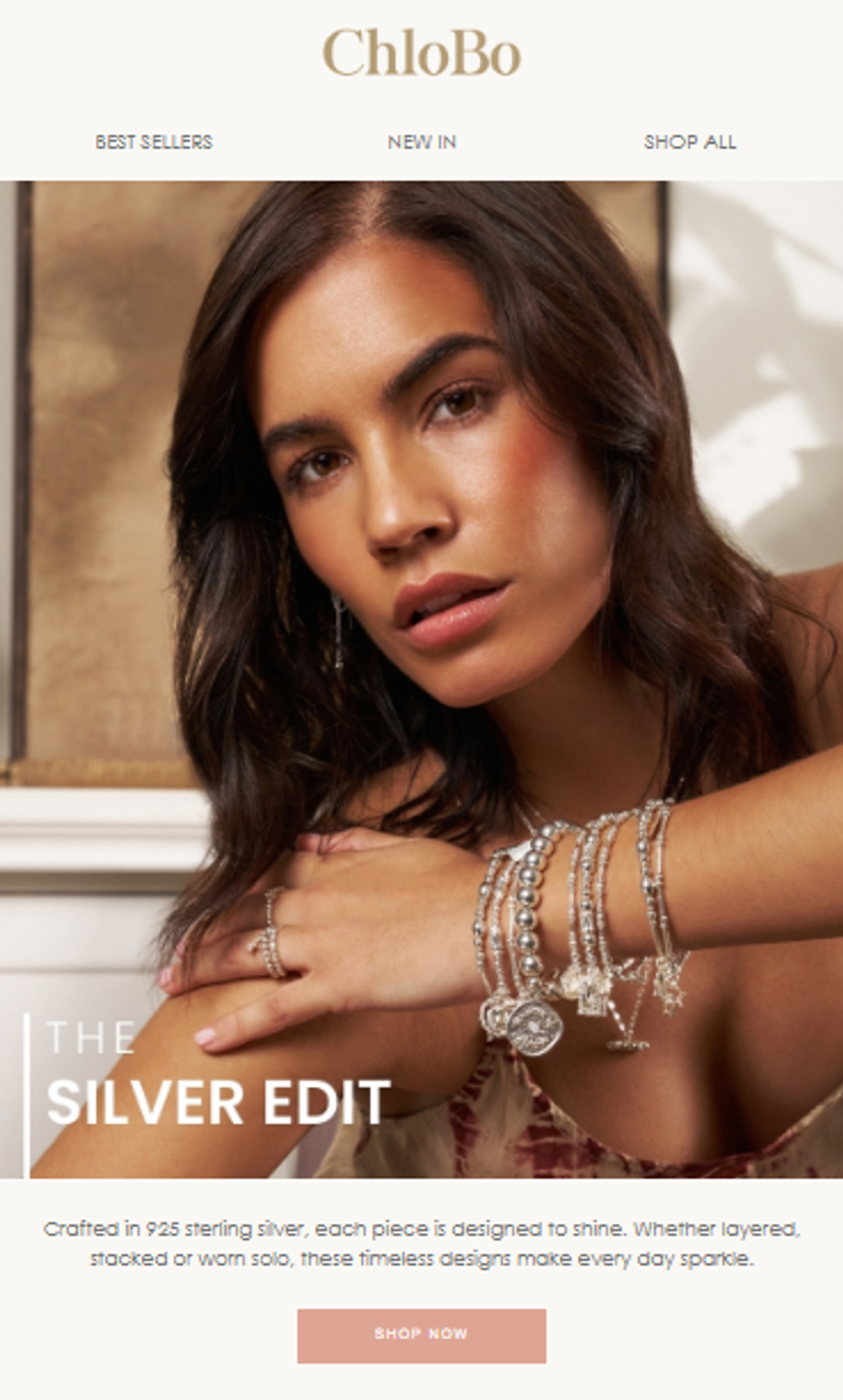
Jewelry ecommerce businesses operate within clear occasion-based demand cycles that make timing essential. Birthdays, Valentine's Day, Mother's Day, and holiday gift seasons all represent concentrated buying moments. Email marketing allows brands to reach customers at exactly the right time with the right products and messaging.
Email marketing also reduces reliance on paid advertising by engaging customers who have already expressed interest in the brand. Instead of spending to reacquire customers through social ads, brands can nurture their existing subscriber lists between purchases. This lowers customer acquisition costs and improves overall marketing efficiency over time.
Jewelry is a considered purchase that often requires trust before a customer commits to buying. Email gives brands a direct channel to educate customers about craftsmanship, materials, and brand values, all of which contribute to building the perceived value that justifies the price point. Subscribers who trust a brand are significantly more likely to convert and return.
Increasing customer lifetime value is one of the most important goals for any jewelry ecommerce brand. Customers who return for anniversaries, holidays, and personal milestones year after year represent substantial long-term revenue without proportional increases in marketing spend. Email marketing is the primary channel that maintains those relationships between purchases.
The Core Elements of Email Marketing for Jewelry Brands
Effective email marketing for jewelry brands relies on several foundational components. These elements help brands create scalable marketing programs that perform consistently across every season. Jewelry ecommerce companies that implement these systems early often see stronger results across every stage of the customer journey.
- Subscriber acquisition
Subscriber acquisition refers to the process of collecting email addresses from potential customers. Jewelry brands often use website popups, style quizzes, exclusive collection previews, or first-purchase discount offers to encourage visitors to sign up.
Growing a subscriber list increases the reach of every campaign sent. A larger, engaged list creates more opportunities to reach customers during high-intent gifting moments throughout the year.
- Customer segmentation
Segmentation divides subscribers into groups based on shared characteristics such as purchase occasion, jewelry preference, gender, or gifting behavior. Jewelry brands that segment their lists can send more relevant and timely emails to each group.
Segmented campaigns are more likely to resonate with subscribers because they reflect individual motivations and preferences. This relevance improves open rates, click rates, and overall campaign performance significantly.
- Automation workflows
Automation workflows send emails triggered by specific customer actions or behaviors. These workflows operate continuously once they are configured, generating revenue without requiring manual involvement.
Examples include welcome series, abandoned cart recovery, post-purchase follow-ups, occasion reminders, and customer winback sequences. Automation allows jewelry brands to stay in communication with customers at every stage of their journey without constant manual effort.
- Campaign newsletters
Campaign newsletters are scheduled promotional emails sent on a regular basis. Jewelry brands use them to showcase new collections, share gift guides, announce holiday campaigns, and tell brand stories.
Regular campaigns keep the brand visible and top of mind between purchase cycles. They also give subscribers a reason to stay engaged with the brand beyond transactional communication.
Email Marketing for Jewelry Brands: 6 Tips
1. Segment Customers by Purchase Occasion and Behavior
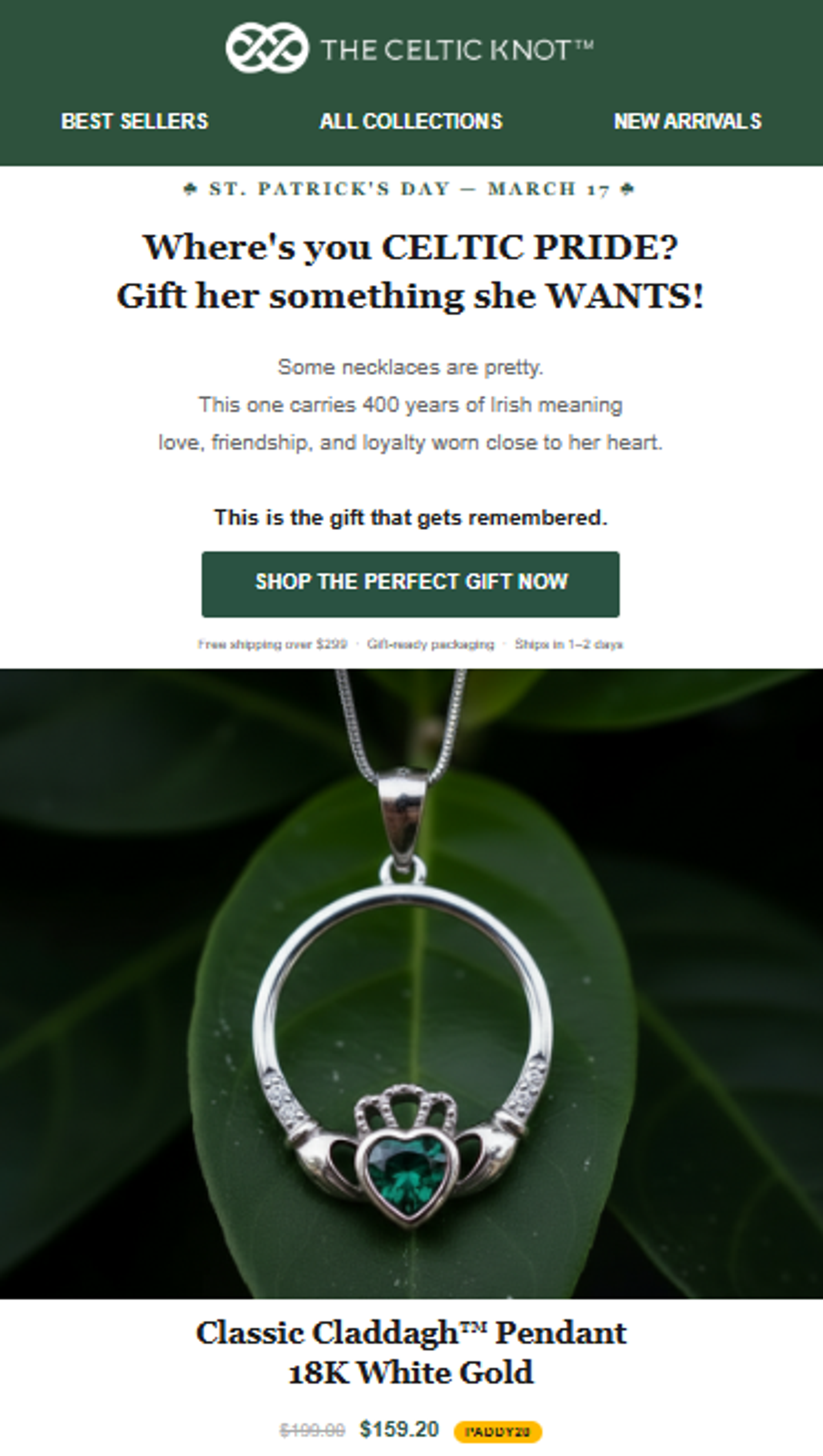
Segmentation is especially important for jewelry brands because customers purchase for very different reasons at different times of year. Sending the same email to every subscriber reduces relevance and limits campaign performance significantly. Brands that segment their lists by occasion and behavior see consistently stronger engagement and conversion rates.
Occasion-based segmentation
Separating campaigns for gift buyers, self-purchase customers, and anniversary shoppers ensures that each subscriber receives messaging that matches their intent. A customer shopping for a Valentine's Day gift needs different messaging than someone browsing for personal jewelry.
Purchase history segmentation
Targeting repeat buyers differently from first-time customers allows brands to maximize the value of each relationship. Loyal customers may respond better to VIP early access and loyalty rewards, while first-time buyers may need more brand education and social proof before committing.
Gender and gifting segmentation
Separating campaigns for those buying for themselves versus those buying as gifts allows brands to adjust both product recommendations and messaging tone. Someone buying a gift needs guidance and reassurance, while a self-purchaser may respond better to personal style and aspiration-driven content.
2. Use Automation to Drive Consistent Revenue
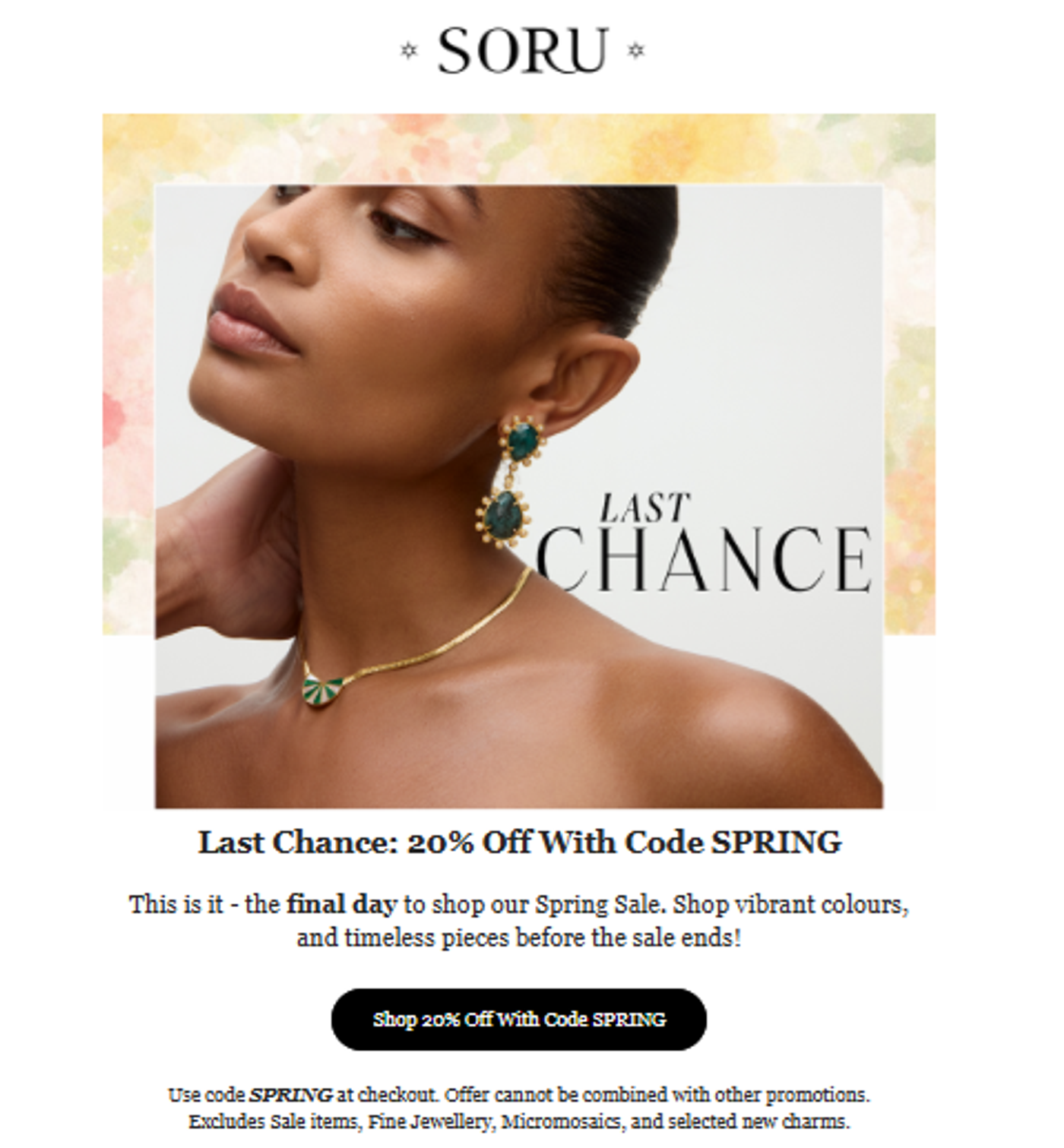
Automation keeps revenue flowing for jewelry brands even between major holidays and gift-giving seasons. For brands with small teams, automation is the difference between a consistent email program and one that only activates around key calendar dates. Setting up the right flows early creates a foundation that generates revenue continuously throughout the year.
- Welcome series
A welcome series introduces new subscribers to the brand's story, craftsmanship, and best-selling collections from the moment they sign up. This sequence is the first impression a brand makes through email, and it sets the tone for the entire customer relationship.
A well-crafted welcome series builds trust and encourages the first purchase by communicating quality and brand values clearly. It also gives new subscribers a strong sense of why they should choose this brand over others.
- Abandoned cart recovery
Abandoned cart emails remind shoppers of pieces they left behind with visually rich, on-brand follow-up messages. For jewelry brands, these emails often include detailed product images, material descriptions, and a gentle nudge to complete the purchase.
Cart recovery is consistently one of the highest-ROI automations available to ecommerce brands. Even recovering a small percentage of abandoned carts adds meaningful revenue without any additional advertising spend.
- Occasion reminder emails
Sending timely reminders ahead of birthdays, anniversaries, and holidays based on customer data keeps the brand top of mind at exactly the right moment. These emails are especially effective for jewelry because customers often need a gentle prompt to start thinking about gift purchases.
Well-timed occasion reminders position the brand as helpful rather than pushy. They also create a personalized experience that strengthens the customer relationship over time.
3. Build Brand Trust Through Storytelling
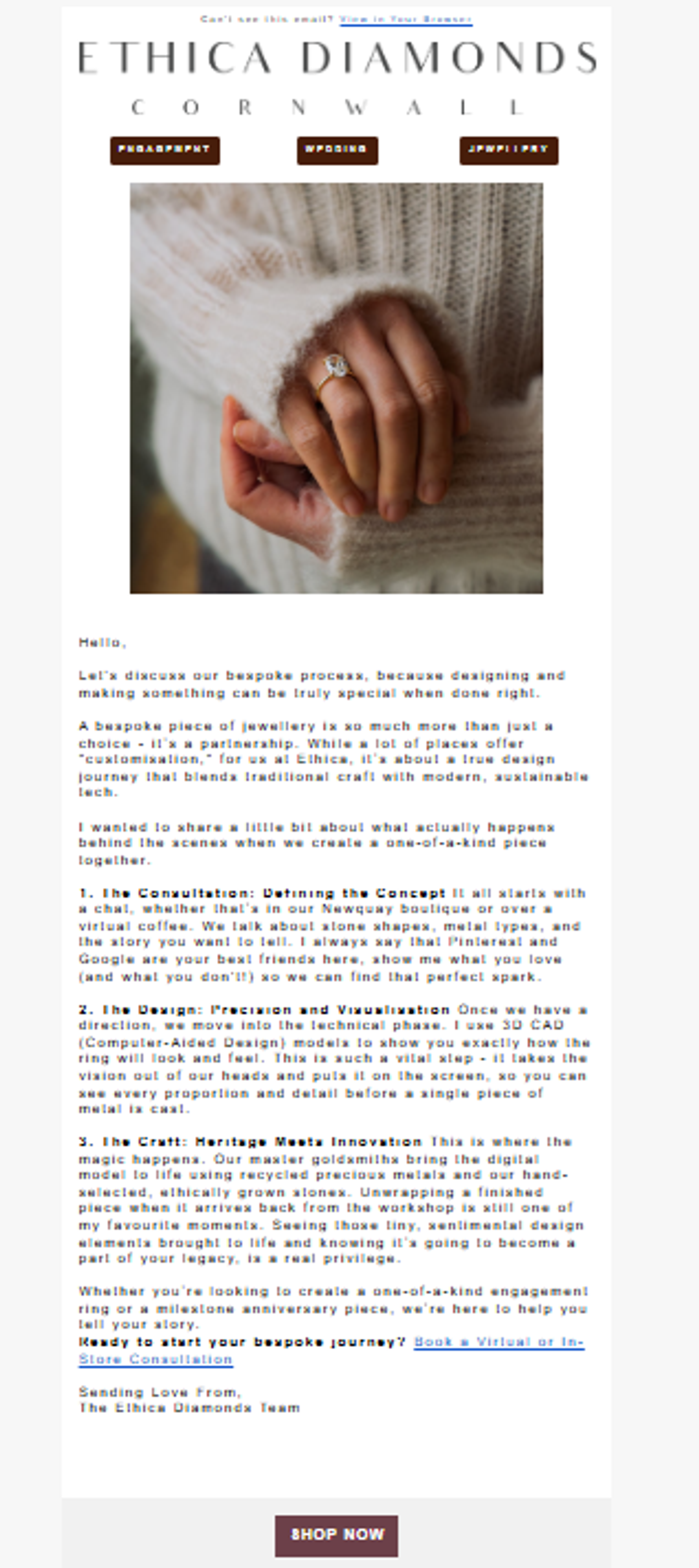
Jewelry is connected to personal milestones, and email storytelling deepens the connection between a brand and its customers in a way that advertising simply cannot replicate. Subscribers who feel connected to a brand's story and craftsmanship are more likely to become loyal, long-term customers. Email provides a direct and owned channel for sharing that story without platform algorithms limiting reach.
Craftsmanship and materials content: Sharing how pieces are made, where materials are sourced, and what makes each design special builds authenticity and perceived value with subscribers. Customers who understand the care and craftsmanship behind a piece often develop a stronger appreciation for the brand and its price point.
Customer milestone stories: Featuring real customers sharing the stories behind their jewelry purchases creates authentic social proof and builds a sense of community around the brand. A subscriber who reads about another customer's engagement ring or anniversary gift is more likely to imagine their own meaningful purchase.
Brand heritage and values: Communicating the brand's origin story, ethical sourcing practices, and design philosophy resonates strongly with modern jewelry consumers. Many shoppers in 2026 actively seek out brands whose values align with their own before making a considered purchase.
4. Promote New Collections and Gifting Campaigns
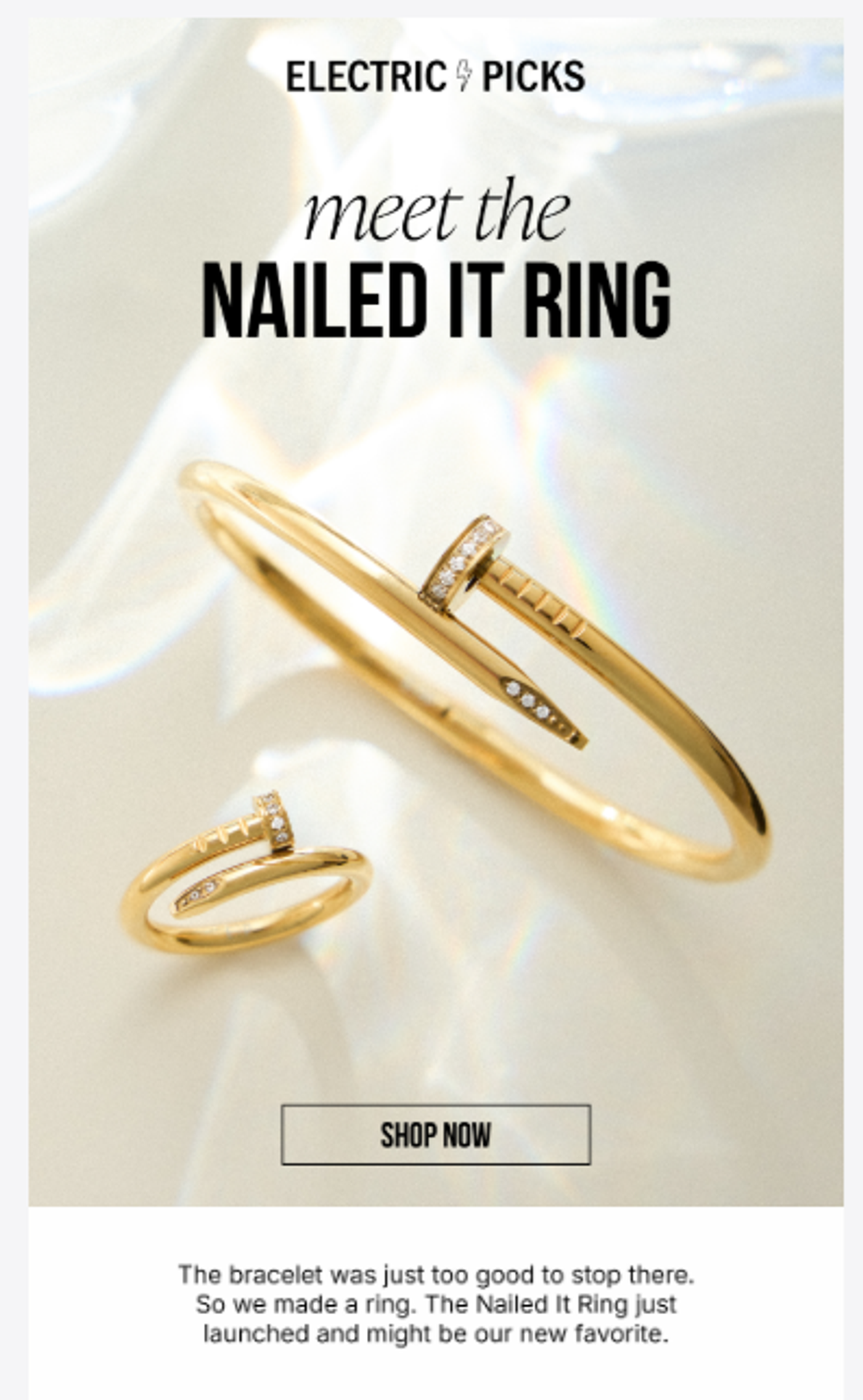
Jewelry brands have natural gifting moments throughout the year that make email campaigns highly effective and well-timed. New collection launches, holiday gift guides, and limited-edition releases all create high-intent buying opportunities that email is perfectly positioned to capture. Reaching subscribers at these moments with visually compelling content often generates the highest campaign revenue of the year.
New collection launches
Building anticipation with pre-launch emails and following up with launch announcements drives early sales from loyal subscribers. Giving email subscribers first access to new collections makes them feel valued and increases the likelihood of purchasing at full price. Early awareness campaigns consistently generate strong revenue for jewelry brands because subscribers are often the most engaged and loyal segment of the audience. Exclusivity and early access are powerful motivators in this category.
Gift guides and holiday campaigns
Sending curated gift guides ahead of key occasions makes purchasing decisions easier for gift buyers who may not know exactly what they are looking for. Organizing products by price point, recipient type, or occasion reduces friction and guides subscribers toward a purchase. Holiday campaigns often generate the highest revenue periods for jewelry brands. Well-timed gift guide emails ensure the brand is present and helpful exactly when customers are actively searching for ideas.
Limited-edition and exclusive offers
Creating urgency with time-sensitive pieces or subscriber-only early access rewards loyalty and drives immediate conversions. Jewelry customers who feel they have exclusive access to limited pieces are more motivated to act quickly before items sell out. These campaigns consistently generate strong short-term revenue spikes for jewelry brands. They also give subscribers a clear and compelling reason to stay on the list and open every email.
5. Personalize the Customer Experience with Data
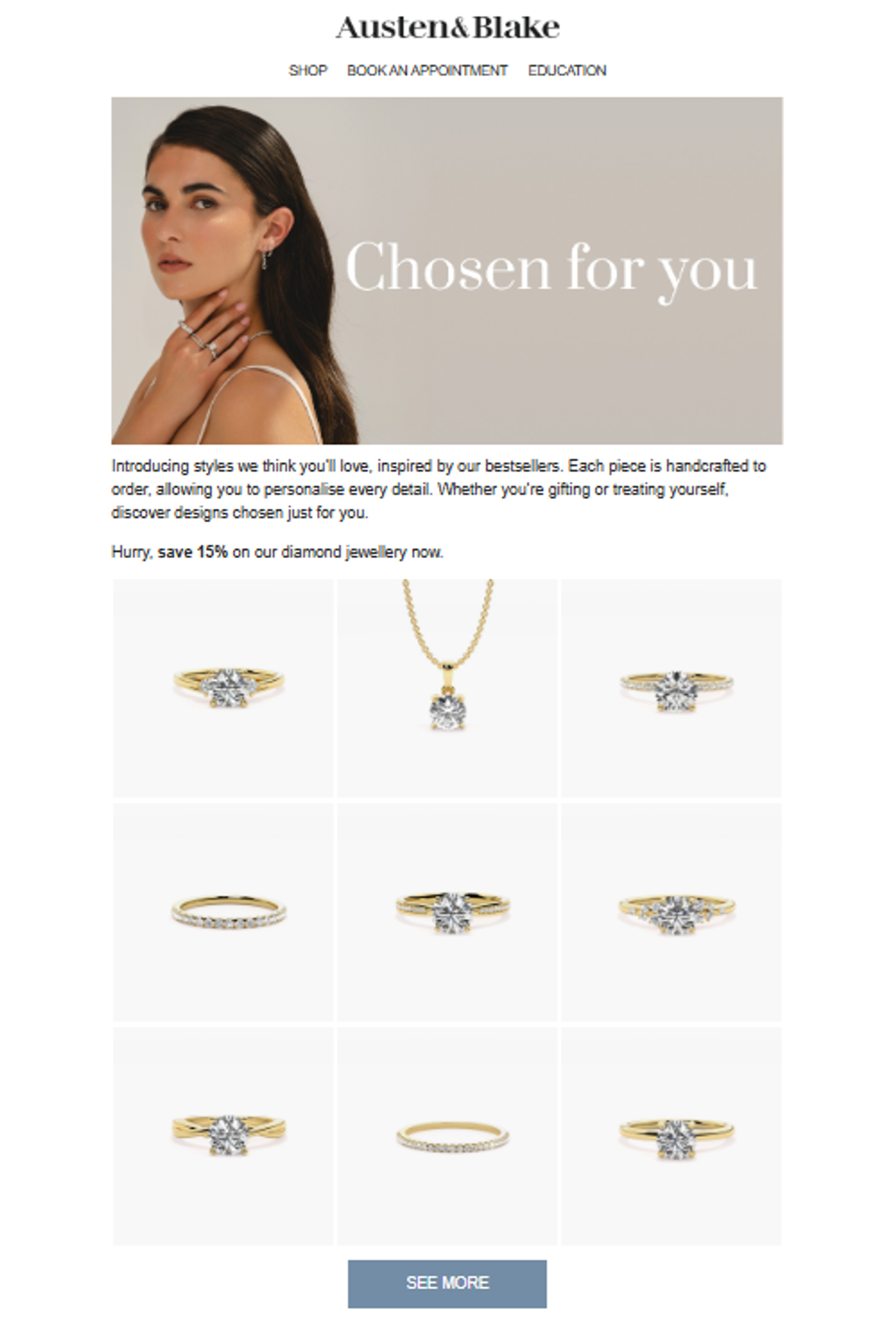
Personalization is especially powerful for jewelry brands because purchases are deeply individual and emotionally significant. Customers who receive emails that feel tailored to their preferences and history are more likely to engage and convert. Data-driven personalization turns a standard email program into a genuinely helpful shopping experience.
Surfacing pieces that match what each customer has already shown interest in creates a more relevant and compelling shopping experience. A subscriber who has browsed gold necklaces should receive recommendations that reflect that preference rather than a generic catalog overview.
Behavior-based recommendations increase click rates and conversion rates significantly. They also demonstrate that the brand understands and values each individual customer's taste.
Using purchase data to send personalized messages on meaningful dates shows customers that the brand remembers what matters to them. A well-timed anniversary reminder or birthday message that references a previous purchase creates a genuinely personal moment.
These emails have some of the highest open and conversion rates of any campaign type for jewelry brands. Customers appreciate being remembered, and that appreciation often translates directly into repeat purchases.
Rewarding high-value customers with exclusive offers, early access to new collections, and personalized thank-you messages strengthens the relationship and encourages continued loyalty. Customers who feel recognized and valued are significantly more likely to return and recommend the brand to others.
VIP programs communicated through email also increase average order value over time. Loyal customers who feel special tend to spend more per purchase than new or occasional buyers.
6. Simplify Email Marketing with Automation Tools
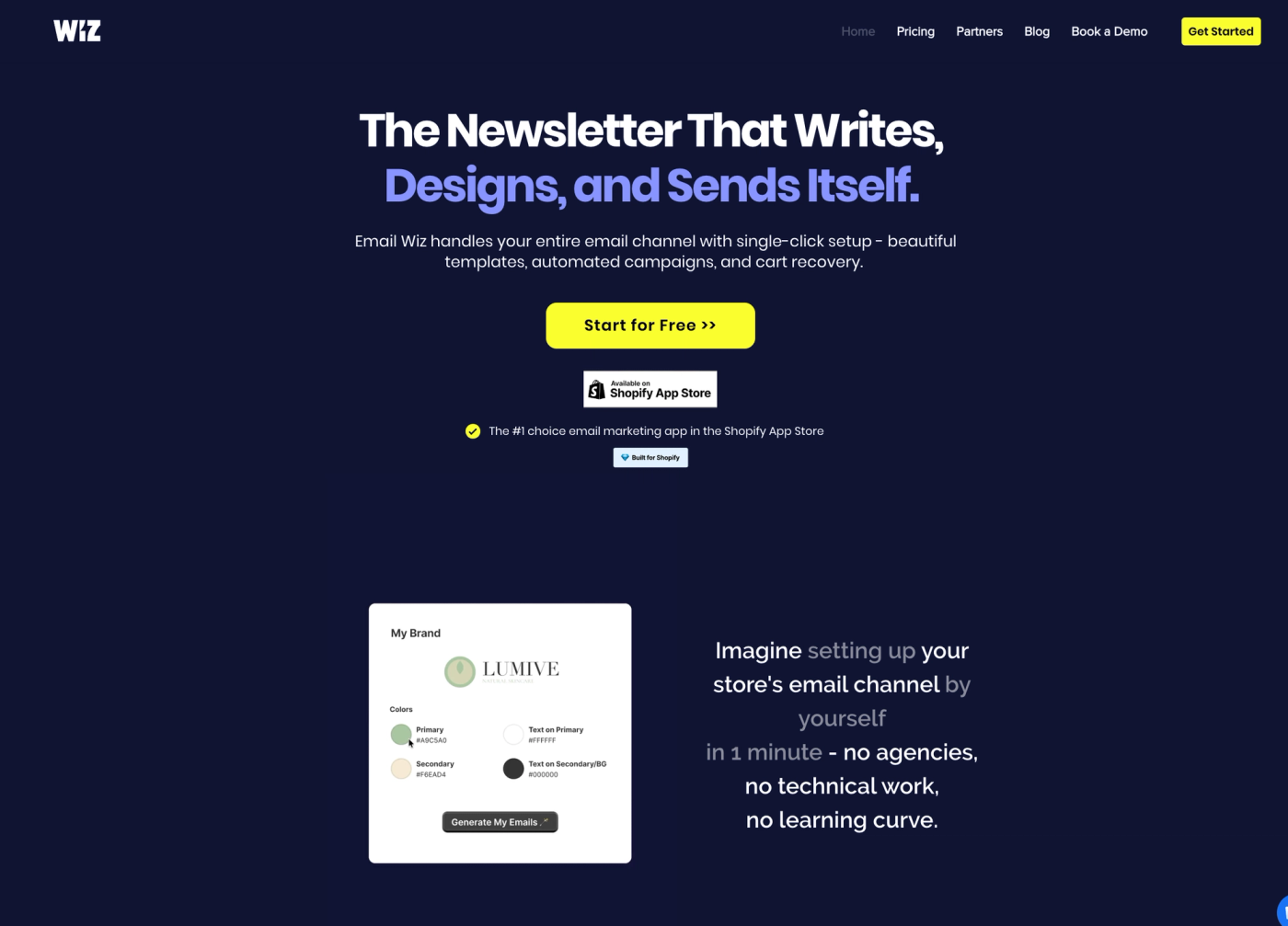
Running email marketing campaigns manually can become complex and time-consuming for growing jewelry brands. Campaign planning, segmentation, content creation, and automation setup all require consistent effort and a level of expertise that small teams may not always have available. Brands that try to manage every element manually often end up with inconsistent communication that underperforms.
Traditional email marketing platforms provide the tools needed to build campaigns and workflows. However, these platforms still require marketers to configure automation, write copy, and design visually rich templates before anything goes live. This operational workload can slow progress significantly for jewelry brands that need their email program running quickly.
New AI-driven platforms are beginning to simplify email marketing operations in meaningful ways. These systems automate tasks that previously required manual effort, from installing flows to generating campaign content based on store data. Automation can now handle much of the work that used to require a dedicated marketing specialist.
Wiz represents one example of this new approach to email marketing for ecommerce brands. The platform automatically installs essential automation flows such as welcome emails, abandoned cart recovery, and post-purchase sequences using store data and product information. It also generates branded campaign content from a single prompt, removing the need for manual writing and design work entirely.
This approach significantly reduces the time required to manage email marketing for jewelry brands. Instead of spending hours configuring workflows and drafting campaigns every week, automation handles the heavy lifting continuously in the background. For jewelry ecommerce brands with small teams, that efficiency can be the difference between a consistent revenue-generating email program and one that never quite reaches its potential.
Final Thoughts
Email marketing for jewelry brands is one of the most effective strategies for building long-term ecommerce revenue. Occasion-driven demand, high average order values, and deep emotional connections with customers all create ideal conditions for strong email performance. Brands that build effective email systems early consistently see higher customer lifetime value and stronger overall growth.
However, understanding how to do email marketing for jewelry business requires significant time and creative resources that many jewelry brand teams simply do not have available. Campaign creation, segmentation, and workflow management can become overwhelming as the business scales and the gifting calendar grows more complex. This challenge is encouraging more brands to explore automation as a practical and efficient solution.
AI-powered platforms are beginning to transform how jewelry brands approach email marketing operations. Tools like Wiz automate workflows, install essential flows instantly, and generate campaign content automatically using store data. For jewelry ecommerce brands looking to scale efficiently without adding to their operational workload, automated email marketing systems represent the next evolution of ecommerce growth. Visit https://www.emailwiz.ai/pricing for more details.
Frequently asked questions
- Why is email marketing important for jewelry brands?
- Jewelry purchases are often driven by specific occasions and emotional significance, which makes timely and personalized email communication especially valuable. Email marketing allows brands to reach customers at high-intent gifting moments without relying on paid advertising. It also builds the brand trust and perceived value that are essential for converting considered purchases at higher price points.
- What types of emails work best for jewelry brands?
- Gift guides, new collection launches, occasion reminder emails, and abandoned cart recovery all perform strongly for jewelry brands. Post-purchase follow-ups and customer milestone emails are also highly effective for building long-term loyalty. Visually rich, story-driven content consistently outperforms purely promotional emails in this category.
- How often should jewelry brands send email campaigns?
- Most jewelry ecommerce brands send one to two campaigns per week alongside their automated flows. During peak gifting seasons such as Valentine's Day, Mother's Day, and the holiday period, frequency may increase to match higher customer intent. Testing and monitoring engagement metrics help determine the optimal sending schedule for each audience.
- What automation flows are essential for jewelry brands?
- Welcome series, abandoned cart recovery, occasion reminder emails, post-purchase follow-ups, and customer winback sequences are the most important flows for jewelry brands. These automations cover the full customer journey and generate revenue continuously without manual involvement. Setting them up early creates a strong revenue foundation that runs in the background year-round.
- What tools help automate email marketing for jewelry brands?
- Platforms such as Klaviyo and Omnisend provide robust automation tools for ecommerce brands managing complex flows and segmentation. These platforms support segmentation, workflows, and campaign management at scale. AI-driven platforms like Wiz take automation further by installing flows automatically and generating campaign content without manual effort, which is especially valuable for small jewelry brand teams.