Brevo Alternatives: 5 Best Options for Advanced Email Automation
- Sam Claren Fausto Dela Paz
- Mar 3
- 6 min read

Updated: May 5
Brevo alternatives are increasingly searched by ecommerce founders who want more advanced email automation without adding operational complexity. While Brevo offers multi-channel marketing and affordable entry pricing, growing brands often explore Brevo alternatives when lifecycle marketing becomes more sophisticated. Choosing the right platform can significantly affect automation depth, team workload, and long-term revenue growth.
Brevo has positioned itself as an accessible email, SMS, and CRM solution. It works well for small to mid-sized businesses that need basic automation and campaign tools. However, advanced ecommerce brands sometimes reach a ceiling in automation flexibility and AI capabilities.
This guide compares five of the best Brevo alternatives for advanced email automation. The focus is on other apps like Brevo with Shopify integration, workflow depth, AI features, and operational autonomy. By the end, you will have a clear framework for selecting the right platform for your growth stage.
Why Brands Start Looking for Brevo Alternatives
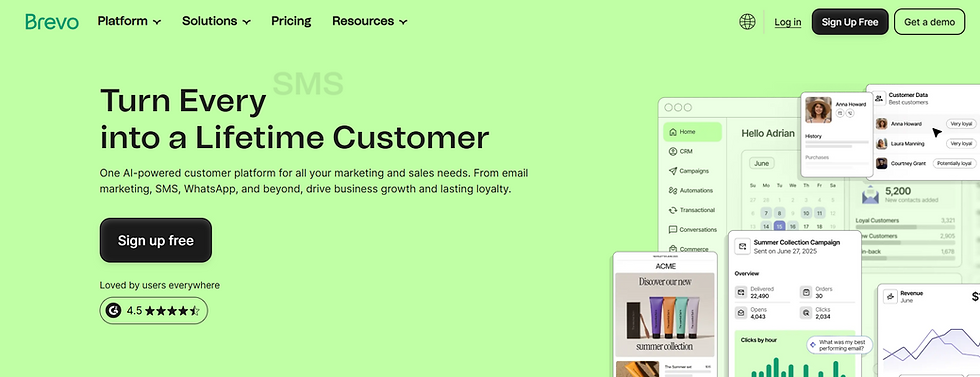
Brevo is legitimate and useful for many teams. However, scaling ecommerce brands often needs more advanced lifecycle automation. Several patterns explain why founders search for Brevo alternatives.
Automation Depth Ceiling
Brevo supports welcome flows and abandoned cart sequences. These core automations perform reliably once configured. However, highly complex conditional journeys may feel limited.
Advanced ecommerce strategies often require layered segmentation. Multi-step behavioral logic can become restrictive. Brands seeking granular lifecycle marketing begin evaluating alternatives.
Trigger Flexibility
Trigger-based automation drives personalized messaging. While Brevo supports triggers, advanced cross-channel conditions may require manual adjustments. Custom scenarios sometimes demand deeper logic.
High-growth stores often want real-time dynamic segmentation. As personalization strategies mature, flexibility becomes critical. Limited trigger customization motivates change.
Manual Campaign Workload
Brevo requires users to draft campaigns manually. Copywriting, design, and scheduling remain active responsibilities. Weekly newsletters demand ongoing oversight.
As revenue goals expand, campaign frequency increases. Founders may spend significant time planning and executing email content. This operational load encourages evaluation of automation-focused Brevo alternatives.
Scaling Complexity
Subscriber growth increases reporting needs and segmentation requirements. Larger databases require more structured list management. Operational oversight expands with scale.
Some brands respond by hiring specialists. Others prefer platforms that reduce dependency on staffing. This difference influences platform selection.
Top 5 Brevo Alternatives
1. Wiz

Wiz stands out among Brevo alternatives because it functions as an AI email marketing agent rather than a traditional tool. Built exclusively for Shopify, it installs revenue-generating flows in about 30 seconds. It automatically fetches branding and product data from the store.
Key strengths include:
Autonomous flow deployment Wiz installs essential welcome, abandoned cart, and post-purchase flows instantly. There is no need to manually configure triggers or build sequences from scratch.
AI-generated campaigns The platform creates on-brand newsletters from simple prompts. It handles copywriting, design, and product selection automatically.
Advanced lifecycle automation Behavioral logic adapts based on real-time Shopify data. Automation continuously optimizes without requiring manual edits.
Content calendar planning Wiz outlines campaigns weeks or months in advance. Founders no longer need to brainstorm promotions each week.
Minimal operational workload Wiz operates as a self-running email department. No dedicated strategist or copywriter is required.
Shopify native architecture The system is designed exclusively for ecommerce brands. Integration friction is minimal.
Wiz represents a shift from automation tools to automation autonomy. For Shopify brands seeking advanced workflows without building a team, it offers the strongest balance of intelligence and simplicity.
2. Klaviyo

Klaviyo is one of the most recognized ecommerce marketing platforms. It offers advanced segmentation and revenue attribution. Many scaling brands consider it when looking for Brevo alternatives.
Strengths include:
Powerful segmentation engine Klaviyo supports granular targeting based on behavior and purchase history. Complex conditions allow detailed personalization.
Detailed revenue reporting Campaigns are tied directly to revenue metrics. This visibility supports performance optimization.
Deep Shopify integration Product and customer data sync reliably. Personalization opportunities increase.
Weaknesses include:
High learning curve Advanced features require strategic expertise. Beginners may feel overwhelmed.
Manual campaign management Copywriting and design remain manual. Ongoing workload is significant.
Pricing escalation Subscriber growth increases monthly costs rapidly. Budget forecasting becomes challenging.
Klaviyo works well for brands with dedicated email teams. Lean ecommerce operations may find it resource-intensive.
3. ActiveCampaign

ActiveCampaign blends email marketing with CRM functionality. It is known for advanced conditional logic. Some hybrid ecommerce brands consider it as a Brevo alternative.
Strengths include:
Advanced conditional branching Workflow logic can be layered and dynamic. Complex lifecycle sequences are possible.
CRM integration Sales and marketing automation align in one system. Cross-channel coordination improves.
Strong automation builder Visual editors support detailed logic mapping. Custom journeys can be designed precisely.
Weaknesses include:
Not ecommerce exclusive Shopify integration exists, but is not the sole focus. Ecommerce personalization may require more configuration.
Steep learning curve Setup and optimization demand expertise. Training time is considerable.
Manual content creation Campaign drafting remains a human task. AI autonomy is limited.
ActiveCampaign suits brands comfortable managing complexity. Smaller Shopify stores may prefer streamlined alternatives.
4. Omnisend

Omnisend is another ecommerce-focused platform. It combines email and SMS marketing in one interface. Many brands explore it among Brevo alternatives.
Strengths include:
Ecommerce templates Pre-built welcome and cart flows accelerate onboarding. Setup time is reduced.
Multi-channel messaging Email and SMS operate within the same system. Coordinated campaigns become easier.
User-friendly interface The dashboard is accessible for beginners. Early implementation is smooth.
Weaknesses include:
Moderate automation depth Advanced lifecycle customization may feel limited. Granular logic requires extra effort.
Manual campaign drafting Copywriting and design remain manual tasks. Weekly workload persists.
Limited AI autonomy AI features assist rather than operate independently. Oversight remains necessary.
Omnisend works well for growing stores. Highly advanced automation needs may require deeper systems.
5. Drip

Drip positions itself as a lifecycle marketing platform for ecommerce brands. It emphasizes behavioral tagging and personalization. Many mid-market stores consider it among Brevo alternatives.
Strengths include:
Behavioral tagging system Subscribers can be grouped based on engagement patterns. Messaging becomes more relevant.
Shopify integration Product and order data sync reliably. Segmentation opportunities increase.
Lifecycle marketing focus Drip supports customer journey mapping. Retention strategies can be structured clearly.
Weaknesses include:
Manual copywriting requirements Campaign content must be created by the user. AI generation is limited.
Smaller ecosystem Integrations are available, but not as extensive as enterprise platforms.
Moderate learning curve Automation logic requires training. Setup may take time.
Drip offers strong lifecycle tools but still depends on active management.
Before Choosing a Brevo Alternative, Consider These Tips
Selecting a platform involves more than feature comparison. Operational capacity and long-term efficiency matter equally. Below are key considerations.
Consider automation versus autonomy
Traditional platforms give you advanced tools. You must still operate those tools effectively. This demands time and expertise.
Autonomous systems like Wiz reduce manual responsibility. They install flows and generate campaigns automatically. The difference significantly affects the workload.
Consider team requirements
Advanced platforms often require a strategist. Hiring increases payroll costs and coordination complexity. Small teams may struggle to justify this expense.
AI-driven systems reduce staffing dependency. Wiz functions without requiring a dedicated email manager. Efficiency improves margin protection.
Consider content production
Manual platforms require consistent drafting of newsletters. Copywriting and design consume time weekly. Scaling increases frequency.
Autonomous AI systems generate campaigns from prompts. Wiz handles copy and layout automatically. This saves hours each month.
Consider scalability
As subscriber lists grow, segmentation complexity increases. Manual oversight expands accordingly. Hiring often becomes necessary.
Autonomous systems scale without expanding headcount. Wiz maintains performance without increasing operational load. Scalability becomes predictable.
Frequently Asked Questions About Abandoned Checkout
1. What is abandoned checkout in ecommerce?
Abandoned checkout happens when a customer begins the checkout process but leaves before completing payment. This usually means they entered shipping details or reached the payment page, showing strong purchase intent.
2. What is the difference between cart abandonment and abandoned checkout?
Cart abandonment occurs when a shopper adds products to their cart but never starts the checkout process. Abandoned checkout happens later in the funnel, when the customer has already begun entering their details, which makes it a higher intent opportunity.
3. How many abandoned checkout emails should I send?
Most ecommerce brands send between two and three abandoned checkout emails. A common structure includes one email within the first hour, a second within 24 hours, and a final reminder within 48 to 72 hours.
4. Should I offer a discount in abandoned checkout emails?
You do not always need to offer a discount to recover abandoned checkout. Many customers simply need a reminder, so it is often best to reserve discounts for later emails if earlier reminders do not convert.
5. What is a good abandoned checkout recovery rate?
Recovery rates typically range from 10 to 20 percent depending on industry and strategy. Stores that use structured automation, personalized messaging, and proper timing often see stronger performance over time.
Final Thoughts
Brevo alternatives become relevant as ecommerce brands pursue deeper automation and operational efficiency. While Brevo delivers value, advanced lifecycle marketing may require stronger systems. Platform choice should reflect growth stage and team capacity.
Among the several apps like Brevo, Wiz offers the most autonomous approach. It installs essential revenue flows instantly and generates campaigns automatically. For Shopify brands seeking advanced automation without building a large team, autonomy represents the next phase of email marketing evolution.
In 2026, efficiency and intelligence matter more than ever. Tools that operate independently create leverage. For advanced ecommerce automation with minimal manual workload, Wiz stands out as the strongest alternative. Visit https://www.emailwiz.ai/ to learn more.



Comments