Email Popup Forms Examples for Ecommerce Brands: 5 Ideas to Grow Your List in 2026
- Sam Claren Fausto Dela Paz
- Mar 20
- 14 min read

Updated: May 11
Email popup forms examples are becoming essential reference points for ecommerce brands that want to grow their subscriber lists and turn anonymous website visitors into paying customers. Popup forms are often the first branded touchpoint a visitor experiences on an ecommerce site, which means the design, timing, and offer all play a critical role in whether someone subscribes or leaves without engaging. Brands that invest in high-performing popup forms consistently build larger, more engaged email lists that generate stronger long-term revenue.
The email list is one of the most valuable assets any ecommerce brand can build. Unlike social media followers or paid traffic, an email subscriber list is owned by the brand and can be marketed to directly and repeatedly without ongoing advertising spend. Popup forms are the primary mechanism through which most ecommerce brands grow that list from their existing website traffic.
In 2026, popup form design and strategy have evolved significantly beyond a simple discount offer in a white box. Personalization, smart triggers, quiz-based formats, and exclusive access offers are all proving more effective than generic popups at capturing high-quality subscribers. This guide explores five email popup form ideas with real-world examples that ecommerce brands can use to grow their lists and connect visitors to a strong email program from the moment they sign up.
Why Email Popup Forms Matter for Ecommerce Brands

Email list growth is the foundation of any effective ecommerce email program. A brand's email revenue is directly tied to the size and quality of the subscriber list it sends to, which makes popup forms one of the most important conversion tools on any ecommerce website. Brands that invest in optimizing their popup forms consistently see faster list growth and stronger email program performance over time.
Popup forms are also often the very first impression a brand makes on a new visitor. The design, copy, and offer presented in the popup communicate the brand's aesthetic and value proposition before a visitor has had a chance to browse the full site. A well-designed popup that feels like a natural extension of the brand experience converts significantly better than a generic template that feels disconnected from the store's identity.
Growing an owned email list through popup forms reduces long-term dependence on expensive paid traffic to drive repeat sales. Instead of paying to reacquire customers through social media ads every time the brand wants to promote a new product, brands with large subscriber lists can reach those customers directly at no additional cost. This makes popup form optimization one of the highest-ROI activities available to ecommerce marketing teams of any size.
Popup forms also solve one of the most significant challenges in ecommerce by converting anonymous website visitors into identified subscribers that brands can market to directly. Most visitors leave an ecommerce site without making a purchase on their first visit, and without capturing their email address, there is no way to bring them back. A well-timed popup form with a compelling offer gives brands a second chance to convert that visitor even after they have left the site.
The Core Elements of High-Performing Email Popup Forms
Effective email popup forms share several foundational characteristics that separate high-converting examples from poorly performing ones. Understanding these elements helps ecommerce brands build popup forms that capture more subscribers and attract higher-quality leads. Brands that get these fundamentals right consistently see stronger list growth and better email program performance.
Compelling offer: A compelling offer is the incentive presented in exchange for an email address, such as a discount, free shipping, early access, or exclusive content. The offer needs to be specific, valuable, and clearly communicated in a single glance for the popup to convert effectively.
The right offer varies by brand and audience, but it should always feel like a fair exchange for the visitor's contact information. A weak or vague offer is one of the most common reasons popup forms underperform despite strong traffic.
Smart timing and triggers: Smart timing refers to configuring when and how the popup appears based on visitor behavior, such as on exit intent, after a set time delay, or after a scroll threshold is reached. Showing a popup at the wrong moment, such as the instant a visitor lands on the site, significantly reduces conversion rates and creates a poor first impression.
Behavioral triggers allow brands to show the popup at the moment a visitor is most likely to engage rather than interrupting their browsing experience prematurely. Well-timed popups feel helpful rather than intrusive and convert at meaningfully higher rates.
Clear and concise copy: The headline, subheading, and CTA button text in a popup form need to communicate the value of subscribing quickly and compellingly without overwhelming the visitor with too much information. Every word in a popup form should earn its place because visitors decide whether to engage or dismiss within seconds of seeing it.
Strong popup copy leads with the benefit to the visitor rather than the ask from the brand. A headline that says "Get 15 percent off your first order" converts better than one that says "Join our newsletter" because it immediately communicates what the visitor receives.
On-brand design: On-brand design means creating a popup that reflects the brand's visual identity, including colors, typography, and imagery, so that it feels like a natural extension of the website experience rather than an interruption. A popup that looks completely different from the rest of the site creates a jarring experience that reduces trust and conversion rates.
Investing in a well-designed popup that matches the brand's aesthetic communicates professionalism and attention to detail. Visitors who see a cohesive and visually appealing popup are more likely to trust the brand and complete the signup.
Email Popup Forms Examples: 5 Ideas
Idea 1: The Discount Popup Form
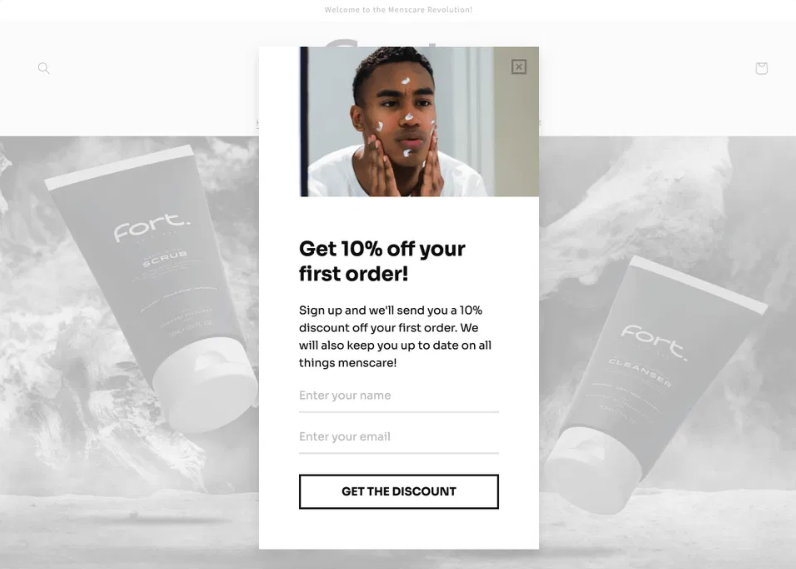
A straightforward discount offer is one of the most consistently effective popup form types for ecommerce brands because it presents a clear and immediate benefit to the visitor in exchange for their email address. Discount popups work across virtually every ecommerce category and consistently outperform vague or benefit-light alternatives. Brands that use a well-designed discount popup with a specific and compelling offer typically see strong signup rates from new visitors.
Percentage discount popup
A percentage discount popup offers a specific percentage off the visitor's first purchase, such as 10 or 15 percent, in exchange for their email address. The percentage format works especially well for higher-priced products where the dollar value of the discount is meaningful and immediately apparent to the visitor.
In practice, a Shopify fashion brand might display a popup with a bold headline reading "Get 15 percent off your first order" alongside a single email field and a clear CTA button. The simplicity of the offer and the immediacy of the value proposition consistently drive strong conversion rates for this format.
Fixed amount discount popup
A fixed dollar amount discount popup offers a specific monetary value off the first order, such as ten or twenty dollars off, which can feel more tangible and valuable than a percentage to some visitors. This format works particularly well for stores with lower average order values where a percentage discount might not feel significant enough to motivate a signup.
A Shopify home goods brand might use a popup offering twenty dollars off any first order over fifty dollars, combining the fixed discount with a minimum spend threshold that also increases average order value. This approach captures the email address while simultaneously encouraging a larger first purchase.
Example in practice
A well-designed discount popup from a Shopify beauty brand might feature a clean two-column layout with a product lifestyle image on one side and a brief headline, email field, and CTA button on the other. The subject line of the follow-up welcome email should deliver the discount code immediately to fulfill the promise made in the popup and set the tone for a trustworthy brand relationship.
Idea 2: The Free Shipping Popup Form

Free shipping is one of the most powerful incentives for ecommerce popup forms because shipping costs are one of the most commonly cited reasons for cart abandonment and checkout drop-off. Offering free shipping in exchange for an email address removes a known barrier to purchase while simultaneously growing the subscriber list. Brands that test free shipping popups against discount popups often find that free shipping converts equally well or better, particularly for stores with higher shipping costs.
Free shipping on first order popup
A free shipping on first order popup offers complimentary delivery on the subscriber's initial purchase as an incentive for signing up. This format works especially well for brands selling heavier or bulkier products where shipping costs represent a meaningful portion of the total order value.
A Shopify supplements brand might display a popup with a headline reading "Sign up and get free shipping on your first order," accompanied by a brief note about typical delivery times and a single email field. This offer directly addresses the most common hesitation point for first-time buyers and makes the signup feel genuinely valuable.
Free shipping threshold popup
A free shipping threshold popup combines the email signup incentive with clear communication about the store's free shipping threshold, encouraging visitors to build a larger first order while capturing their contact information. This format turns the popup into a value-adding moment rather than a simple ask for an email address.
A Shopify lifestyle brand might use a popup that says "Join our list for free shipping on orders over forty dollars" alongside a brief showcase of two or three popular products that help visitors reach the threshold naturally. This approach grows the list while simultaneously increasing average order value from the very first purchase.
Example in practice
An effective free shipping popup from a Shopify home goods brand might feature minimal design with a strong headline, a single email input field, and a CTA button that reads "Claim free shipping." The follow-up welcome email should confirm the offer immediately and include a clear reminder of how to apply free shipping at checkout to ensure the subscriber follows through on their first purchase.
Idea 3: The Quiz or Personalization Popup Form

Quiz-based popup forms generate higher engagement and more useful subscriber data than standard discount popups because they invite visitors into an interactive experience rather than presenting a passive offer. By asking two or three short questions before capturing the email address, brands collect preference data that can be used for segmentation and personalized email campaigns from the very first send. Ecommerce brands that use quiz popups consistently report both higher signup rates and stronger email engagement compared to standard discount formats.
Product recommendation quiz popup
A product recommendation quiz popup invites visitors to answer two or three short questions in exchange for a personalized product recommendation delivered to their email address. This format works especially well for brands with large or complex product catalogs where visitors may feel overwhelmed by choice without some guidance.
A Shopify skincare brand might use a three-question quiz popup asking about skin type, primary skin concern, and daily routine before offering to send a personalized product recommendation to the visitor's email. This approach captures the email address while simultaneously collecting segmentation data that makes every subsequent campaign more relevant and effective.
Skin type or style quiz popup
A skin type or style quiz popup uses a short interactive quiz to collect preference and characteristic data that can be used to segment subscribers and personalize email campaigns from the moment they join the list. This format is especially powerful for beauty, fashion, and wellness brands where product relevance depends heavily on individual characteristics.
A Shopify fashion brand might use a style quiz popup that asks three questions about the visitor's preferred aesthetic, typical occasions they dress for, and favorite colors before delivering a personalized style edit to their inbox. The subscriber enters the email program already segmented, which means the first welcome email can be genuinely personalized rather than generic.
Example in practice
A well-executed quiz popup from a Shopify wellness brand might open with a headline reading "Find your perfect supplement routine in 60 seconds," present three quick questions about health goals and lifestyle, and then ask for an email address to deliver the personalized recommendation. This format converts well because the visitor is actively invested in receiving the result by the time they reach the email field.
Idea 4: The Exclusive Access Popup Form
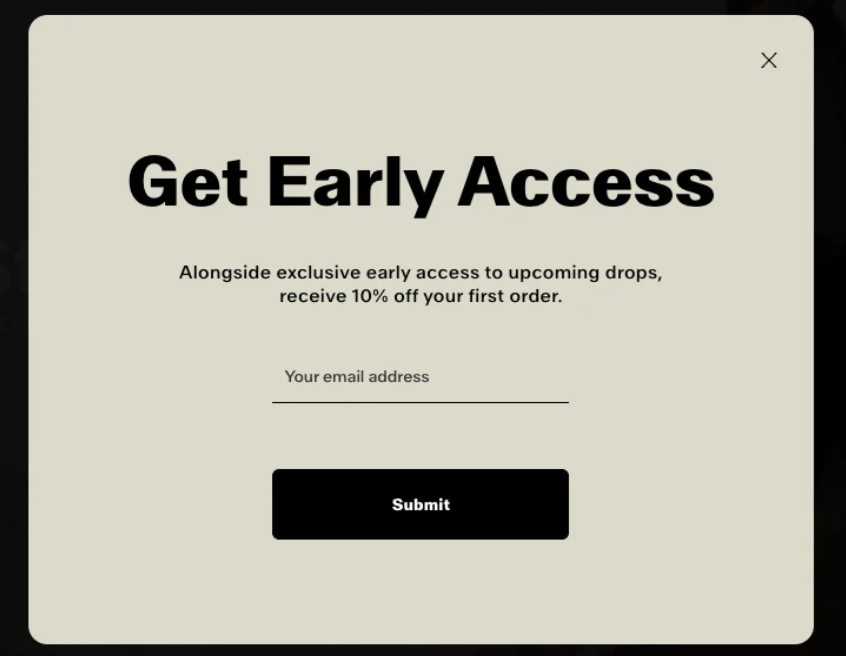
Exclusive access popups appeal to customers who are motivated by insider status, early access, and the feeling of being part of a select community rather than by discounts or monetary incentives. This format works especially well for brands with strong identities, loyal followings, or limited-edition product strategies where exclusivity carries genuine perceived value. Ecommerce brands that position their email list as an exclusive community rather than a promotional channel consistently attract higher-quality subscribers who engage more deeply with the brand.
Early access to new collections popup
An early access popup invites visitors to join the email list to be the first to shop new arrivals, limited-edition drops, or exclusive collaborations before they are available to the general public. This format creates a genuine value proposition for visitors who are already interested in the brand's products and do not want to miss out on coveted releases.
A Shopify streetwear brand might use a popup with a headline reading "Be first. Get early access to every drop" alongside a brief explanation that email subscribers receive exclusive 24-hour early access before collections go live to the public. This offer consistently attracts highly engaged subscribers who are motivated by the brand's products rather than a one-time discount.
VIP members-only popup
A VIP members-only popup positions the email list as an exclusive community with access to subscriber-only offers, behind-the-scenes content, or special events that are not available to the general public. This framing elevates the perceived value of subscribing beyond a single discount and builds a sense of long-term relationship with the brand.
A Shopify luxury accessories brand might use a popup inviting visitors to "Join our inner circle" for exclusive access to limited pieces, private sale events, and styling content curated for members only. This positioning attracts subscribers who are genuinely interested in the brand rather than one-time discount hunters who unsubscribe after their first purchase.
Example in practice
A compelling exclusive access popup from a Shopify fashion brand might feature minimal, high-end design with a bold headline, a one-line description of what members receive, and a simple email field with a CTA button reading "Join the list." The follow-up welcome email should immediately deliver on the exclusivity promise by providing a piece of content or access that is genuinely not available anywhere else.
Idea 5: The Exit Intent Popup Form with a Last-Chance Offer

Exit intent popups capture visitors who are about to leave the site without subscribing or purchasing by presenting a timely and compelling last-chance offer at exactly the right moment. This format is uniquely effective because it targets visitors who have already demonstrated interest in the brand by browsing the site but have not yet converted. Ecommerce brands that add a well-designed exit intent popup to their existing popup strategy consistently see a meaningful increase in overall list growth without any additional traffic investment.
Exit intent discount popup
An exit intent discount popup triggers a targeted offer at the exact moment a visitor shows exit behavior, such as moving their cursor toward the browser navigation or back button. This last-chance format works because it interrupts the exit decision with a compelling reason to reconsider, presented at the moment the visitor is most open to it.
A Shopify clothing brand might trigger an exit intent popup with a headline reading "Wait, here is 10 percent off before you go" that appears only when a visitor begins to navigate away from the site. This approach captures subscribers who would otherwise leave without any interaction and converts a percentage of them into first-time buyers through the welcome flow that follows.
Exit intent with cart reminder
An exit intent popup that combines a signup incentive with a reminder of items in the visitor's cart simultaneously recovers a potential abandonment and captures the email address in a single interaction. This dual-purpose format is especially powerful because it addresses both the list-building goal and the revenue recovery goal at the same time.
A Shopify wellness brand might trigger an exit intent popup for visitors with items in their cart that says "You left something behind, sign up and get free shipping on your order." This message captures the email, reduces cart abandonment, and gives the brand permission to follow up with an automated cart recovery sequence if the visitor still does not complete their purchase.
Example in practice
An effective exit intent popup from a Shopify supplements brand might feature a bold headline, a brief reminder of the products the visitor viewed, a compelling offer, and a single email field with a prominent CTA. The design should feel urgent but not aggressive, using warm and direct language that acknowledges the visitor's intent to leave without making them feel pressured.
How to Connect Your Popup Forms to Your Email Marketing System

A popup form is only as valuable as the email program it feeds into. Capturing an email address is just the first step and what happens next determines whether that subscriber becomes a customer or simply a contact on a list that never converts. The moment someone signs up through a popup form, they should immediately enter an automated welcome series that delivers the promised offer, introduces the brand, and guides them toward their first purchase.
The connection between popup capture and email automation is where most ecommerce brands leave significant revenue on the table. Many stores invest heavily in optimizing their popup forms but neglect to build the welcome sequence that converts new subscribers into buyers. A well-designed welcome flow that launches the moment someone automatically signs up is consistently one of the highest-revenue automations in any ecommerce email program.
Wiz represents one example of a platform that simplifies this connection for Shopify brands. It automatically installs a welcome series alongside a pop-up flow that activates the moment a new subscriber joins the list, without requiring manual configuration or copywriting. For Shopify brands that want their popup capture connected to a revenue-generating welcome sequence from day one, that kind of automated setup removes one of the most common barriers between list growth and email revenue.
Frequently Asked Questions
What is an email popup form and why does it matter for ecommerce?
An email popup form is a subscription capture tool that appears on an ecommerce website to invite visitors to join the brand's email list in exchange for an incentive. It matters because it converts anonymous website traffic into subscribers that brands can market to directly and repeatedly without additional advertising spend.
What is the best incentive to use in an email popup form?
The best incentive depends on the brand and audience, but discount offers, free shipping, and quiz-based personalization consistently perform strongly across ecommerce categories. Testing different incentive types is the most reliable way to identify what motivates a specific audience to subscribe.
When is the best time to show an email popup form to visitors?
The best time to show a popup is after a visitor has had at least 10 to 15 seconds to engage with the site or after they have scrolled through a meaningful portion of the page. Exit intent triggers are also highly effective for capturing visitors who are about to leave without subscribing.
How do you avoid annoying visitors with popup forms?
Setting appropriate timing delays, using exit intent triggers rather than immediate page-load triggers, and ensuring the popup is easy to dismiss on both desktop and mobile all reduce the likelihood of creating a negative visitor experience. A well-designed popup that presents a genuinely valuable offer rarely feels intrusive because the value exchange is clear and fair.
What should happen after someone submits an email popup form?
The subscriber should immediately receive an automated welcome email that delivers the promised offer and introduces the brand. Connecting the popup to an automated welcome series ensures that every new subscriber has a positive first experience and is guided toward their first purchase without any manual involvement from the brand.
Conclusion
Email popup examples are essential reference points for any ecommerce brand that wants to grow its subscriber list and convert website traffic into long-term customers. The right popup form design, offer, and timing can transform anonymous visitors into engaged subscribers who generate consistent revenue through email marketing. Brands that invest in optimizing their popup forms consistently see faster list growth and stronger email program performance across every campaign they send.
However, a popup form is only the beginning of the customer relationship. The email program it feeds needs to be equally strong, starting with an automated welcome series that delivers on the popup promise and guides new subscribers toward their first purchase. Brands that neglect this follow-through often find that their list grows but their email revenue does not.
AI-powered platforms are beginning to make it easier for ecommerce brands to connect popup capture to automated email marketing without manual setup or specialist knowledge. Tools like Wiz automatically install welcome flows and pop-up sequences that activate the moment a new subscriber joins the list, ensuring that every signup is immediately followed by a revenue-generating welcome experience. For ecommerce brands looking to turn their popup forms into a consistent source of new customers, automated tools represent the most efficient and scalable path forward. Visit https://www.emailwiz.ai/ for more details.


Comments